



Address newsletter
Get the latest news on buying, selling, renting, home design, and more.
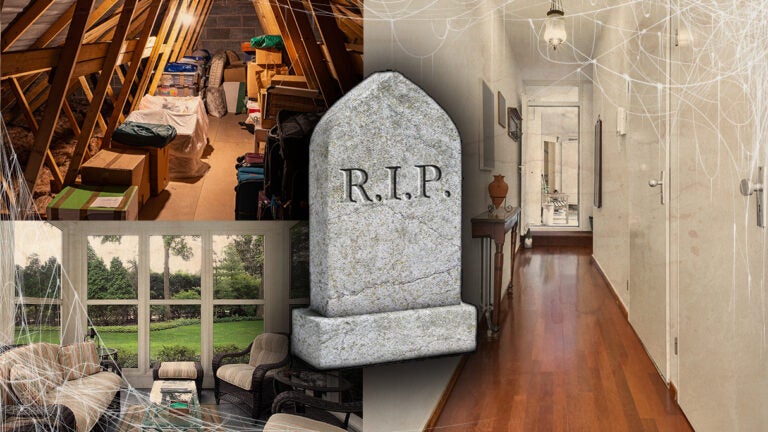
As a kid growing up in the 1990s, “Home Alone” was pure fantasy. Not only did Macaulay Culkin’s Kevin McCallister live every child’s dream, left to his own devices while his parents traveled to Europe (pre-smartphones, of course), the kid partied in a mansion: careening down endless hallways, sliding down grand staircases, and frolicking in stately living and dining rooms.
Smartphones aside, the movie is outdated for other reasons: Today’s Kevin would probably order his pizza through Uber Eats from a compact, four-story new-build with a furnished basement and an au-pair suite in the attic. Capacious communal spaces — kitchen, great room, all-season porch — would have replaced those hallways long ago.
Don’t take my word for it. According to a July 2024 US Residential Architecture and Design Survey, hallways and their ilk are, per the survey, “non-functional.” Why? According to the 2024 National Association of Home Builders Eye on Housing survey, buyers want smaller homes than they did 20 years ago. In 2003, the typical home buyer preferred 2,260 square feet of finished area. In 2023, that number was down to 2,067 square feet.
Now, “People are looking to maximize every square foot of livable space. Basements that were used for storage are being converted to media rooms, gyms, and guest rooms. The attic is a home office or a kids’ playroom,” said Lauren Zirilli, a home designer and a real estate agent with Coldwell Banker Realty in Westwood.
In that spirit, let’s move to our virtual multipurpose kitchen/great room/office/wet bar to raise a toast for these obsolete spaces.
Once the centerpiece of Rockwellian holiday gatherings and proper dinner parties, these relics became truly obsolete during COVID, when they turned into de facto offices, study spaces, and closets.
“They were becoming storage facilities. People were stacking stuff on top of the tables,” said Michelle Lee Parenteau, who runs the interior design firm Michelle Lee Designs in Johnston, R.I.
Parenteau said current clients are expanding their kitchens, with 10- to 12-foot islands in Cambria quartz or blue Bahia, designed for both family meals and entertaining.
“Homes are more casual and less formal,” she said. “But I did do a dining room in East Greenwich, R.I., with grass-cloth wallpaper to give it a more casual feel, over upscale and pretentious.”
Charming, maybe. Functional? Not so much. Now, Parenteau said, year-round rooms with heated floors and mini-splits, often built off the living room, are all the rage.
“Porches are becoming all-season for people who want to maximize and who have bigger families,” she said.
Remember creepy basements that housed musty family photos, ancient wedding gowns, and God knows what else? Those have been supplanted by finished basements, said Zirilli — and storage has moved into a separate carriage house, for those who can afford it.
“Storage rooms are disappearing. People are building secondary buildings on their property. It used to be the old carriage house, but now it’s meant for storage, for all the things,” Zirilli said. “I go into a lot of new-builds right now where every single inch of the home is finished. People are tucking all kinds of things into basements, including playrooms, gyms, yoga rooms, pet rooms, and pet-washing stations.”
Ditto attics, which are now used as bedrooms.
“Bedrooms drive value,” Zirilli said. Think about it. What sounds more appealing in a home listing: an attic for your holiday ornaments or an au-pair suite?
Thanks to Ring cameras, “People aren’t doing doorbells anymore. They are completely obsolete,” Zirilli said.
Stately Colonials with four or five boudoirs? Unnecessary these days, said Allison Blank, a real estate agent with Compass in Chestnut Hill.
“Most people aren’t having three to five kids anymore, so what we see often is that one of those rooms becomes an office, and the other room becomes a kids’ hangout space or a gym. That’s where your Peloton goes.”
For empty-nesters looking to sell, here’s an idea: “I would probably stage [bedrooms] with a desk to show that it can be a home office, and then maybe also with a little table with crayons and four little chairs around it to show that this is additional living space, with a door — and a door can change with your life, right?” she said.
Living and sitting rooms are antiquated; open concept is in. As such, instead of hallways and walls denoting a home’s flow, layouts call for different “moments” of furniture, Zirilli said.
“People have open-concept great rooms where the furniture defines the space,” she said. Perhaps one area is devoted to a fireplace, a TV, and a buttery couch; another area might have a bar, an island, and stools.
Of course, lack of walls does cause problems for artwork and TV sets, Zirilli said.
“I just saw something that piqued my interest: TVs on a rolling easel for open spaces that don’t really have a lot of wall space. People drag them around. They put them in front of their bed or wheel them into the bathroom,” she said.
Home alone, indeed.
Kara Baskin can be reached at [email protected]. Follow her @kcbaskin.
Get the latest news on buying, selling, renting, home design, and more.





To comment, please create a screen name in your profile
To comment, please verify your email address
Conversation
This discussion has ended. Please join elsewhere on Boston.com