Tito Jackson and Boston’s police commissioner go toe-to-toe over body cameras
"This is proven technology."
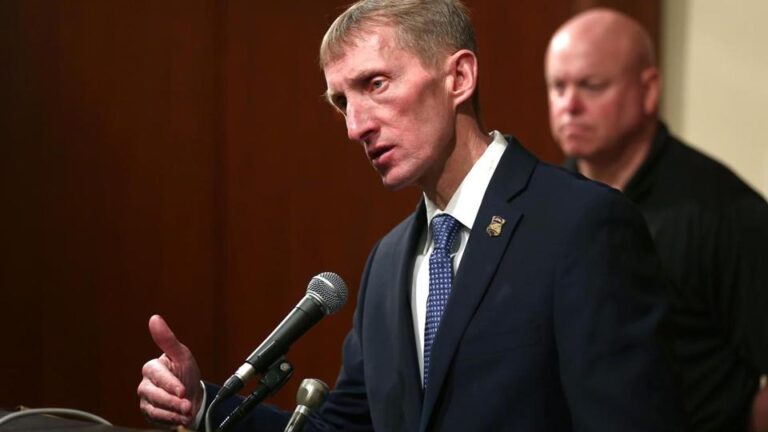
If Tito Jackson wanted attention, he’s getting it from at least one person.In an interview Thursday, Boston Police Commissioner William Evans rejected the criticism from Jackson, a city councilor and mayoral candidate, over the city’s implementation of a police body camera pilot program.“I don’t want to be a political pawn here,” Evans told WGBH’s Boston Public Radio, referring to Jackson’s recently announced campaign against Mayor Marty Walsh, a fellow Democrat.
“I know Tito obviously has to get some attention,” he said.
According to Evans, Jackson came in for “the last five minutes” of a recent two-hour meeting on the pilot program, extended for another six-month period last week.
“I thought we had a great, great meeting on it,” the commissioner said. “When we left there, we didn’t see that people had any complaints with the whole idea of extending it.”
In an interview earlier this week on Boston Herald Radio, Jackson panned the leadership of Evans and Walsh regarding the pilot program and hinted he might drop the commissioner if he becomes mayor.
“The current commissioner is not dealing with this issue of the implementation of body cameras in an acceptable fashion,” Jackson said Tuesday, calling for body cameras to be “fully adopted” in the city.
“We have dragged our feet,” he said.
In response Thursday, Evans said that “some people” went into the pilot program thinking it was “a done deal.” The commissioner said officials hope to use the warmer months to get better data on the effectiveness of the cameras.
“It can be perceived as dragging our feet, but, you know, we want to get it right,” he said.
Evans said comparable cities like Los Angeles and New York, which are generally perceived as having implemented police body cameras, still only had the cameras on a “fraction” of their officers. According to the commissioner, it could cost up to $10 million to equip the city’s police force with body cameras.
“It’s an awful lot of money to go into a program with not having all the data,” he said.
In an appearance Thursday night on Greater Boston, Jackson shot back that body cameras are “proven technology.”
“We are not first to the market on this issue and we, as a city, should continue to lead and not follow in this space,” he said.
During his radio interview earlier Thursday, Evans also took issue with the numbers Jackson provided on shootings in the city. Jackson has repeatedly cited data from a recent Boston magazine report, which found that Boston police make arrests in about 4 percent of nonfatal shootings and 15 percent of fatal shooting.
Evans said last year and the year before the arrest rate on homicides was 70 percent and 63 percent, respectively.
According to Boston, the gap between the statistics Jackson and Evans are citing can be likely attributed to a high arrest rate in non-shooting homicides.
Evans said Thursday that he had “a lot of respect” for Jackson, but that he worried the city councilor getting people “riled up” over the numbers.