

Sign up for the Today newsletter
Get everything you need to know to start your day, delivered right to your inbox every morning.

Marshfield is pressing forward with a legal challenge to the MBTA Communities Act, asking Massachusetts’ highest court to reconsider whether the state housing law burdens towns, and whether it effectively strips local voters of meaningful choice.
The town’s appeal to the Massachusetts Supreme Judicial Court (SJC), which is expected to continue into 2026, focuses on two key arguments: that the law is an “unfunded mandate” and that it disenfranchises voters by forcing municipalities to approve zoning changes without a meaningful “no” vote.
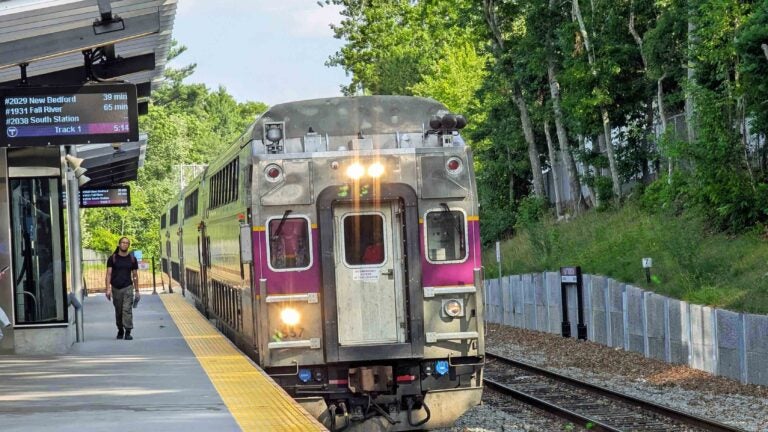
The MBTA Communities Act, passed in 2021, mandates cities and towns near MBTA transit stations adopt zoning laws that allow for more multi-family housing.
While most municipalities have complied or are in the process of doing so, Marshfield initially resisted. The town became the first to sue the state over the law earlier this year.
Marshfield claimed that the law imposes financial burdens on towns without providing adequate funding to cover the costs of compliance, such as infrastructure upgrades.
The town was one of several municipalities that filed lawsuits seeking to either block the mandate or require the state to provide funding. Superior Court Judge Mark Gildea dismissed the suits in May, ruling that the potential costs were too “indirect” to qualify as an unfunded mandate and that state grants could help offset expenses.
Marshfield quickly appealed. In July, the SJC agreed to hear the case.
“The appeal is to test the constitutionality of the law from a little different perspective than it was before,” Marshfield Town Counsel Robert Galvin told Boston.com, “and to determine whether the Act and its regulations constitute an unfunded mandate.
Marshfield’s concerns over financial impacts of compliance are not hypothetical. Galvin said the town has already lost several grants due to its earlier noncompliance, including grants from the Seaport Economic Council for a dredging project, a $45,700 state educational grant, and money earmarked for airport improvements.
Under the appeal, Marshfield is asking the court to consider whether towns should be reimbursed for compliance costs, or excused from compliance until funding is provided.
“Marshfield could seek its costs and expenses in compliance, or be asked to be excused from compliance until it’s provided with the funds in order to comply,” Galvin said.
Another key argument focuses on local voting rights.
Marshfield operates under an open town meeting form of government, where residents act as the town’s legislative body. Voters have the right to vote “yes” or “no” on articles ranging from budgets, zoning amendments, and other major decisions.
The MBTA Communities Act is codified as Section 3A in Chapter 40A of Massachusetts’ General Laws, rather than under the existing Section 3, which exempts certain land uses — such as religious, educational, or agricultural facilities — from local zoning approval.
Because the law is in Section 3A, towns must formally vote to approve local zoning changes to comply. Marshfield’s legal team argues this creates a constitutional problem: if voters reject zoning approval, the state can still penalize the town for noncompliance.
In other words, Marshfield argues that the state is requiring a local vote, but not honoring the outcome if voters say no.
“You always have the right to vote ‘yes’ or ‘no’ [at town meeting],” Galvin explained, “but on this issue, if you voted ‘no,’ the Attorney General was saying that the Commonwealth has a right to force you to do it.”
Galvin said the law should have been placed under Section 3, which would have allowed the state to override local zoning without requiring a town vote.
“If they put it in Section 3, and said it was a subject that the towns can’t regulate, we would have no beef with the Commonwealth,” Galvin said.
Despite the ongoing legal battle, Marshfield is implementing the necessary zoning changes to move forward with compliance. In October, voters approved a 3A zoning proposal during a town meeting, but with a caveat that the fight against the law would continue.
“We intended to continue the fight,” Galvin said. “These are issues that don’t go away just because you pass it. There are constitutional issues and other statutory issues that need to be resolved.”
The next major appeal filings are due in January, and the SJC is expected to hear arguments as early as February.
As of Dec. 19, 2025 about 94 percent of MBTA Communities, or 167 of the 177 municipalities, have adopted zoning or are on track to comply with the law. Ten towns remain non-compliant.

Get everything you need to know to start your day, delivered right to your inbox every morning.




To comment, please create a screen name in your profile
To comment, please verify your email address
Conversation
This discussion has ended. Please join elsewhere on Boston.com