
Sign up for the Today newsletter
Get everything you need to know to start your day, delivered right to your inbox every morning.
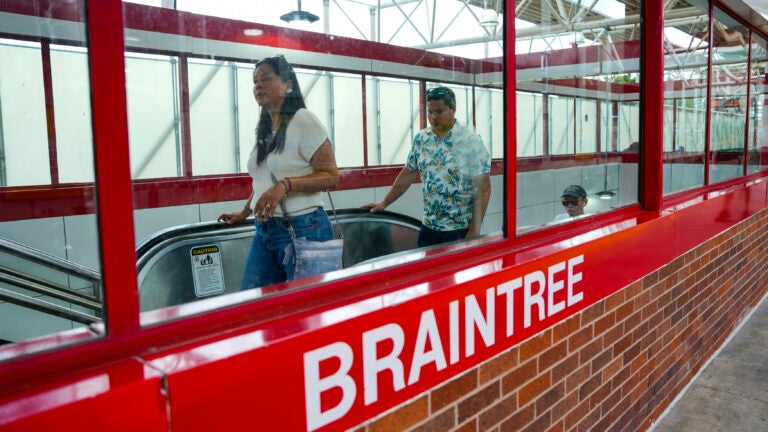
Braintree’s first development permitted under the MBTA Communities Act is moving forward in the approval process — and it is a record-breaking 3A project in Massachusetts so far, a town official told Boston.com.
“This is the biggest MBTA development in the state going on right now,” Peter Matchak, Braintree’s director of planning and community development, told Boston.com.
The $230 million proposal at 10 Plain Street calls for a 752-unit, by-right apartment complex developed by Trammell Crow Residential. The project will be built in two phases: Phase 1 consists of five four-story buildings with 427 units, surface parking, and five single-story detached garage structures. Phase 2, expected a year later, includes a four-story building with 325 units and an integrated parking garage. The complex calls for 1.5 parking spaces per unit. Ten percent of units — or 76 apartments — will be affordable under Chapter 40B regulations.
Trammel Crow Residential did not respond to Boston.com’s request for comment.
According to architectural plans, the development will offer a mix of studios, one-, two-, and three-bedroom units. Amenities include a swimming pool for residents, EV charging stations, a playground, and daytime public parking to provide access to the Monatiquot River.
Because the property lies within Braintree’s MBTA zoning overlay district, and the proposal is allowed by-right, meaning it does not require a special permit to be developed. The state’s MBTA Communities law requires 177 cities and towns to create at least one district where multifamily housing is allowed by-right.
At a Nov. 12 Planning Board meeting, project consultant Karl F. Seidman said the development was estimated to “have a substantial positive fiscal impact” on the town.
Siedman’s peer review of the developers’ fiscal impact analysis, submitted Oct. 17, estimated the project would generate between $733,000 and $1.2 million annually in net tax revenue.
Seidman also highlighted non-financial gains for Braintree, noting the project’s contribution of affordable housing, open-space improvements, and the revitalization of long-dormant industrial land.
“I think it’s a positive project for Braintree that will bring in a new stream of tax revenue for the town, which currently does not exist on that property,” Matchak said.
The 31-acre site was once home to Armstrong World Industries, a factory that manufactured gaskets and foam pipe insulation. After decades of vacancy, the land is now positioned for reuse alongside the town’s ongoing dam removal project – which Matchak said has helped open the property for redevelopment.
“Having [the dam removal] being completed, and this project coming in, does tell a story of redevelopment, or revitalization of that post-industrial era that we are seeing across the state,” he said.
The next public hearing on the project is scheduled for Dec. 9. Matchak estimated that final approval of the development could come within four to six months, after which the project would move into conservation permitting and other pre-construction steps.

Get everything you need to know to start your day, delivered right to your inbox every morning.




To comment, please create a screen name in your profile
To comment, please verify your email address
Conversation
This discussion has ended. Please join elsewhere on Boston.com