
The latest on the Karen Read murder case
Sign up for our Extra newsletter to get updates from the retrial and other breaking news alerts delivered to your inbox.
On the stand Tuesday:
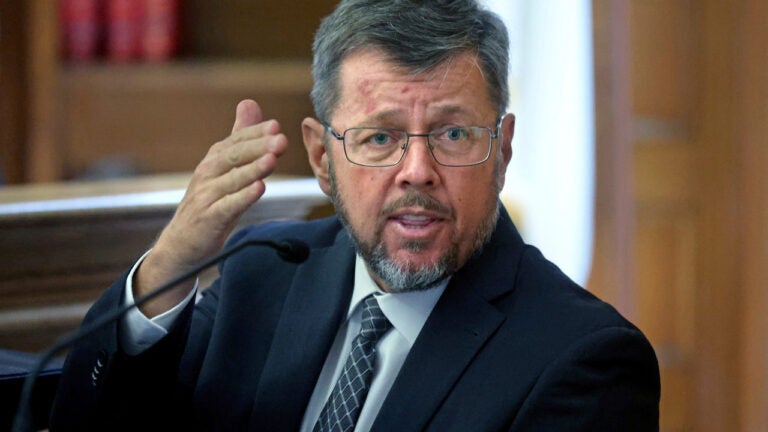
Prosecution accident reconstructionist Judson Welcher told jurors he took a hands-on approach while testing to see whether the wounds on John O’Keefe’s right arm were consistent with Karen Read’s right taillight, almost literally putting himself in O’Keefe’s shoes.
Welcher explained he’s of a similar height and build to O’Keefe and used that fact to his advantage while testing possible collision scenarios. He showed photos and videos of himself dressed in clothing identical to what O’Keefe was wearing when he was mortally wounded on Jan. 29, 2022, down to the same model of sneakers.
He testified earlier Tuesday that data from Read’s SUV indicates she accelerated in reverse around 12:32 a.m. that day, about the same time prosecutors allege she backed into O’Keefe, her boyfriend of two years.
“The triggering event itself was a high-throttle opening in a transition to reverse,” Welcher said of the particular incident Read’s SUV recorded. “It’s a forward motion followed by a higher speed rear motion, and at the end of the trigger event, you’re still at 74% throttle.”
Special prosecutor Hank Brennan then turned his attention to alternate scenarios that could explain the damage to Read’s right rear taillight. The defense team has claimed the damage occurred as Read slowly backed her SUV into O’Keefe’s car while pulling out of his driveway to look for him shortly after 5 a.m. on the 29th. The moment was captured on Ring home surveillance footage from O’Keefe’s driveway, and Welcher testified at great length about studying the video and going frame-by-frame to track the cars’ positions.
“There actually is contact between the vehicles,” he opined, playing the Ring footage for jurors. To support his claim, Welcher highlighted the tire tracks Read’s SUV left in the snow and an area of O’Keefe’s car where the snow was visibly displaced.
“There’s no damage” to O’Keefe’s vehicle, he testified. “So sure, it knocked the snow off, but it wasn’t sufficient to cause damage to his vehicle.”
Welcher said he also ruled out the possibility that Read’s right rear taillight was broken or cracked in the impact, telling jurors he saw “nothing in the snow” after the Lexus pulled out of the driveway and drove off.
“Were you looking for anything in particular?” Brennan asked.
“Of course I was. I was looking for taillight fragments,” Welcher replied. He denied seeing any taillight fragments on the ground in any of the videos he reviewed of O’Keefe’s vehicle after it made contact with the Lexus.
During another line of questioning, Welcher walked jurors through the testing he conducted as O’Keefe’s virtual body double. Displaying photos of himself next to a Lexus SUV comparable to Read’s, Welcher highlighted the height of his head relative to a “wing” ledge at the top of the vehicle’s rear. He testified about covering the SUV’s right taillight in grease paint to determine where his outstretched arm would make contact if he “shuffled” into the back of the vehicle.
According to Welcher, the approximate location lined up with the lacerations on O’Keefe’s right arm. He juxtaposed images of O’Keefe’s arm and his own to underscore his point.
“We don’t know exactly how he was struck,” Welcher later added, noting pedestrian impacts are sensitive to exact angles, such as body posture. He also acknowledged he couldn’t say for certain what angle O’Keefe’s arm was bent at the time of the purported collision.
Welcher testified he repeated his test by having the Lexus back into him at low speeds, noting that even an impact at about 2 mph would cause him to rotate and take a step. Reading from his report, he testified that the location and orientation of O’Keefe’s arm lacerations were consistent with the geometry and orientation of the right taillight on Read’s SUV.
He said his own knee was approximately the same height as the SUV’s bumper, offering a possible explanation for the small abrasion a medical examiner noted on the outside of O’Keefe’s right knee. According to Welcher, the height of the rear “wing” also corresponds with the location of a small laceration on O’Keefe’s right eyelid.
Medical examiner Dr. Irini Scordi-Bello previously testified that O’Keefe’s primary cause of death was blunt impact injuries to the head, and Welcher testified head wounds are the most common injuries in pedestrian impacts. He said O’Keefe’s head injuries, absent jaw or facial fractures, would be “predominantly associated with falls, and not assaults.”
Welcher also told jurors he dropped a crash test dummy backward onto a hard surface as part of his testing. He played a video of the dummy testing and explained that research shows skull fractures can occur at drop heights as low as 40 inches. O’Keefe, he noted, was 73 inches tall.
“Based on all the evidence you’ve considered, could you share with the jury what your opinion is to a reasonable degree of engineering certainty about whether the defendant’s Lexus struck Mr. O’Keefe on Jan. 29, 2022, around 12:32 a.m.?” Brennan asked.
“Based on the totality of the evidence, DNA, everything I’ve talked about, that is consistent with that happening,” Welcher replied. “And with a reasonable degree of scientific certainty, that is what happened.”
Defense attorney Robert Alessi objected, asking Judge Beverly Cannone to strike Welcher’s response from the record. Following a lengthy sidebar, Cannone dismissed jurors for the day and said Welcher will continue his testimony under direct examination at 10 a.m. Wednesday.
With jurors out of the room and Welcher off the stand, Brennan and Alessi continued their arguments over whether the Aperture expert’s last answer of the day was appropriate. Cannone said she will discuss the matter with attorneys Wednesday morning after reviewing Tuesday’s evidence.
Speaking to reporters outside the courthouse Tuesday afternoon, Read seemed skeptical of Welcher’s hands-on methods.
“So he tried to dress identically to John, but didn’t do anything else to mimic what the commonwealth is accusing me of,” she said.
Asked if she accelerated in reverse as Welcher claimed, Read replied, “the data is what the data is, and it’s going to come out cleanly — more cleanly — in our case in chief.”
She added: “I think it’s important to demonstrate, what is the commonwealth accusing me of? The speed? The positioning? Recreate that for us. … That’s what I would want to see if I were you.”
Data from Karen Read’s SUV indicates she accelerated in reverse at 74% throttle around the time prosecutors allege she backed into her boyfriend, John O’Keefe, accident reconstructionist Judson Welcher testified Tuesday.
The Aperture LLC biomechanical engineer and accident reconstructionist walked jurors through data for a trigger event the vehicle purportedly recorded around 12:32 a.m. on Jan. 29, 2022 — the morning O’Keefe died.
According to Welcher, Read’s Lexus traveled forward about 34 feet during the trigger event, paused, and reversed an additional 53 feet from its starting point, for a total distance of 87 feet. The vehicle was “still going” 23 mph when the trigger data stopped recording, he said.
“And you can see that it’s still at 74% throttle,” Welcher added. “So, you know, this is three-quarters of full throttle, in reverse.”
Special prosecutor Hank Brennan began Tuesday’s questioning by having Welcher walk the jury through his professional background, particularly his work around sideswipe collisions, pedestrian collisions, and the biomechanics of low-speed impacts.
At Brennan’s prompting, Welcher explained newer vehicles manufactured by Toyota — Lexus’s parent company — have a device called an “event data recorder,” more commonly referred to as a “black box.” According to Toyota’s website, those EDRs record “information received several seconds before and/or a fraction of a second after a crash or near-crash situation.” Another system in the vehicle, “Techstream,” also records some trigger event data, Welcher noted.
Welcher testified he began looking into Read’s case for the prosecution in the fall of 2024. He ran through a long list of the evidence he’s reviewed, including photographs, videos, summaries of witness testimony, lab reports, and Read’s various media interviews.
Welcher said he also had the opportunity to visit the alleged crime scene at 34 Fairview Road and to personally inspect cars belonging to Read and O’Keefe. He told jurors he even purchased a Lexus SUV identical to Read’s to conduct additional testing.
“You want to have as much information as possible,” Welcher said of his visit to Canton.
He walked jurors through photos from his inspection of Read’s SUV, noting the vehicle’s lower bumper protrudes and had no visible damage to its lower right taillight when he saw it in person.
While prosecutors allege Read damaged her upper right taillight backing into O’Keefe, her lawyers contend she actually did so backing into O’Keefe’s car while leaving his house to search for him the morning of Jan. 29, 2022. Welcher identified a mark on Read’s SUV that he said was “consistent with the contact to Mr. O’Keefe’s vehicle.”
Turning his attention to the “black box” data from Read’s SUV, Welcher said he wasn’t surprised to learn the vehicle’s EDR system contained no relevant data. He explained the system is designed to record collisions that put the vehicle’s occupants at risk, not necessarily pedestrian crashes.
The SUV’s “Techstream” system, on the other hand, is designed to assist in diagnosing maintenance issues, particularly problems with acceleration and deceleration, according to Welcher. He said “Techstream” data from Read’s SUV showed two trigger events on the same key cycle, recording 10-second snapshots for each.
Welcher further testified that data from Read’s SUV showed the vehicle traveled about 36 miles between its purported backup maneuver on Fairview Road and its arrival at the Canton Police Department the evening of Jan. 29, 2022. Aperture used Google Maps to retrace the SUV’s path the morning of the 29th, adjusting for the correct date and time, he said.
Welcher said data from Read’s SUV showed the vehicle’s infotainment system powering up around 12:12 a.m. that morning, with additional data pointing to a three-point turn at about 12:23 a.m. Welcher’s Aperture colleague, Shanon Burgess, testified last week that he used the three-point turn to compare timestamps between Read’s car and O’Keefe’s cellphone, which was tracking location data through Waze at the time.
Welcher reiterated Burgess’s finding that there was a variance of 21 to 29 seconds between Read’s SUV and O’Keefe’s phone. Adjusting for that variance, the backup maneuver would have ended between 12:32 a.m. and four seconds and 12:32 and 12 seconds, he said.
According to Welcher, there was evidence the SUV’s wheels were slipping on the ground during the backup maneuver outside 34 Fairview Road. He said 30% throttle is needed for the vehicle to register a trigger event for a shift in reverse.
Judge Beverly Cannone called a 45-minute lunch recess shortly before 1 p.m. Welcher will return to the stand following the break.

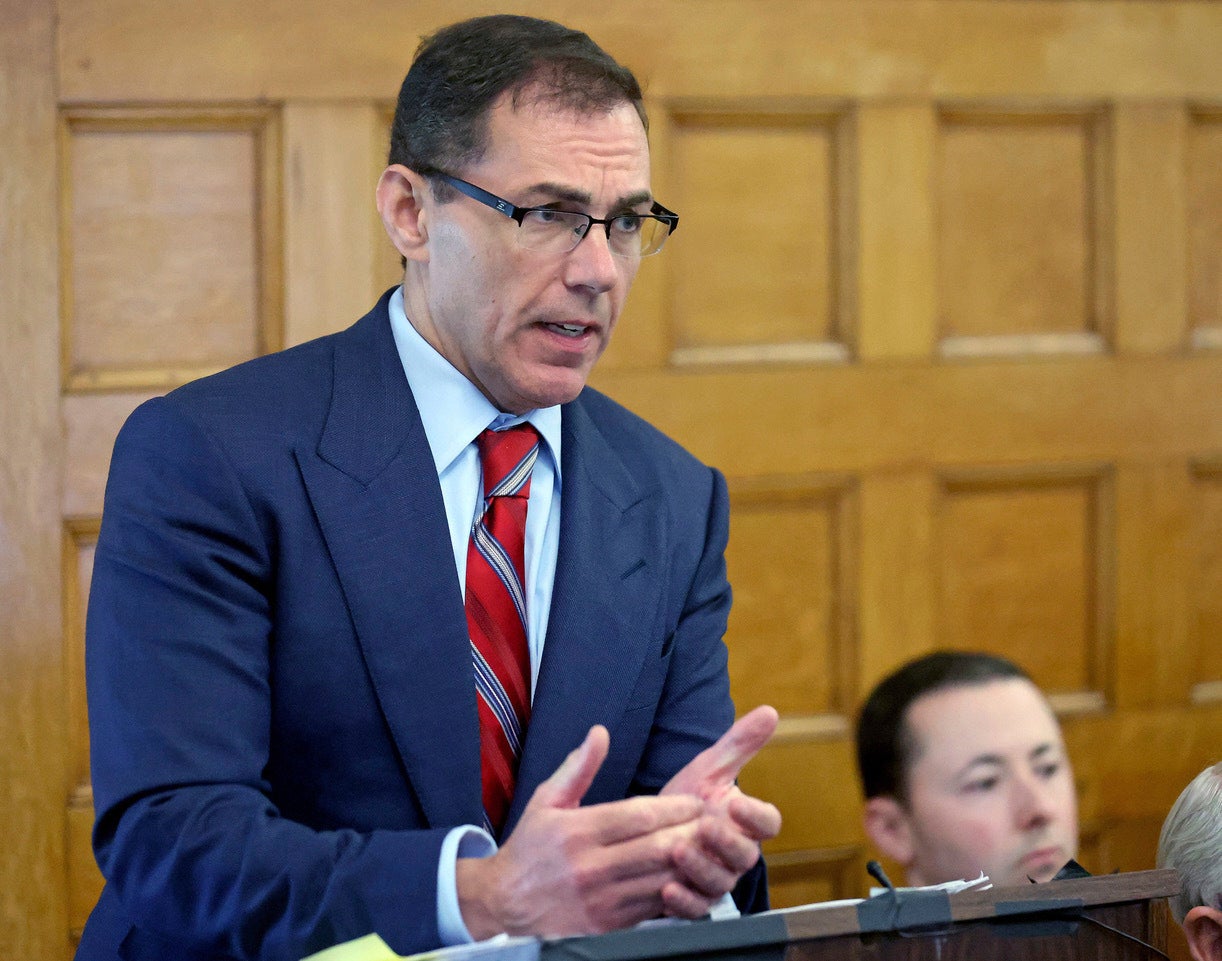
Defense attorney Robert Alessi volleyed sharp questions at prosecution accident reconstructionist Judson Welcher Tuesday morning during a brief voir dire without jurors present.
Alessi confirmed the Aperture LLC expert recently deleted a slide and “removed a couple words” from the presentation he prepared for Karen Read’s retrial. Welcher also told Alessi he’s spoken with several members of the prosecution — including prosecutors Hank Brennan and Adam Lally — multiple times in the past two weeks.
Welcher explained he met with Brennan over the weekend to run through his presentation and said the special prosecutor suggested he delete a slide that contained information about which Welcher wasn’t permitted to testify.
Alessi asked Welcher whether he was aware of issues relating to the “accuracy or inaccuracy” of Aperture colleague Shanon Burgess’s curriculum vitae, and Welcher said he’s been “bombarded” with emails about it. The defense last week grilled Burgess about his lack of a bachelor’s degree and the conflicting information provided in his Aperture biography, LinkedIn page, and CV.
Welcher said he tried to avoid looking at the emails he’s received; most witnesses in Read’s retrial are under sequestration orders.
He confirmed he altered his presentation in light of Burgess’s May 8 supplemental report, adding, “It’s better data.” Alessi, meanwhile, argued the change has “significant effects” on the central issues of Read’s case.
“You understand the consequences of that change, do you sir?” he asked.
Welcher acknowledged the new data “brings [the SUV’s timeline] closer” to timestamps offered by Cellebrite digital forensics expert Ian Whiffin regarding activity on John O’Keefe’s cellphone. He denied the adjustment was “significant,” though.
Following the voir dire, Judge Beverly Cannone called jurors in to hear Welcher’s full testimony.
Livestream via NBC10 Boston.
The sixth week of Karen Read’s murder retrial begins Tuesday in Norfolk Superior Court, with prosecutors expected to wrap their case in the near future.
Read told reporters outside the courthouse last week she expected another week in the prosecution’s case. Once prosecutors rest, Read said her lawyers would offer a “broader and deeper” presentation than they did in her first trial.
“I’m anxious,” she said. “I’m ready to put on our case, which will be more robust than it was last year.”
According to Read, it’s “still TBD” whether the defense will call several key witnesses who testified for the prosecution last year but have yet to take the stand during the retrial. That includes former Massachusetts State Police Trooper Michael Proctor, who led the investigation into the January 2022 death of Read’s boyfriend, Boston Police Officer John O’Keefe. State Police later fired Proctor over his conduct during the investigation, particularly his vulgar texts about Read.
Prosecutors allege Read, 45, backed her SUV into O’Keefe in a drunken rage while dropping him off at a house party in Canton after midnight on Jan. 29, 2022. Yet Read’s lawyers contend she was a “convenient outsider” framed in a vast law enforcement conspiracy to protect the family and friends of homeowner Brian Albert, a fellow Boston police officer. They’ve floated an alternate theory that O’Keefe entered Albert’s home and was beaten, attacked by the family dog, and ultimately dumped outside in the snow.
Jurors last week heard from several witnesses, including a Miami neurosurgeon who opined that O’Keefe’s fatal head injuries were from a fall backward onto hard ground and two DNA experts who compared O’Keefe’s DNA to samples from Read’s taillight and a hair discovered on the vehicle’s rear. Another witness, digital forensics expert Shanon Burgess, alleged that data from Read’s SUV showed a “backing maneuver” at about 12:32 a.m. on the 29th — around the time prosecutors allege Read struck O’Keefe.
But under cross-examination by defense attorney Robert Alessi, Burgess acknowledged the data from the SUV’s so-called “black box” doesn’t, on its own, indicate that a collision occurred on Jan. 29. Elsewhere in his questioning, Alessi picked apart Burgess’s timelines and hammered at his credentials.
Massachusetts State Police Crime Lab forensic scientist Christina Hanley was the last on the stand Wednesday, telling jurors debris from O’Keefe’s clothing contained small pieces of red and clear plastic consistent with the plastic from Read’s taillight. As he launched into his cross-examination, defense attorney Alan Jackson attempted to leave the door open for reasonable doubt by confirming Hanley couldn’t say for certain whether the plastic debris had come from Read’s taillight.
“It may have come from a taillight. It may not have,” he suggested.
“It’s a possibility,” Hanley agreed.
The ongoing trial is Read’s second, after jurors in her first trial returned deadlocked and prompted a mistrial.


Sign up for our Extra newsletter to get updates from the retrial and other breaking news alerts delivered to your inbox.



To comment, please create a screen name in your profile
To comment, please verify your email address
Conversation
This discussion has ended. Please join elsewhere on Boston.com