
The latest on the Karen Read murder case
Sign up for our Extra newsletter to get updates from the retrial and other breaking news alerts delivered to your inbox.
On the stand Wednesday:
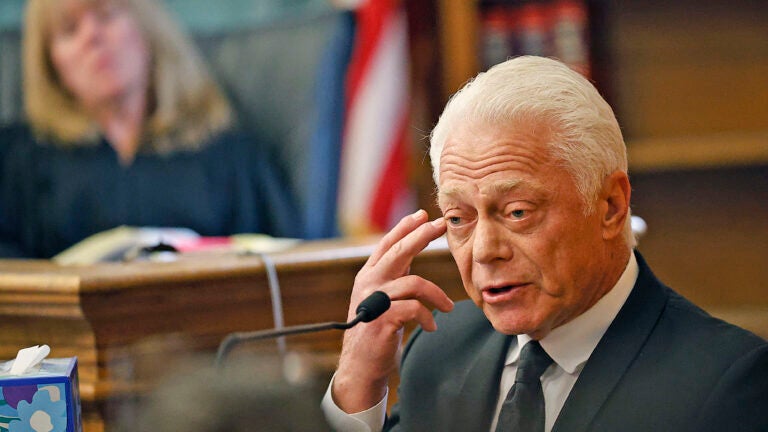
Following the lunch recess, Massachusetts State Police Crime Lab forensic scientist Christina Hanley walked jurors through test results she said deemed Karen Read’s taillight consistent with bits of red and clear plastic found in debris from John O’Keefe’s clothing.
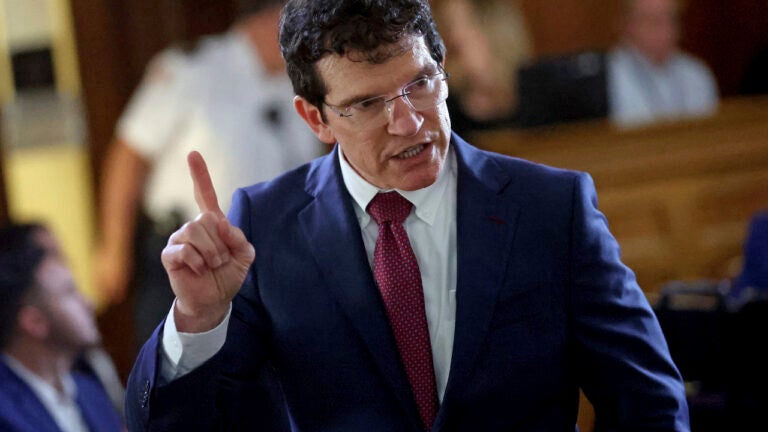
As he stepped up for cross-examination, however, defense attorney Alan Jackson confirmed Hanley wasn’t saying conclusively that the plastic in the debris had come from Read’s taillight.
“It may have come from a taillight. It may not have,” he suggested.
“It’s a possibility,” Hanley acknowledged.
Answering subsequent questions from Jackson, she testified she wasn’t sure the SUV’s taillight was entirely plastic, or whether it might have contained glass. Jackson asked Hanley whether she had seen biological material like skin or blood on any of the evidence she examined, and she said that would fall outside her area of expertise.
“I don’t think I noted anything that would be consistent with that,” she added.
At Jackson’s prompting, she confirmed one of the five pieces of glass found on Read’s bumper was consistent with a shard ex-Trooper Michael Proctor recovered from 34 Fairview Road. Yet as Jackson pointed out, the glass Proctor found was not a match for a broken cup or the other pieces of glass investigators recovered at the scene.
Jackson also confirmed Hanley’s previous testimony that the broken cup did not match two of the glass shards from Read’s bumper. Hanley explained she did not test the other three shards from the bumper due to their size and condition.
“So in sum, not a single piece of glass on that bumper could be connected to that cup, correct?” Jackson asked.
“There was no physical match to the pieces that I compared for physical match from the bumper. There was no physical match to the glass cup,” Hanley replied.
“But the one piece of glass that did match something [from the bumper], came from the same source, was consistent with coming from the same source, was the single piece of glass … bagged by Trooper Michael Proctor, correct?” Jackson asked in a follow-up.
Hanley confirmed the glass Proctor recovered was consistent with the shard in question.
Judge Beverly Cannone dismissed jurors for the day shortly after 3 p.m., telling them Read’s trial is running ahead of schedule. She gave the jury the day off Thursday, issuing an emphatic warning as they left.
“It’s very, very important: Do not discuss this case with anyone,” Cannone said. “Don’t say a word about this case. Don’t let anybody say anything to you about this case. Don’t do any independent research or investigation into this case.”
Testimony will resume Tuesday morning, after Memorial Day weekend.
“I feel great,” Read told reporters outside the courthouse Wednesday as she reflected on the fifth week of her retrial. “I’m anxious; I’m ready to put on our case, which will be more robust than it was last year.”
She told trial watchers to expect more witnesses and a “broader and deeper” case from the defense team. It’s still up in the air whether Read’s lawyers will call several key witnesses who testified for the prosecution last year but have yet to take the stand this time around.
“TBD,” Read said when asked if the defense will call Proctor, the embattled former trooper who led the investigation into O’Keefe’s death. “Still TBD.”
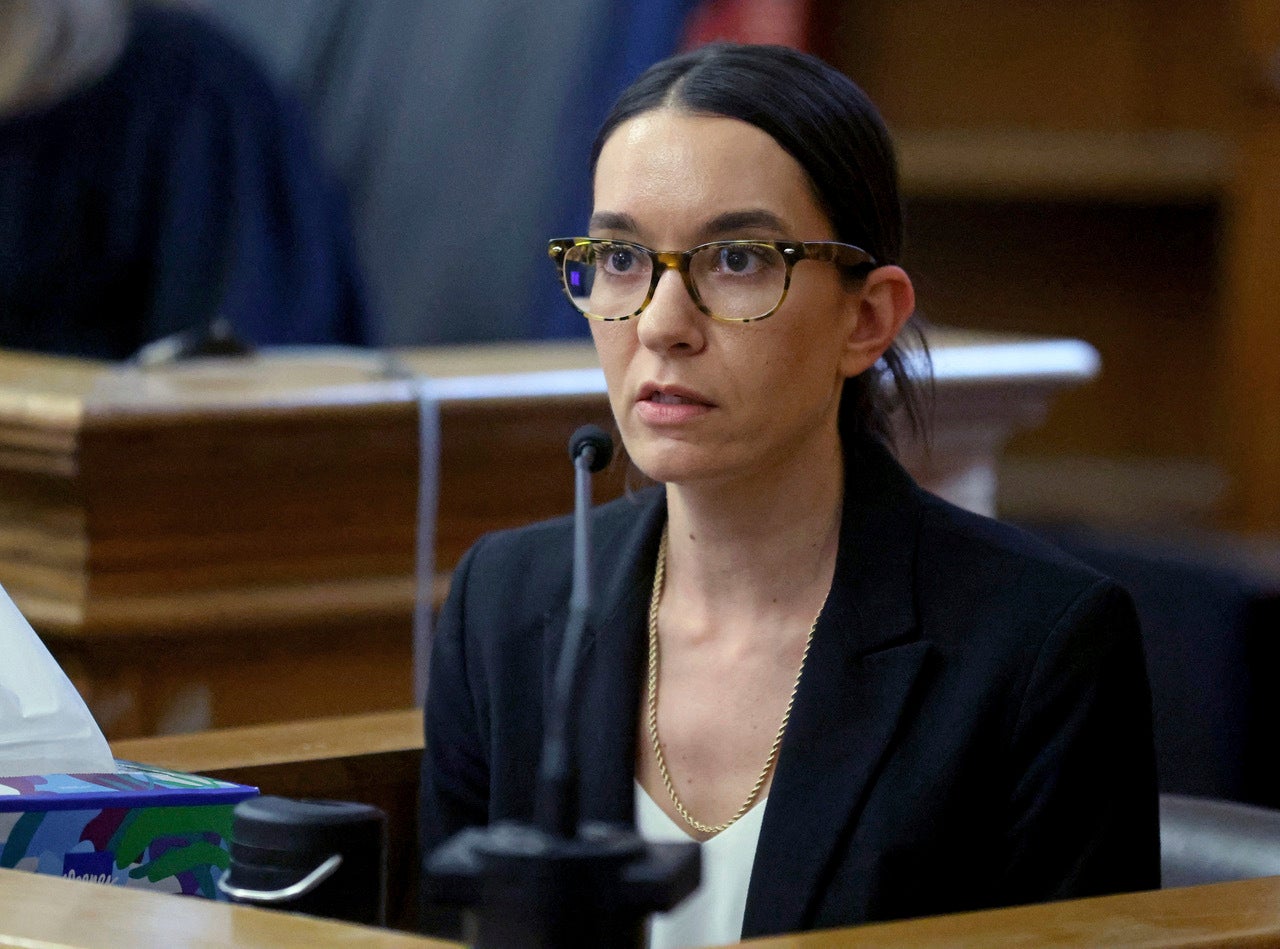
Debris from John O’Keefe’s clothing contained small bits of clear and red plastic consistent with the plastic from Karen Read’s taillight, according to Massachusetts State Police Crime Lab forensic scientist Christina Hanley.
Hanley returned to the stand Wednesday afternoon to continue her testimony about the analysis she performed on pieces of glass and plastic in connection with Read’s case.
She told jurors the miniscule pieces of plastic found on O’Keefe’s clothing measured just a fraction of an inch in width and length, with the largest piece of red plastic “roughly the size of a grain of rice.” Both types of plastic were consistent with Read’s taillight, meaning they could have originated from the taillight “or from another source with the same characteristics,” Hanley explained.
Earlier, she testified about matching six glass shards recovered from the scene at 34 Fairview Road to a broken drinking glass found outside the home following O’Keefe’s death. In other words, she said, the pieces had a “jigsaw” fit and were at one point together as part of a larger unit.
However, Hanley testified the broken cup did not match two shards of glass found on Read’s bumper. She said she did not test the other three pieces of glass from Read’s bumper due to their size and condition.
Judge Beverly Cannone called a lunch recess shortly after 1 p.m. Hanley will return to the stand after the break.
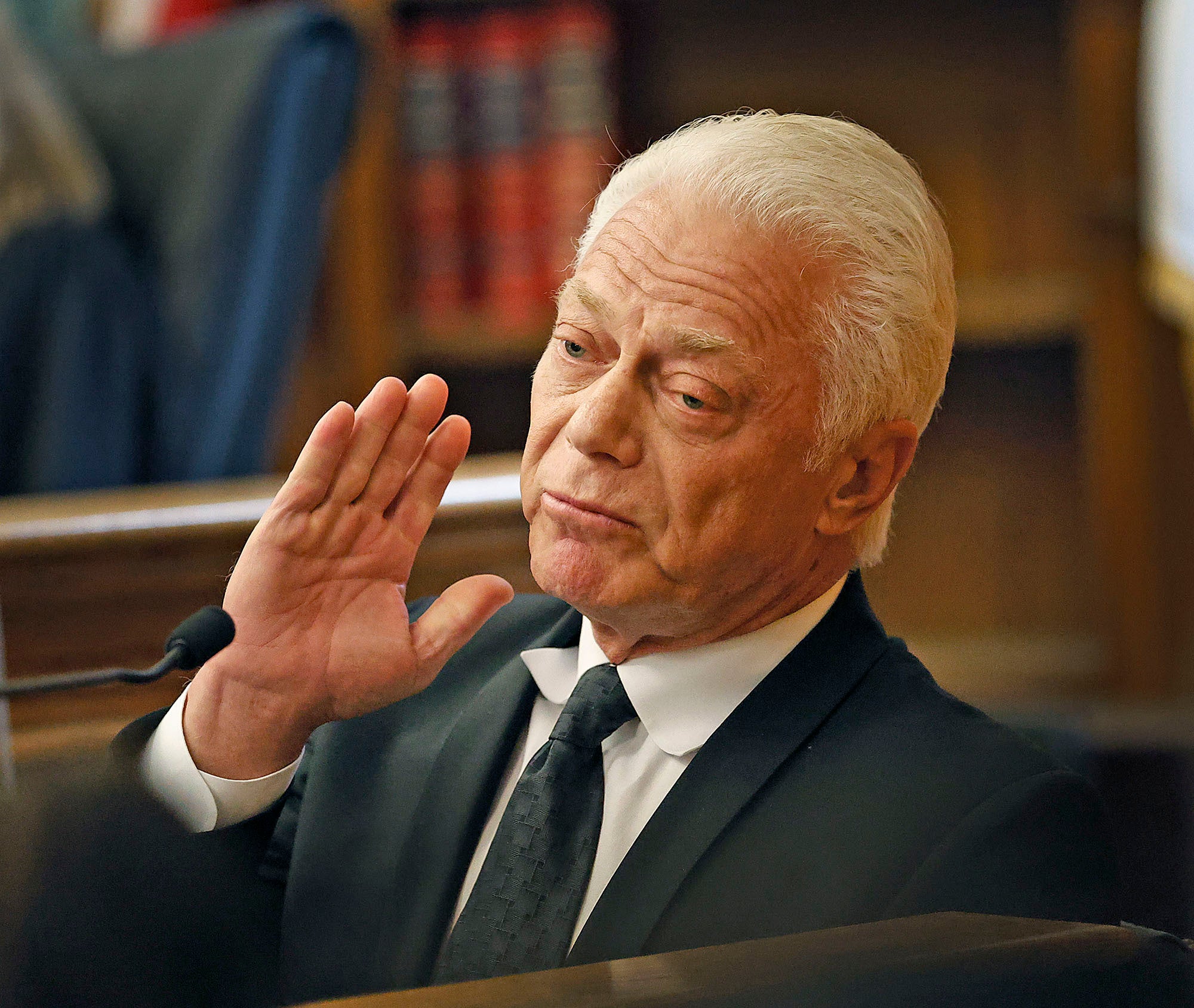
John O’Keefe’s fatal head injuries were from a fall backward onto hard ground, a Miami neurosurgeon opined Wednesday.
“The only way he could get this kind of an injury was to fall backwards, hit the back of his head, and then the resulting, you know, energy forces going into his brain and to the base of his skull,” Dr. Aizik L. Wolf told jurors.
An active brain surgeon, Wolf estimated less than 1% of his income comes from serving as a witness or consulting on court cases.
“I don’t do this for a living,” he added.
Special prosecutor Hank Brennan questioned Wolf about his research and clinical work around brain injuries, and Wolf also testified he reviewed reports and autopsy photos from the criminal case against Karen Read, O’Keefe’s girlfriend and alleged killer. Medical examiner Dr. Irini Scordi-Bello testified last week that O’Keefe’s official cause of death was blunt impact injuries to the head and hypothermia.
Brennan displayed a photo of a laceration to the back of O’Keefe’s head and had Wolf describe the injuries he observed.
“It was a classic linear basilar skull fracture,” Wolf testified, adding, “basically the base of your skull is what it encompasses.”
Brennan then asked Wolf to walk jurors through what happens when someone sustains this type of head injury.
“What happens is you fall backwards,” Wolf explained. “The skull hits the ground. It gets, in layman’s terms, mashed a little bit. And then the brain moves forward as a response to that.”
He continued: “The brain is being thrust forward at a fairly good speed, and it’s getting bruised.”
Wolf described the cut on the back of O’Keefe’s head as a “classic blunt trauma laceration” and said the injury would not require a fall onto a ridged surface, as Read’s attorneys previously suggested.
Asked whether O’Keefe’s head injury could result from an attack with a weapon, such as a bat or hammer, Wolf pointed to the lack of a depressed skull fracture. He said blunt trauma “the way he had” would cause the head injury O’Keefe sustained without a depressed skull fracture.
According to Wolf, O’Keefe’s orbital fractures occurred as a result of his head trauma.
“As he fell backwards and he struck his head — he was clearly at a very high speed generated by the gravity — the bone, depending on the quality of his bone, the density, then generated forces,” Wolf explained.
He also identified signs of “raccoon eyes,” or periorbital ecchymosis, in a photo that showed O’Keefe’s bruised and swollen eyelids.
Wolf said it’s impossible to know whether the head injuries immediately knocked O’Keefe unconscious. However, O’Keefe’s injuries were “very substantial,” and it’s more probable than not that he quickly lost consciousness or the ability to perform “functional” activities such as calling for help, Wolf testified.
He said someone in that state could still move, albeit not intentionally. Wolf further testified that traumatic head injuries often don’t kill someone immediately, as it’s a “process” that involves brain swelling and the eventual death of the brain stem.
Wolf told jurors he didn’t believe O’Keefe died immediately after sustaining his head injuries, though similarly traumatic head injuries have a high rate of mortality.
During a brief cross-examination, Wolf told defense attorney Robert Alessi he does not perform autopsies as part of his regular duties, adding, “I am not a forensic pathologist. I’m a brain surgeon.”
“I see more brains than a forensic pathologist,” Wolf testified.
Responding to a subsequent question from Alessi, Wolf confirmed a laceration on O’Keefe’s right eyelid wasn’t related to O’Keefe’s “raccoon eyes.”
After jurors filed back into the courtroom Wednesday morning, Judge Beverly Cannone asked them one of her three standard questions, confirming they were able to refrain from independent research or investigation into Karen Read’s case.
Cannone also typically asks jurors whether they’ve refrained from discussing the case with anyone and whether they’ve seen, heard, or read anything about the case. However, she skipped those inquiries after questioning all 18 jurors individually at sidebar.
“We’ve discussed the other two questions,” Cannone explained.
She said it’s important jurors refrain from discussing or making comments about the trial and do not allow others to talk to them about the case.
“That means each other,” the judge added.
Special prosecutor Hank Brennan then called Dr. Aizik L. Wolf of Miami Neuroscience Center to the stand.
Wednesday’s court proceedings got off to an unusual start as Judge Beverly Cannone told jurors they would each need to be questioned individually at sidebar.
“An issue has come to my attention that is going to make it necessary that I talk to each one of you individually over at sidebar with counsel. So that process will take a little while,” Cannone told the jury. “Don’t speculate as to what I’m going to talk to you about.”
She then sent jurors out of the room and cleared the courtroom of reporters and spectators.
The announcement followed a lengthy sidebar discussion, during which Cannone appeared to be briefing prosecutors and defense attorneys.
Livestream via NBC10 Boston.
Testimony in Karen Read’s murder retrial continues Wednesday in Norfolk Superior Court as prosecutors enter the home stretch.
Read told reporters outside the courthouse Tuesday she expects “probably a week” more in the prosecution’s case. Once prosecutors rest, defense attorneys will have their turn to call witnesses and make their case for Read’s innocence.
Read, 45, is charged in the January 2022 death of her boyfriend, Boston Police Officer John O’Keefe. Prosecutors allege she was driving drunk after a night of bar-hopping and deliberately struck O’Keefe with her SUV while dropping him off at an afterparty in Canton.
Read’s lawyers, meanwhile, say she was framed in a widespread law enforcement conspiracy intended to protect the family and friends of homeowner Brian Albert, a fellow Boston police officer. They’ve suggested O’Keefe was attacked after entering Albert’s home after midnight on Jan. 29, 2022.
Tuesday’s court proceedings left off with Massachusetts State Police Crime Lab forensic scientist Christina Hanley on the stand. Judge Beverly Cannone sent jurors home for the day with Hanley midway through her testimony about the testing she performed on pieces of glass and plastic in Read’s case.
Hanley is expected back on the stand Wednesday, though jurors will first hear from another prosecution witness set to testify out of order. A court official told reporters Tuesday the next witness is a doctor, but did not provide a name. Special prosecutor Hank Brennan in his opening statement teased testimony from a neurosurgeon and an independent crash reconstructionist, neither of whom has taken the stand.
Jurors heard from Aperture LLC digital forensics expert Shanon Burgess earlier in the week, with Burgess testifying at length about the data recovered from Read’s SUV. He alleged “essentially all” user data from Read’s SUV was missed during an initial download of the vehicle’s chips, although a closer inspection revealed an overlooked microSD card. According to Burgess, data from Read’s SUV indicated the vehicle made a “backing maneuver” that ended between 12:32 a.m. and four seconds and 12:32 a.m. and 12 seconds on the 29th — around the time prosecutors allege Read struck O’Keefe.
Under a blistering two-day cross-examination, however, defense attorney Robert Alessi repeatedly hammered at Burgess’s credentials. Alessi pointed out Burgess lacks a bachelor’s degree, despite conflicting information on Aperture’s website, some iterations of his curriculum vitae, and his personal LinkedIn page. Alessi also revisited Burgess’s timelines for “power on” and “power off” events recorded by Read’s SUV on the 29th, arguing the expert’s timelines were off by 24 hours and mistakenly listed a date of Jan. 30, 2022.
None of the information from the so-called “black box” in Read’s SUV “indicates that there was a collision on Jan. 29, does it?” Alessi asked in a later question.
“Not by itself, correct,” Burgess answered.
The ongoing trial is Read’s second. Cannone declared a mistrial last July after jurors in Read’s first trial returned deadlocked.


Sign up for our Extra newsletter to get updates from the retrial and other breaking news alerts delivered to your inbox.



To comment, please create a screen name in your profile
To comment, please verify your email address
Conversation
This discussion has ended. Please join elsewhere on Boston.com