
The latest on the Karen Read murder case
Sign up for our Extra newsletter to get updates from the retrial and other breaking news alerts delivered to your inbox.
On the stand Tuesday:
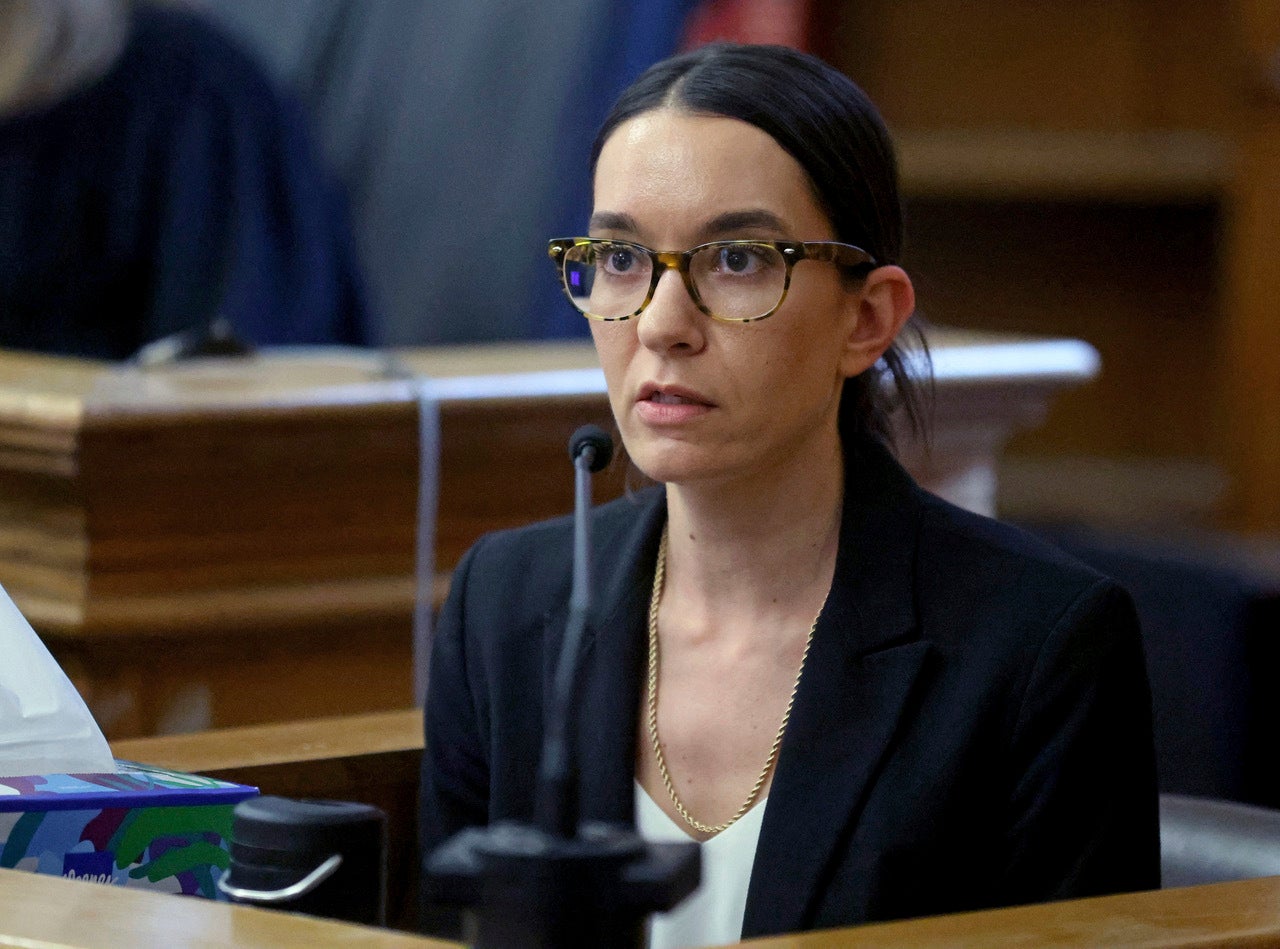
Taking the stand Tuesday afternoon, Massachusetts State Police Crime Lab forensic scientist Christina Hanley told jurors she compared several pieces of glass recovered from Karen Read’s bumper and the scene outside 34 Fairview Road.
Hanley testified she was tasked with performing a physical match analysis on the glass in connection with Read’s case, also receiving some items of plastic for comparison. She said the items she examined included a broken drinking glass found outside 34 Fairview Road, which had “dirt debris on the exterior and interior of the cup.”
According to Hanley, a physical match is when broken, irregular pieces “have a jigsaw fit.” She testified six glass shards recovered from Fairview Road were a physical match for the broken drinking glass. However, Hanley said the cup did not match two shards of glass she analyzed from Read’s bumper.
She told jurors she sampled one of the pieces from the bumper “to do further microscopic and analytical analysis on and do a comparison with one of the pieces from the road.”
Hanley was midway through her testimony when Judge Beverly Cannone dismissed jurors for the day at 3:40 p.m. Hanley will return for additional testimony Wednesday.
Following the lunch recess, special prosecutor Hank Brennan turned his attention to a three-point turn Aperture expert Shanon Burgess identified as one of two trigger events Karen Read’s SUV recorded the morning of Jan. 29, 2022.
Burgess tracked the SUV’s path using location data from an iPhone belonging to Read’s boyfriend, John O’Keefe. He reiterated that the variance in the clocks on Read’s vehicle and O’Keefe’s cellphone was between 21 to 29 seconds.
At Brennan’s prompting, Burgess reminded jurors his analysis determined another trigger event, a “backing maneuver,” ended between 12:32 a.m. and four seconds and 12:32 a.m. and 12 seconds. Burgess confirmed Read’s SUV was reversing at the time, though he did not recall how fast the vehicle was traveling.
Returning for additional questioning, defense attorney Robert Alessi asked Burgess whether he discussed the case with anyone between leaving the stand Monday and continuing his testimony Tuesday. Burgess said he did not.
Responding to a subsequent question, Burgess said he was not aware of any court filings — in Read’s case or others — that misrepresented his educational background.
However, Alessi pointed to a copy of Burgess’s curriculum vitae filed in a federal case out of Texas, which listed a graduation year of 2024 for a University of Alabama at Birmingham bachelor’s degree — a degree Burgess does not hold. Burgess noted the CV was filed in 2023, explaining the date listed was an expected graduation year.
“It’s just a statement, right?” Alessi asked. “There’s nothing after it that explains what’s intended, correct?”
“Correct,” Burgess replied.
Pointing to a different iteration of Burgess’s CV submitted for Read’s case, Alessi asked, “You know how to write ‘currently pursuing’ on your CV, correct?”
“Correct,” Burgess confirmed.
Burgess also acknowledged the CV filed in the federal case featured an “error,” listing a type of bachelor’s degree the University of Alabama at Birmingham does not offer.
Brennan returned for a few more questions, asking Burgess whether he submitted the erroneous CV to the federal court in Texas. Burgess said he did not and also denied seeing the document beforehand.
Asked why he didn’t complete his degree in 2024 as planned, Burgess’s answer was simple: “Work, family, and life.” He denied representing to any court that he held a degree he hadn’t actually obtained.
As Burgess left the stand, Brennan played three clips from Read’s various interviews with media outlets. In one clip, she talked about making a three-point turn after mistakenly passing a street on the way to 34 Fairview Road. In another, she alleged her SUV could be heard pulling into O’Keefe’s driveway during a 12:41 a.m. voicemail she left on O’Keefe’s phone the morning of the 29th.
Speaking to an off-camera interviewer in a third clip, Read also estimated the time of O’Keefe’s death, stating, “We think he died right around 12:25, 12:30 … [in the] early morning of Jan. 29.”
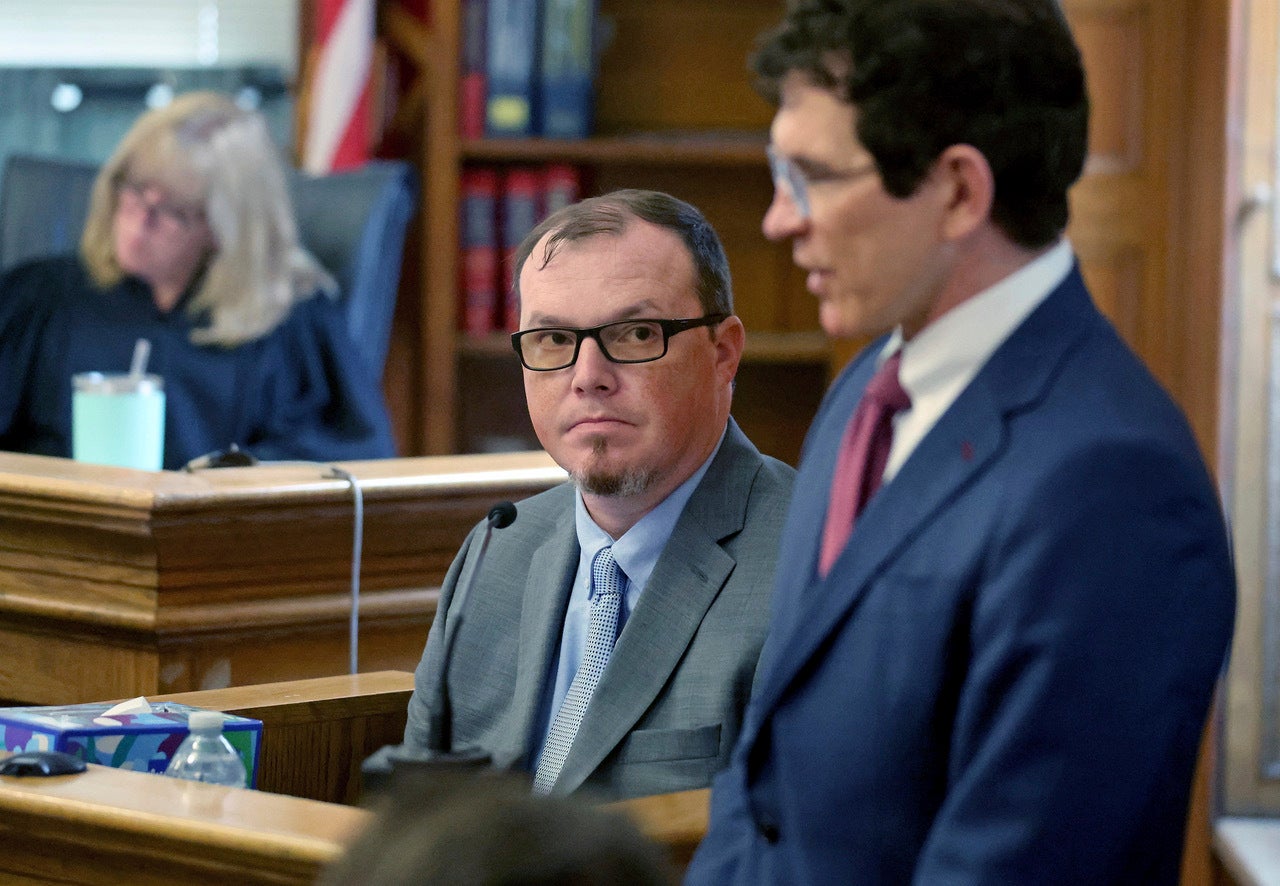
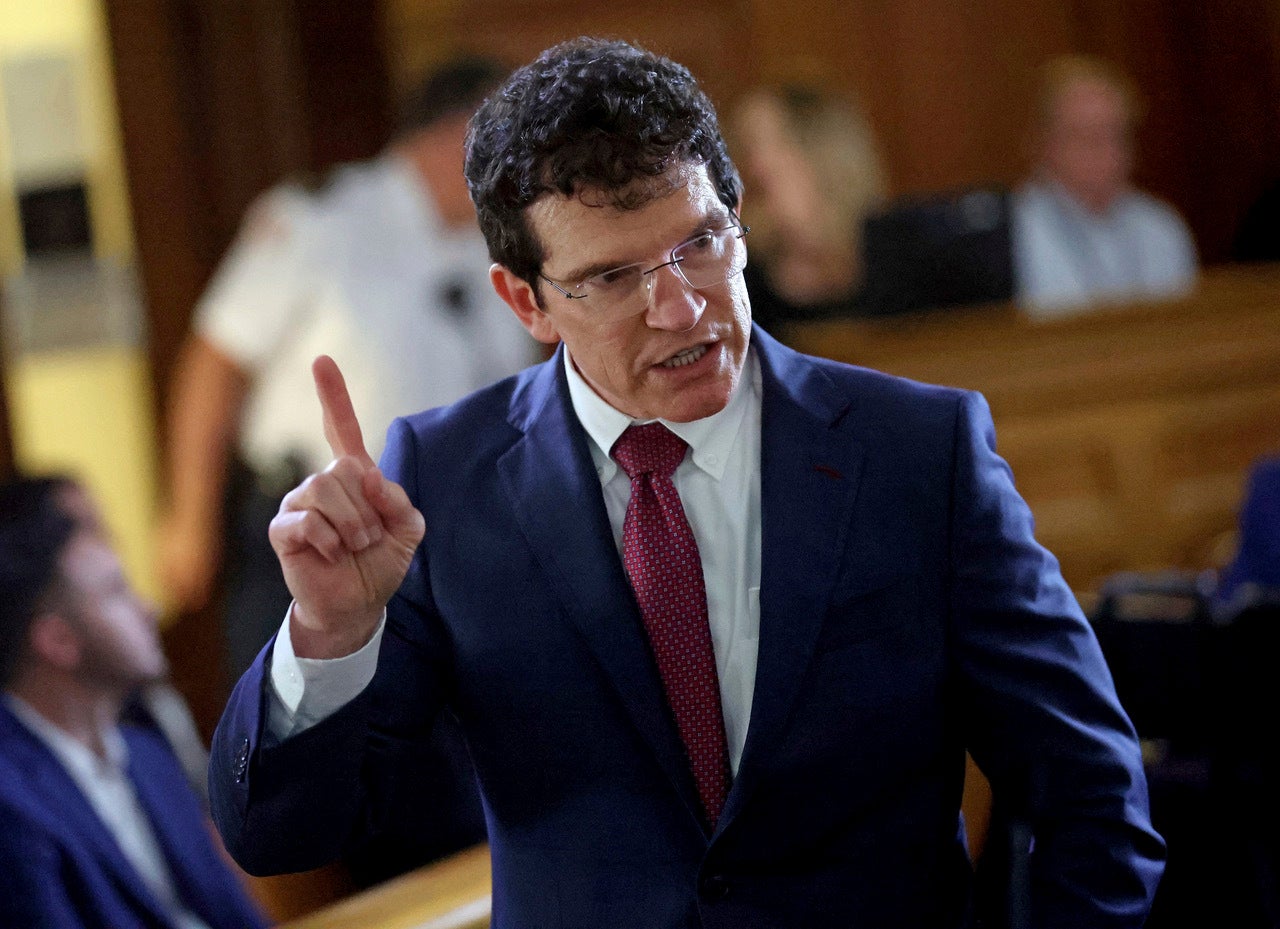
Defense attorney Robert Alessi pored over Aperture expert Shanon Burgess’s timelines Tuesday with a scrupulous eye, highlighting Burgess’s apparent confusion over the most vital date in Karen Read’s murder case.
Alessi began by reminding jurors that special prosecutor Hank Brennan did not ask Burgess on direct examination about his “supposed education,” a pointed remark about Burgess’s lack of a bachelor’s degree and the conflicting information provided in his staff biography, LinkedIn page, and curriculum vitae.
Alessi stressed the importance of accuracy and reliability in digital forensics, particularly during a criminal case.
“And accuracy and reliability are especially important when seconds and minutes matter, as they matter and as you testified to in this case, correct?” he asked.
“Correct,” Burgess replied.
Alessi revisited Burgess’s timelines for “power on” and “power off” events recorded by Read’s SUV on Jan. 29, 2022 — the day prosecutors allege she struck her boyfriend, John O’Keefe. He asked Burgess whether his timelines were accurate “down to the second,” and Burgess testified they were.
“In point of fact, Mr. Burgess,” Alessi fired back, none of the timelines “are accurate at all, and certainly not down to the second. Am I right or am I wrong?”
“You’re wrong,” Burgess answered.
Alessi contended the timelines were off by exactly one day, noting Burgess’s presentation indicated a 24-hour window beginning the evening of the 29th. Burgess suggested he could have misspoken earlier in his testimony, incorrectly stating the events happened on the 30th.
Alessi continues to pick apart expert’s timelines
Further into his questioning, Alessi noted Burgess’s January report did not issue any opinion or conclusion as to the timing of two “Techstream,” or trigger, events recorded by Read’s SUV after midnight on the 29th.
The analysis did, however, compare the call logs on Read’s SUV and O’Keefe’s iPhone to determine whether there was a variance between the clocks on both devices, Alessi said. He displayed a table indicating smaller variances than the range of 21 to 29 seconds Burgess offered Monday, accusing Burgess of failing to apply the smaller range to the SUV’s trigger events.
Yet as Brennan stepped up for redirect examination, Burgess testified that some of the calls recorded on the call log happened when the SUV was powered off, meaning the timestamps with a smaller variance actually reflected Read’s phone syncing with her car.
“If you’re using the one- and two-second offsets, that could be misleading, because it’s not actually comparing the Lexus clock with the iPhone clock for Mr. O’Keefe,” he testified.
Burgess told jurors Monday that, adjusted for the clock variance, Read’s SUV made a “backing maneuver” that ended between 12:32 a.m. and four seconds and 12:32 a.m. and 12 seconds. But as Alessi pointed out, fellow Aperture expert Judson Welcher put the start of the trigger event at 12:31 a.m. and 38 seconds and the end at 12:31 a.m. and 43 seconds.
Alessi also cited a separate report from prosecution digital forensics expert Ian Whiffin indicating user activity on O’Keefe’s iPhone around 12:32 a.m.
Burgess explained the times came from different sources — Read’s SUV versus O’Keefe’s phone — and repeatedly suggested the conflicting timestamps were based on an “unadjusted clock.” Pressed by Alessi, he confirmed Welcher did not use the term “unadjusted clock” in his analysis.
“Is there any danger in comparing two times if you don’t consider the clocks that they came from?” Brennan later asked during his redirect.
Yes, Burgess replied.
Burgess’s supplemental report back under the microscope
Under cross-examination, Burgess testified that a March report from defense expert Matthew DiSogra offered inaccurate findings and served as a catalyst for Burgess’s own supplemental May 8 report.
Alessi argued three separate reports from Welcher, Whiffin, and DiSogra established the “backing maneuver” trigger event happened before O’Keefe’s phone registered its final user activity after midnight on Jan. 29.
“Using unadjusted timestamps or inaccurately adjusted timestamps,” Burgess shot back. He also disputed Alessi’s claim that his supplemental report “departed” from his original findings, adamant that the document merely offered clarification.
Alessi confirmed Burgess’s May 8 report used Read’s three-point turn as an “anchor” between the clocks on the SUV and O’Keefe’s phone.
“Isn’t what you did … a classic example of confirmation bias, which is to be avoided in science?” Alessi asked.
“No, it is not,” Burgess testified.
Alessi alleged that relying on the three-point turn was the only way Burgess could slot the “backing maneuver” trigger after O’Keefe’s phone locked for the last time at 12:32 a.m.
“The adjustment is the only adjustment that can be applied due to the data, yes,” Burgess replied.
At Alessi’s prompting, Burgess also confirmed his May 8 report did not mention an offset of three seconds between the SUV’s ignition and its infotainment system powering up.
“And, in fact sir, nowhere — nowhere — in your May 8 report do you even discuss why you’re not addressing that three-second [offset], do you?” Alessi asked.
“I do not discuss it, but that offset is adjusted within the adjustment that we do with the three-point turn,” Burgess testified.
Did Read’s ‘black box’ indicate a collision?
In a subsequent line of questioning, Alessi asked Burgess whether he had any understanding of what Welcher addressed in his presentation for Read’s case. Burgess said he did not.
“So you have no idea what your colleague, Dr. Welcher, who’s working on the same case, was addressing in his slide presentation?” Alessi pressed.
“Generally, yes, but I cannot speak to it,” Burgess replied.
Alessi highlighted Burgess’s use of the term “collision” in his supplemental report, asking where Burgess had gotten the notion of a crash.
“That would have been from crash reports,” Burgess replied, pointing to reports from Massachusetts State Police.
Fielding a series of follow-up questions from Alessi, he confirmed not every “Techstream” or trigger event recorded by the SUV necessarily indicated a collision. Following the morning recess, Alessi asked Burgess whether he was aware Read’s SUV logged approximately 30 “Techstream” events in the roughly eight months she owned the vehicle. Burgess said he was not.
None of the information from the so-called “black box” in Read’s SUV “indicates that there was a collision on Jan. 29, does it?” Alessi asked.
“Not by itself,” Burgess replied. “Correct.”
Brennan seeks to clear up question of Burgess’s credentials
With Brennan back up for redirect examination, Burgess confirmed he knew the witness sequestration order in place for Read’s trial meant he couldn’t watch, discuss with attorneys, or review other witnesses’ testimony.
As for his LinkedIn profile, Burgess testified Monday was the first time he learned the page was incorrect and hadn’t been updated recently. Burgess also said he’s not involved in Aperture’s website design or content, nor does he know where the website derives its information for staff bios.
Brennan pointed to two different iterations of Burgess’s CV, which indicated he is “currently pursuing” a bachelor’s degree. Burgess further testified he’s never represented in any court proceeding that he’s received a bachelor’s degree.
Answering follow-up questions, he confirmed a bachelor’s degree is not a necessity in his field of digital and vehicle forensics. Brennan named Bill Gates and Steve Jobs as examples of two successful tech giants who lacked college degrees, earning muted chuckles from some in the courtroom and a swift objection from the defense table.
“Do you leave stuff in or out of a report if you find it helpful or hurtful to one side?” Brennan asked in a subsequent question.
“No, I do not,” Burgess testified. He confirmed he’s always felt encouraged to provide all available information, regardless of where it leads.
Burgess and Brennan also began picking apart DiSogra’s findings at length before Judge Beverly Cannone called a lunch recess around 1 p.m.
Livestream via NBC10 Boston.
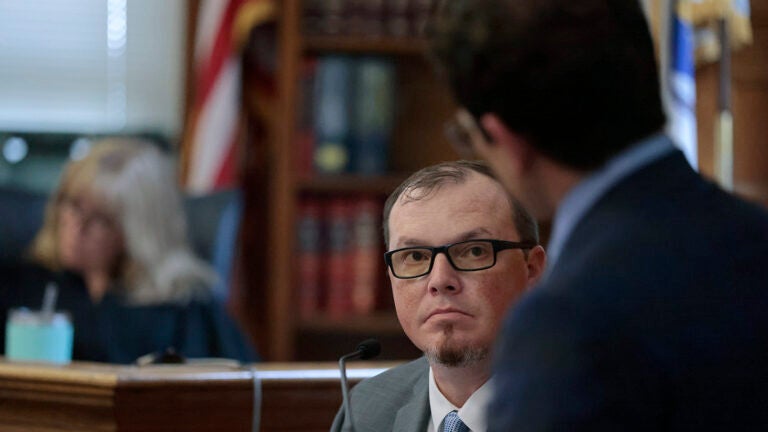
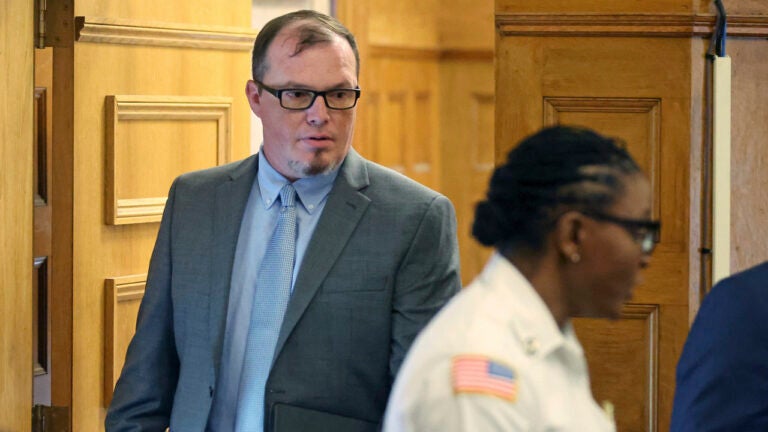
Following an afternoon of blistering cross-examination, Aperture LLC expert Shanon Burgess returns to the stand Tuesday in Karen Read’s murder retrial.
Burgess, who specializes in vehicle and cellphone forensics, first began working with prosecutors on Read’s case in October 2024. He testified Monday that “essentially all” user data from Read’s SUV was missed during an initial download of the vehicle’s chips, though closer inspection revealed a microSD card that had been overlooked.
He cited two “Techstream,” or “triggering,” events on the vehicle from Jan. 29, 2022 — the day prosecutors allege Read drunkenly and deliberately backed her SUV into her boyfriend, Boston Police Officer John O’Keefe. Those triggers included a three-point turn and a “backing maneuver,” Burgess testified.
Read, 45, is accused of ramming O’Keefe with her SUV while dropping him off at an afterparty in Canton following a night of bar-hopping. Her lawyers say she was framed in a coverup, suggesting O’Keefe was actually beaten inside the home and afterparty guests conspired with law enforcement to pin the blame on Read.
Burgess told jurors the “backing maneuver” Read’s SUV made ended between 12:32 a.m. and four seconds and 12:32 a.m. and 12 seconds, based on O’Keefe’s phone data. Another prosecution digital forensics expert, Ian Whiffin, previously testified O’Keefe’s phone logged its last movement at about 12:32 a.m. on the 29th.
Stepping up for cross-examination, defense attorney Robert Alessi called Burgess’s methodology and credentials into question, noting he lacks a bachelor’s degree despite conflicting information on his Aperture staff bio, some iterations of his curriculum vitae, and his personal LinkedIn page.
Alessi also reminded jurors Burgess mixed up bytes and bits in his initial protocol for additional testing of data from Read’s SUV, though Burgess testified he corrected his mistake early on in the process.
Burgess further disputed Alessi’s claim that he had “enlarged” the clock variance between Read’s SUV and O’Keefe’s cellphone, which Burgess said was between 21 to 29 seconds. He told jurors a supplemental report he issued on May 8 — well after Read’s retrial had started — included “clarifications” but did not change his original analysis.
The ongoing trial is Read’s second, after jurors in her first trial returned deadlocked and prompted a mistrial.


Sign up for our Extra newsletter to get updates from the retrial and other breaking news alerts delivered to your inbox.


To comment, please create a screen name in your profile
To comment, please verify your email address
Conversation
This discussion has ended. Please join elsewhere on Boston.com