
Here’s some travel advice from a crisis-response expert after the Paris attacks
The best thing you can do as a traveler is to be cognizant of signals or warning signs that danger is imminent.
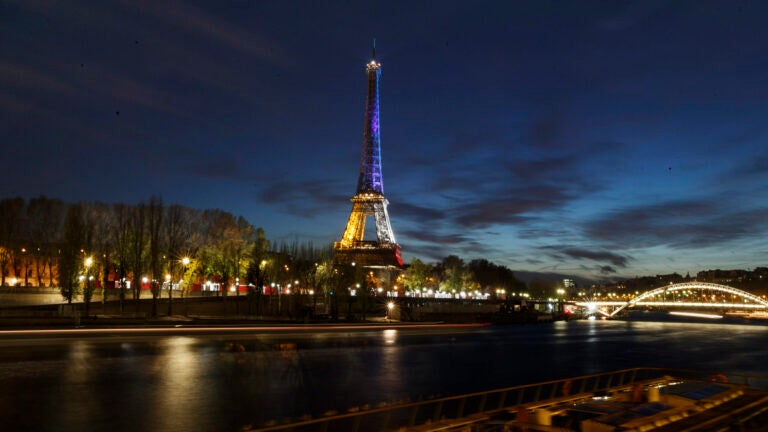
The US State Department issued a worldwide travel alert on Monday warning American citizens to “exercise vigilance’’ while in public places and when traveling — particularly during the holiday season.
The alert is effective through February 2016.
If you’ve booked an upcoming trip to Europe, you may be wondering: What security measures should you take in light of the recent terror attacks in Paris?
Boston.com spoke with Dan Richards, CEO of Global Rescue, a Boston-based firm that provides travel risk and crisis management to its members, about the attacks in Paris that killed at least 129 people and wounded hundreds more. Richards said the company, which provides service to individuals, companies, and government entities like NASA, had a number of clients who were in Paris during the attacks.
None of their members were injured or killed. But the company, which also assisted with the evacuation of climbers from Mount Everest after the earthquake in Nepal earlier this year, has been fielding many calls from their operation centers since the attacks, providing advice and support remotely. Richards shared the advice being given to his clients and weighed in on what people should think about if they’re concerned about traveling.
(His responses have been edited for clarity.)
Have you advised your members to either shelter in place or move? There have been reports that people in Paris are not congregating in public spaces as much as they did after the Charlie Hebdo attacks.
In the first 24 hours after the attacks, we advised our clients who were calling in safe locations, in their hotels and other places, to shelter in place as the events unfolded. Because the last thing that you want to do is to move from what is ostensibly a safe location to a place that might not be.
The highest likelihood for our clients, given their profiles and locations, it was to stay right where they were. As the situation became clearer, we continued to advise our clients, for those that wanted to stay in the city, to shelter in place while remaining in the city was certainly an option. For those that wanted to leave, minus some very short duration interruptions, air traffic was restored, and they could leave by rail or by air if that’s what they wanted to do.
In terms of the sentiment for the Parisian and French people on the streets, what we’re hearing is that people are avoiding public places, but they’re also not congregating like they did in solidarity after the Charlie Hebdo attacks. I would say that the feeling in the streets is a little bit more fearful — it’s hard to say than perhaps it should be in the wake of such an awful attack.
So people are nervous and on edge, and rightly so. It’s such an unbelievable shame that in a city as wonderful as Paris, you would be frightened to go out in the streets and go to the theater and go do all the wonderful things that can be done in Pairs. But in the wake of such an attack, it’s not unreasonable that people would feel that way.
What’s your advice for people who are now maybe concerned about traveling to places like Paris?
The best thing that you can do as a traveler is try and be cognizant of any kind of signals or warning signs that might exist. Sometimes those are difficult to pick up. But if you’re going to a location where there have been overt threats by bad actors or a group like ISIS, then you may want to consider going somewhere else. Which is a terrible thing to have to say or to do.
But in this particular instance there weren’t great warning signs for the average tourist. And if you ended up in one of these places while these folks were doing what they were doing, unless you were armed, you were going to have a problem, because basically the best thing you could do would be to try and get out of the kill zone. Which a lot of people did. Unfortunately a lot of people didn’t.
For the average traveler though, the best thing you can do is be situationally aware, to bring a reliable form of communication, perhaps a redundant form of communication because often times in the wake of these events, not usually in the developed world but in the developing world, communications go offline.
So having a satellite communication capability never is a bad thing. The cost for satellite communication, both the devices themselves and the subscriptions, have come down dramatically in the last 5 or 10 years. So it becomes much more reasonable for the average traveller to have a satellite communication device.
And when you’re going to these places, always be aware of your surroundings. If you’re going to a place where you’re going to be surrounded by large numbers of people, Westerners in particular (especially if there have been overt threats being made against westerners), just realize that these gatherings could represent a target of opportunity for these bad actors.
Any other thoughts for people planning to travel?
Like I said, statistically Western Europe and the United States, North America, all of our allies, these are safe places to travel. I would be the last person to say don’t travel to these locations. I’m a husband and a father and I would take my family to these locations. I think they’re still largely safe.
But it makes sense to take basic precautions. And if you’re not going to be going to Western Europe or America or other parts of the world that are very friendly towards Westerners, it makes sense to do your diligence. So that you are informed about what risks you are in fact taking by going to some of these locations.
And if you do decide to go, that you take the proper precautions and bring the resources that you might need to deal with any threats or problems that you might encounter if you go there.




To comment, please create a screen name in your profile
To comment, please verify your email address
Conversation
This discussion has ended. Please join elsewhere on Boston.com