
⚽ Get the latest World Cup news
Receive updates on the 2026 FIFA World Cup
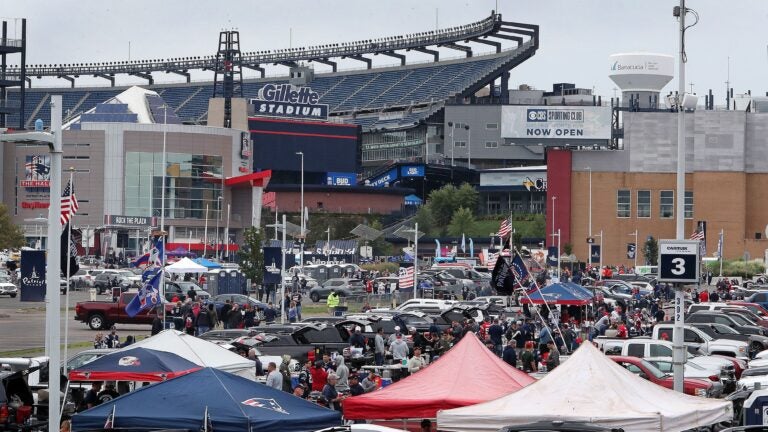
After initially prohibiting tailgating for World Cup matches at Gillette Stadium, the Boston 2026 World Cup host organization recently reversed the ban following online backlash and controversy.
A Boston 26 spokesperson released a statement Monday afternoon announcing that tailgating will now be permitted.
The committee had “sought clarification” from FIFA, world football’s governing body, and determined the pre-game social event would be allowed as there are no “venue restrictions or local public safety restrictions” to prevent it, the spokesperson said.
“Based on prior information that FIFA communicated to Boston Soccer 2026, it was both our understanding and the host venue’s understanding that ‘no tailgating’ was a tournament-wide FIFA rule, and we included that information in our forward-facing messaging accordingly,” the spokesperson said.
Stadium gates will open three hours before kickoff, according to Boston 26.
Boston.com reached out to Boston 26 multiple times for comment but received no response.
The initial prohibition was announced by Boston 26 on its event website in early April.
“Please note that the traditional ‘tailgating’ (eating and drinking around parked cars) is not permitted for these events,” organizers had said about the matches scheduled between June 13 and July 9.
This announcement quickly sparked outrage, with multiple posts on social media going viral, including one from Polymarket, a prediction market company, which prompted FIFA to respond.
“FIFA does not have a formal policy that restricts tailgating,” wrote a FIFA spokesperson in an X post April 15.
“However, site-specific restrictions may be imposed in alignment with host city public safety authorities in certain venues based on local regulations,” the FIFA spokesperson added.
The initial ban was met with dismay by local soccer supporter groups, who view tailgating as a vital part of the American sports culture.
“Tailgating is uniquely ingrained into American sporting culture in a way that you don’t necessarily see in other countries,” said Ben Horner, club president for the Boston Blues.
Horner said the official supporter group for Chelsea FC hosts a number of events with the city, including pre-match tailgatings at Gillette Stadium. He said the ban would lead to “more sterile and less authentic” soccer matches.
Horner views the prohibition as evidence that FIFA and World Cup organizers are “missing the mark on what makes the World Cup great.” He pointed to limited parking as another example, after the MBTA announced in March that the number of available parking spaces will drop from 20,000 to 5,000.
“It’s just very clear that it is not a celebration of the world’s game. It’s a money-making venture,” Horner said. “The ‘no tailgating’ thing is just another example of fans not being put first.”
Evan Cipriano, secretary of the Boston chapter of the American Outlaws, the largest supporter group for the U.S. national teams, said he was shocked to hear tailgating would be disallowed. Given tailgating’s rooted status in American sports culture, Cipriano said the ban is a “missed opportunity” and a “real shame” as it overlooks the chance to incorporate different cultures.
Cipriano said visitors are coming from all over the world to view games, creating an opportunity for Boston residents and tourists to interact and share cultures.
“[Tailgating] brings together fans across both teams, and it kind of adds to the camaraderie, sportsmanship elements of this tournament,” he said. “All of that is really lost.”
Following Boston 26’s announcement that the tailgating ban was uplifted, Horner expressed frustration with the organizing process.
“It’s a little frustrating that there was this backlash and turmoil created because a point of confusion wasn’t clarified before the policy was announced,” he said. “That seems like an unfortunate misstep for an organizing process that hasn’t been all that smooth to begin with.”
Receive updates on the 2026 FIFA World Cup


Be civil. Be kind.
Read our full community guidelines.To comment, please create a screen name in your profile
To comment, please verify your email address