
Tom Brady’s agent suggests Alabama and Clemson players boycott college football final
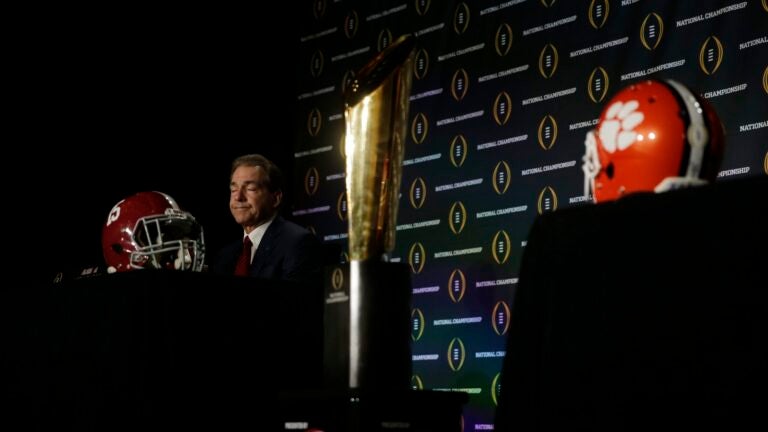
Could college football players force the NCAA to pay student-athletes by threatening to boycott the national championship game Monday? Donald Yee thinks so.
Yee — who represents Tom Brady with his consulting firm, Yee & Dubin Sports — wrote a recent column for the Washington Post, arguing that University of Alabama and Clemson University football players could easily force the NCAA to share the revenue from disproportionately white administrators and coaches with its disproportionately black football and basketball players.
Yee cited the University of Missouri the football team, which joined racial protests on campus by initating a boycott of team practices and games — ultimately helping to force the resignations of school’s president and chancellor.
He says that same model could work to get the NCAA to pay its athletes. From the Post:
The few players who go on to NFL or NBA careers give up years of potential earnings to play for free in college, risking injury in the process. Most athletes, of course, don’t make it to the pros.
No other large-scale commercial enterprise in the United States treats its performers and labor this way.
Change, however, could come rapidly and fairly easily. If even a small group of players took a stand and refused to participate — imagine if they boycotted or delayed the start of Monday night’s championship game — administrators would have to back down. There’s too much money on the line, and no one could force the teams to play against their will. The schools and the NCAA would simply have to renegotiate the bargain with football and basketball players.
Citing “lavish’’ pay for college athletics administrators and coaches while the unpaid athletes often do not receive the benefits of their scholarship (i.e. “contrived majors,’’ lower graduation rates), he questioned why the business model is still allowed to exist.
Yee said that one of his clients, former NFL linebacker Scott Fujita, told him all the power is in the players’ hands — as evidenced by the protests at the University of Missouri.
“The current model will only be ‘broken’ for as long as the athletes themselves allow it to remain that way,’’ Fujita told Yee. “There’s no governing body that’s going to fix it. It must be the players. And as more players realize the power they can wield, and once they can organize around the common purpose of the change they seek, that’s when things will begin to shift.’’
It’s not the first time Yee — who’s not adverse to making his opinions known — has written on the subject of paying college athletes. He also wrote a lengthy piece on it for Washington Post back in 2010, laying out the 10 steps to accomplish reform.
Read his full article from Friday here.




To comment, please create a screen name in your profile
To comment, please verify your email address
Conversation
This discussion has ended. Please join elsewhere on Boston.com