
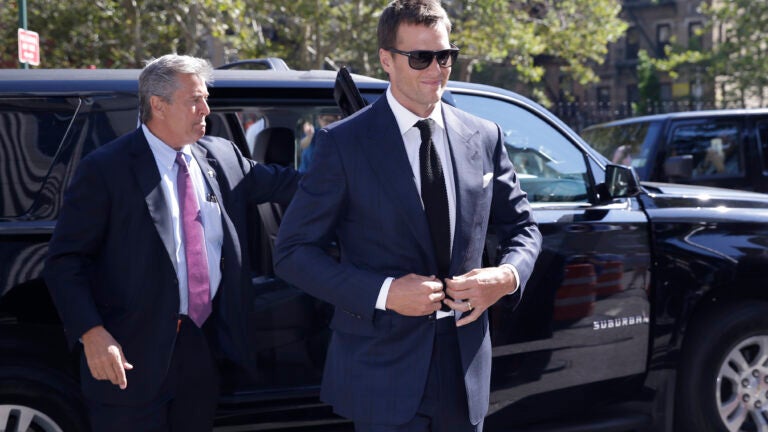
Tom Brady may or may not be vindicated, but he should not surrender
COMMENTARY
Of all the half-baked opinions we’ve had to endure in the 216 days since the AFC Championship Game and the beginning of this unfathomable national obsession regarding the inflation levels of footballs, there’s one that has aggravated me beyond the others:
The notion that Tom Brady should cut a deal so we can all move on.
Let me get this straight: Brady is suspended four games by the Bill Lumbergh of commissioners after an independent investigation that cost seven figures and wasn’t independent at all leaned on some dubious science and cherry-picked information to determine that it was more probable than not that he was generally aware that two Patriots employees deflated air from a batch of approved footballs.
So far, so true, right?
OK, continue …
Then, when the punishment is appealled, Commissioner Lumbergh acts as the arbiter in the case (as is his right, because the NFL Players Association isn’t a beacon of competence, either), doubles down on his suspension by using more ominous language such as “approved of, consented to, and provided inducements in support of a scheme’’ as well as headline-grabbing distractions such as Brady “destroying’’ his phone.
Meanwhile, the NFL’s long media arm reports that Brady wanted the records from his appeal sealed, perhaps suggesting he had something to hide. Soon enough, the opposite seems to be the truth – good heavens, thousands of the guy’s emails were released by his legal team revealing no personal pockmarks other than that he overpays for a pool cover, believes a 38-year-old peer has two years left in his career and is a proud parent.
It does not take much theorizing to see why the NFL might not have wanted the full transcript of the appeal released: The public justification for the arbitration ruling seemed to be based in deliberate, devious misrepresentation by Goodell of what Brady told him under oath.
And he’s supposed to bargain with these people? Really? If he did nothing wrong, it must take superhuman restraint not to curse them out on sight. Goodell should consider himself lucky that Brady hasn’t rallied Patriots fans to storm the commish’s Coastal Maine ivory tower. (Maybe he’s waiting until Goodell no longer expects it.)
The notion that Brady should settle for the benefit of – I don’t know, reporters who are sick of standing around outside courtrooms? – is absurd on a few levels.
Why would he accept a suspension if he genuinely believes he was treated unfairly by the league?
Would you? Or would you fight?
Why would Brady capitulate to the NFL’s wishes and admit wrongdoing simply to justify the time and money spent on this petty rope-a-dope of a quest?
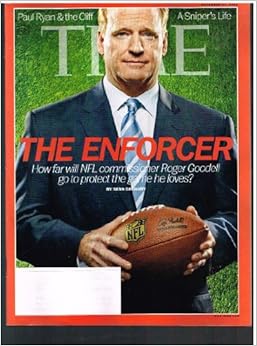
Why should he be the one to make concessions in what is increasingly looking like an attempt by Goodell to prove he’s still The Enforcer after a series of embarrassments that have dented his precious shield and damaged the perception that he possesses any integrity whatsoever?
Predicting twists in this whole saga is as foolhardy as trusting unnamed league sources to provide accurate information. But after Wednesday’s events in federal court in Manhattan, optimism regarding Brady’s situation – at least in regard to whether or not he received a fair appeal – is understandable.
In building to Wednesday’s hearing, Judge Richard Berman encouraged good-faith negotiations between Brady and the NFL in hopes of coming to a settlement. But the NFL reportedly continues to insist on a certain acknowledgement that is a non-starter for Brady: admission of culpability in the cockamamie “scheme.’’
In court Wednesday, Brady’s lawyer, Jeffrey Kessler, seemed to leave open the possibility for Brady to accept some punishment for not cooperating with the investigation to a sufficient degree.
Kessler acknowledged that Brady “should have conducted himself differently’’ in regards to surrendering the information and was acting on the advice of his agent, Don Yee.
That can be interpreted as Brady’s willingness to accept a fine. But it remains unfathomable, given what we know about him and this case, that he’d ever consider missing even a single snap.
Judge Berman’s line of questioning seemed to indicate he recognized the same flaws in NFL-appointed investigator Ted Wells’ report and the upheld suspension that any clear-eyed observer might: “Where is the evidence of a scheme or conspiracy that covers the [AFC title game]?,’’ he asked. “I’m having trouble finding it.’’That led to a telling and perhaps damning response from NFL attorney Daniel Nash: “Is there a text in which Mr. Brady instructs someone to put a needle in a football? No. There is no such direct evidence.’’
No, there is not, no matter how many millions of dollars have been spent and how many trees have died for the cause. I don’t know whether vindication will come Brady’s way.
But he’s fighting for it, and that’s admirable enough given that the world is apparently full of take-your-medicine-anywaycaterwaulers.
And the season – and all of this becoming an afterthought at last — isn’t so far away. Patriots head coach Bill Belichick surely wants this resolved, though I can’t imagine he’d ever ask his quarterback to confess to a crime he says he did not commit simply so he will know who will be playing quarterback for the first few weeks of the season.
Vindication may or may not be coming to Brady. But vengeance? Oh, we know that is going to be his.
At this point, we’re just waiting to find out which week it will be unleashed on Roger Goodell’s league.




To comment, please create a screen name in your profile
To comment, please verify your email address
Conversation
This discussion has ended. Please join elsewhere on Boston.com