
In electing Tim Raines, Jeff Bagwell, and Pudge Rodriguez, Hall of Fame voters got it right
And a few other scattered thoughts on this year's Cooperstown class and voting plot twists.
COMMENTARY
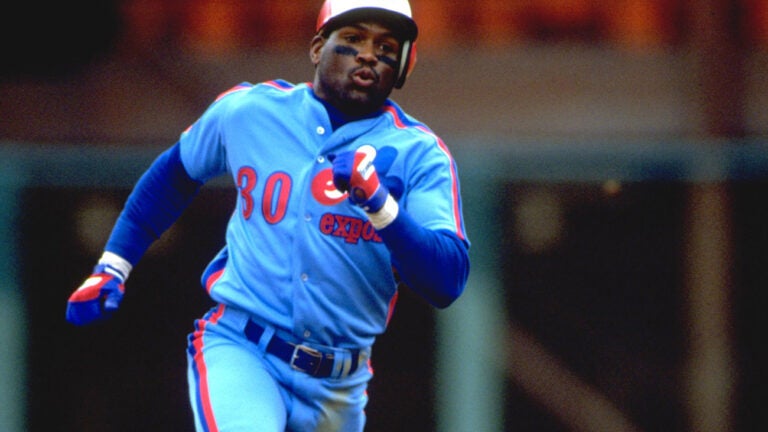
Tim Raines, Jeff Bagwell, and Pudge Rodriguez are headed to Cooperstown. Two annual oversights are finally seen with clarity, their greatness acknowledged with baseball’s highest honor, while the greatest defensive catcher many of us have ever seen will join them in his first year of eligibility.
It’s unforgettable day for them, the confirmation of a dream that at times may have seemed out of reach – this is Raines’s 10th and final year on the ballot, Bagwell’s seventh, while Rodriguez’s first-ballot induction was a mild surprise – and a great day for baseball as well. Personally, I’d have liked to have seen more than three players get the requisite 75 percent, but several are within range. And the voters got it right.
I will admit, even with Ryan Thibodaux’s essential ballot-tracking data suggesting for weeks now that Raines would make it, as a longtime fan of his I was worried that he was going to suffer the cruel fate of coming up a single vote or two short in his final year of eligibility. He received 69.8 percent last year, which put him in good if not totally certain position to make it this year. Instead, he got a resounding 86 percent. Fifteen years after his last game, his greatness was appreciated in full.
Raines is a player whose sensational career – he was the Canadian man’s Rickey Henderson in his Expos prime – was dotted with too many unfair if-onlys. His rookie season, in which he stole 71 bases in 88 games – a record-breaking pace – was interrupted by the ’81 players strike. From 1984-87, he was in the top four in the NL every year in wins above replacement for a position player, and was perhaps the most well-rounded offensive threat in the league, but his success was underreported stateside because he played in Montreal. When he hit free agency after winning the batting title in 1987, collusion kept him from getting the contract and attention he deserved. One more lousy twist of fate would have been somewhat fitting Wednesday. Instead, the breaks – and the votes – finally went his way.
As for Bagwell, who checked in at a slightly higher 86.2 percent, he was overdue, too. It seemed backward to me that Craig Biggio would be inducted into the Hall of Fame before his superior fellow Killer B from some stacked Astros lineups, but that’s how it played out. Red Sox fans will again take this opportunity to retroactively lament Lou Gorman’s decision to trade Bagwell, then in Double A, to the Astros in the 1990 stretch run for reliever Larry Andersen. I was one of those lamenting it at the time, for Bagwell was the rare prospect with which I was familiar in those days. During the annual warm April day at the University of Maine a few years prior, I’d seen Bagwell, then at the University of Hartford, hit four home runs in a doubleheader and tucked away the name. Who knew he was a future Hall of Famer then? Not me. And not Lou Gorman.
Raines, Bagwell, Rodriguez. That’s a heck of a class. A few other takeaways on the voting results:
Prediction: Roger Clemens and Barry Bonds will be inducted together someday
I said inducted, not indicted, just to be clear. In the fifth year on the ballot for both controversial icons, Clemens jumped from 45.2 percent to 54.1 percent. Bonds went from 44.3 percent to 53.8 percent. If the Hall of Fame’s decision to reduce a candidate’s time on the ballot from 15 years to 10 was intended to give voters less time to consider the players with the PED stain – and thus get them off the ballot quicker – they’d better come up with a new plan, because it’s not working.
It’s remarkable and telling that Rodriguez, who was pegged as a PED user in one of Jose Canseco’s books, cruised in. Bonds and Clemens are going to get in before their 10 years are up. My question is this: How can you vote for one but not the other? Aren’t they basically the pitcher and hitter version of the same record-setting, scandal-plagued candidate?
David Ortiz is going to sail into the Hall of Fame
It wasn’t that long ago – early in the 2016 season, I’d say – that Ortiz’s candidacy for Cooperstown was cause for a legitimate debate. His status as a designated hitter – a player with no value other than his prolific bat – worked against him since no career DH has been enshrined. He was stigmatized further by the vague association to performance-enhancing drugs when his name was leaked from a list of 103 positive tests during the supposedly anonymous 2003 testing.
He looked like a candidate who would require a couple of years of further consideration even after his name was on the ballot. That, I believe, has changed because of several developments: Ortiz finished his magical career with a sensational final season (38 homers, league-best 1.021 OPS) and no further whiff of scandal; commissioner Rob Manfred basically gave him a pardon on the ’03 test, suggesting it may not have even been accurate; Rodriguez got in Wednesday (this really is a game changer going forward); Edgar Martinez, a DH lifer himself for the most part, saw the biggest leap of votes of any player this year (from 43.4 to 58.6 percent) and is trending toward eventual induction; and the recent induction of PED ostrich Bud Selig seems to have eased some of the sanctions on the players who took him up on the loose rules in the 2000s. It’s no longer a matter of whether Ortiz gets in.
The suspense now is whether the MLB Network will need a seven-second delay for his speech on induction day.
Manny Ramirez did better than expected
During their heyday in the heart of the Red Sox order in which they did their modern-day Ruth-Gehrig routine, not many would have figured that Ortiz would be the better bet for Hall of Fame induction by the time their careers were complete. Ramirez is the best righthanded hitter I’ve ever seen, and the second-most compelling – usually in a fun way – Red Sox player of my lifetime to Pedro Martinez.
But perception, often aided by new information, shifts over time, and it has not shifted the right way for Ramirez. He flunked a couple of PED tests after baseball got serious about steroids, and his ignorant timing has queued up some self-righteous reaction from those willing to give the benefit of the doubt to players who probably did a better job of masking their pharmaceutical indiscretions. Ramirez got 24 percent of the vote on his first year on the ballot. That’s probably 50 percent lower than what you might have expected had he never been publicly tainted by PEDs. Then again, it’s better than three-time 60-homer man Sammy Sosa has ever done in his five years on the ballot. The real test with Ramirez comes next year when we discover which direction perception will shift next.
You’ve heard of talking yourself up? Curt Schilling talked himself down
Entering Hall of Fame season (that’s a thing, right?), Schilling had the fourth-highest vote percentage of the returning candidates (52.2) percent, having finished above Bonds and Clemens last year. Then he opined, and he meme-d, and he kept opining and meme-ing until he offended enough voters that he slipped right on down the ballot (to 45 percent). That was by far the biggest drop of any player this year.
It’s not right; Schilling is a Hall of Fame-caliber pitcher, and the character clause, implemented by a man who showed little of his own, is too often an excuse to deny a player a vote for another reason besides what should be considered first and foremost – on-field performance. I’m skeptical he gets in now, and that’s a shame, even if he is an insufferable Hefty bag of wind. That bag knew how to pitch.
This stands as a final salute to some other champion Red Sox
Orlando Cabrera, who is probably the most beloved Red Sox player to have played no more than 58 regular season games for the team, did not get a vote. Tim Wakefield avoided the shutout, receiving a single vote. Jason Varitek, a better catcher than Jorge Posada but not a better power hitter, got a pair of votes, falling 15 votes shy of his Yankees counterpart, who also fell off the ballot. J.D. Drew did not get a vote, which makes sense since I don’t have a ballot yet.
They’re not Cooperstown-worthy players and Wednesday’s verdicts did not bring any surprises. But among them, they have plenty of moments and achievements that are forever enshrined in the minds of Red Sox fans. As far as consolation prizes go, that’s a decent legacy.




To comment, please create a screen name in your profile
To comment, please verify your email address
Conversation
This discussion has ended. Please join elsewhere on Boston.com