
Sign up for the Today newsletter
Get everything you need to know to start your day, delivered right to your inbox every morning.
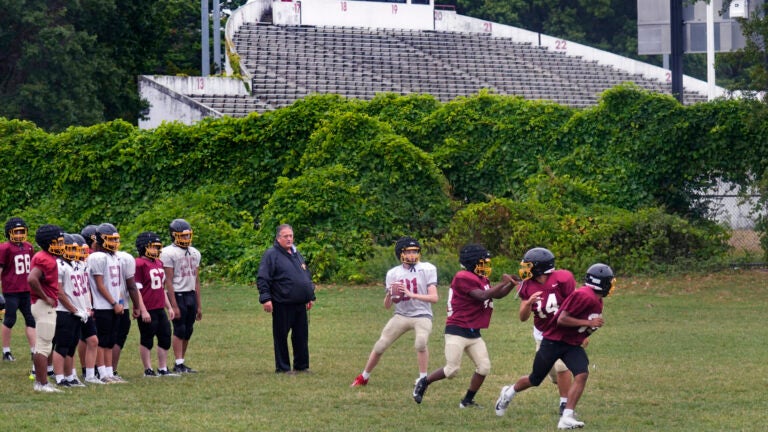
Boston Mayor Michelle Wu made an effort this week to defend her plan to overhaul White Stadium in Franklin Park. As Wu prepares to run for reelection, she sought to explain the rising cost estimates associated with the project and maintain public support in the face of a City Councilor’s call to cancel the plan altogether.
Wu announced ambitious plans last year to partner with a new professional women’s soccer team to renovate the dilapidated White Stadium, which opened in 1949. The city plans to cover half the costs, with the new soccer team covering the other half. The team, called BOS Nation FC, would practice and play home games in the stadium, and it would also be maintained as a hub of the Boston Public Schools athletics program.
According to the timeline of the project the city posted online, demolition and construction was tentatively set to begin in “late fall 2024.” But lease negotiations are still ongoing. Wu said the city will share the full details of the lease agreement as soon as it is finalized.
Earlier this month, news broke that the city’s estimated contribution to the project is $91 million, up from the $50 million estimate city officials gave over the summer.
That jump, along with other concerns, prompted City Councilor Ed Flynn to call on Wu to cancel the renovation altogether. Flynn, who is reportedly considering a mayoral run himself in 2025, seized on comments Wu made during an appearance on GBH’s “Boston Public Radio” last week.
“We are going to pay our half of the stadium, no matter what it costs,” Wu said. Flynn repeated that quote in his own press release.
The mayor walked back the comment Wednesday.
“There’s no such thing as a blank check when it comes to city capital projects,” Wu said during an appearance on “Java with Jimmy.” That evening, she repeated the quote in a lengthy series of posts on the Bluesky social media platform.
Wu said that the increasing cost estimates were part of a “standard process” during her “Java with Jimmy” interview. The $50 million figure was a placeholder before the design process occurred. As part of this process, the city held more than 50 public meetings and solicited more than 900 public comments, Wu said. The city altered the stadium design to address the concerns they heard from residents.
The design “changed a lot” through community engagement, she said. Most notably, residents clearly said that they did not want a “big, boxy structure” that would block scenic views and clash with the historic nature of Franklin Park. Other changes were made to the proposed landscaping around the stadium, increasing the cost estimate further, she said during the interview.
No such thing as a blank check when it comes to City capital projects. We start with placeholder $, finalize design, set budget/contingencies, then bid out contracts for final costs. 50+ public meetings & 900+ comments reshaped the project design & we’ve refined the budget to make it happen.
— Michelle Wu 吳弭 (@wutrain.bsky.social) December 18, 2024 at 7:53 PM
[image or embed]
While Wu said that extensive community involvement caused the estimates to change, Flynn said that residents were not being included in the process enough.
“Boston taxpayers have a right to understand and be heard on the White Stadium project, given that $91 million is being obligated on the city’s behalf. In light of increasing costs, it is critical that we engage our residents on this important conversation, especially when many neighbors have expressed that their concerns were not heard or respected at City Hall,” Flynn said in a statement.
Right now, the city is estimating it will spend about $10 million on grass turf and a new track, $50 million on a grandstand, locker rooms, community kitchen and event space, $20 million on BPS athletics offices, weightrooms, and sports medicine facilities, and $10 million on landscaping, Wu said on Bluesky.
The mayor said this week that the rising costs of construction materials were also a factor, and that estimates will change again once the city starts bidding out construction contracts. On WBUR last week, Wu said she was optimistic that current estimates would be “in the ballpark” of what is needed in the end.
Wu stressed that the soccer team would be paying for things like its own locker rooms, another grandstand, upgrading the scoreboard and lighting system to be professional-grade, public restrooms, and a concessions area. The team will pay rent and help fund operations and maintenance in the future.
“There have been some comparisons that I think have been quite off, and we’ve been really careful about trying to make sure that the city is in control and that we pay for the things that students and the community will use and we’re not responsible for what the soccer team would use,” Wu said on “Java with Jimmy.”
The city will still own White Stadium and have full control over it in the future, as the soccer team will only be a tenant, Wu said. The soccer team would only use stadium facilities for less than 10% of all available hours during the year, she added. The city claims that public access will expand from just nine hours per week to 15 hours a day, seven days a week.
“It’s not like we’re handing it over, paying for a cost, and then they’re going to decide how and when it’s used and the community could get shut out. It’s actually the opposite of that,” Wu said.
But worries abound, including from football players and coaches. White Stadium would be unavailable to BPS high school football teams during the women’s soccer season, which runs from about March through November.
At the same time, plans are moving forward to potentially build a soccer stadium in Everett for the New England Revolution. Professional men’s and women’s soccer teams share stadiums around the country. Flynn and others are saying officials need to explore the possibility of both soccer teams sharing one stadium.
When asked about this possibility on WBUR, Wu said the city had consulted with BOS Nation FC. The team’s leaders said that interest in women’s sports is growing rapidly, and their perspective is that a professional women’s team in Boston deserves its own home away from the shadow of the Revs, the mayor said.
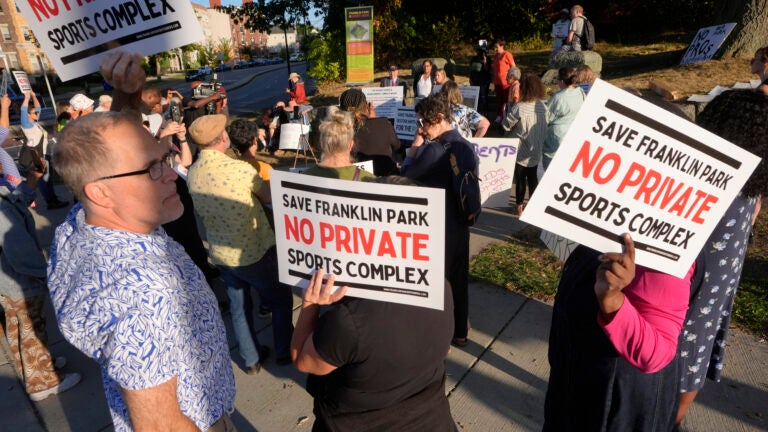
And there is the matter of litigation. Environmental advocates and residents, dubbed the Franklin Park Defenders, are suing the city and the team to halt the project. They say the plan represents an “unconstitutional privatization of public land” and worry about the displacement of BPS students, environmental concerns, and transportation headaches. BOS Nation FC plans to begin play in the spring of 2026.
But the legal battle could force construction delays or an outright abandonment of the renovation plan that would put the soccer team’s future in jeopardy, The Boston Globe reported. The team is considering Boston University’s Nickerson Field as a potential backup.
Get everything you need to know to start your day, delivered right to your inbox every morning.




To comment, please create a screen name in your profile
To comment, please verify your email address
Conversation
This discussion has ended. Please join elsewhere on Boston.com