
Address Newsletter
Our weekly digest on buying, selling, and design, with expert advice and insider neighborhood knowledge.
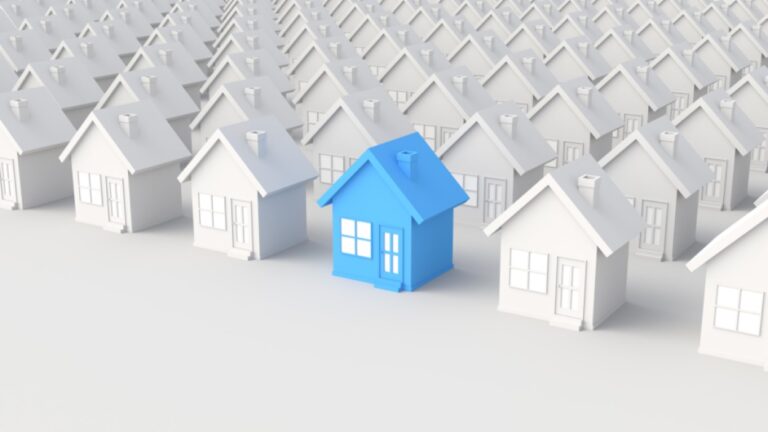
The dream of climbing the property ladder is slipping further out of reach for many millennials in Greater Boston.
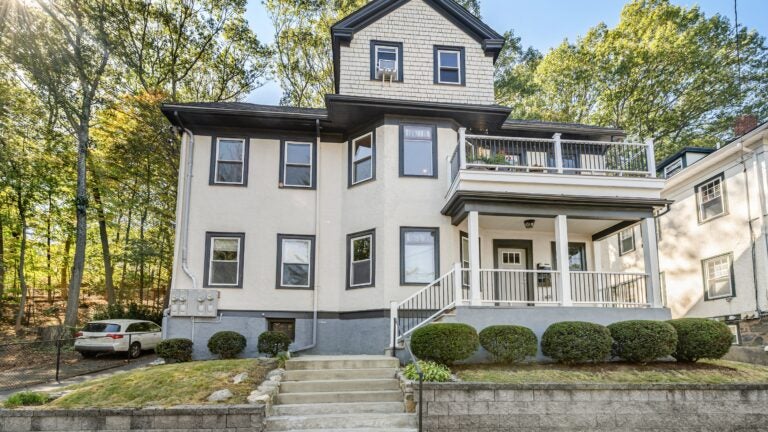
In the area’s frozen real estate market, a growing number of young homeowners between the ages of 29 and 44 are finding themselves stuck in their so-called starter homes far longer than they ever expected. Locked in by historically low mortgage rates they secured during the pandemic and facing steep prices on the next rung up, these homeowners are discovering that moving up isn’t as simple — or as affordable — as it once seemed.
For some, what was supposed to be a brief stop on the path to a forever home has turned into a long-term arrangement.
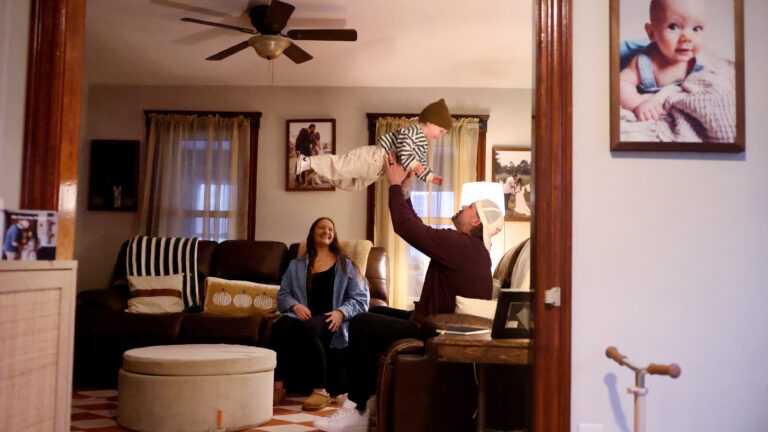
“We bought in 2019 and redid as much as we could right away, but now we’re busting at the seams,” said Sam O’Malley, who lives with her husband, Shea, and their young son in Worcester. “Our dining room has turned into a playroom, and we only have one full bath, which is getting harder as our family grows. We’re trying to make room for another nursery right now and just finding space anywhere we can.”

They’ve thought about adding onto their home ahead of their daughter’s arrival in a few months, but even that costs a lot of money amid fluctuating prices of building materials. The O’Malleys’ story is increasingly common.
“We refinanced during COVID when rates went down to two and three-quarters,” said Shea O’Malley. “We paid dirt cheap for our house. To get one with just an extra bedroom and half bath for three times our mortgage [today] is insane.”
Like many homeowners who bought or refinanced at the market’s low point, they can’t justify giving up their sub-3-percent mortgage rate for one more than double that today.
“We’ll look online and see what the monthly payment would be on something bigger, and it’s just like, ‘Nope, we’ll be staying where we are,’” Sam said.
While her father often reminds her how much their home has appreciated, “That wouldn’t even put a dent in what we’d need for the kind of house we want,” she said. “Selling our house and getting a new one in our price range wouldn’t be an upgrade; it would be the same exact house.”
Nationwide, the typical homeowner now stays in their home for about 14 years, according to Zillow’s recently published 2025 Consumer Housing Trends Report — slightly shorter than before the pandemic but still far longer than in the past.
“People have accepted that those 3-percent mortgage rates aren’t coming back,” said Amanda Pendleton, Zillow’s home trends expert. “They’ve gone through the five stages of grieving and are finally listing their homes, recognizing that life goes on. But for many, the math just doesn’t work.”
Pendleton said the typical monthly mortgage payment has doubled in the past five years, adding roughly $900 to $1,000 more each month for pretty much the same house.
“That’s why so many people feel trapped in their starter homes,” she said. “The cost of moving to something with an extra bedroom or a bigger backyard just isn’t in the cards.”

– Jessica Rinaldi/Globe Staff
That financial reality has pushed many homeowners toward renovation as a coping mechanism.
“People are getting creative to make their starter homes work long term,” Pendleton said. “That’s why we’ve seen this renovation boom since the pandemic. Even though construction costs have gone up, the cost of moving has gone up even more.”
Common fixes include finishing basements or attics, opening walls between kitchens and living rooms, or creating outdoor living areas that expand usable space. Covered patios or all-season porches are especially popular in the Northeast due to their functionality and added square footage, Pendleton noted.
Rachel Drew, director of the Remodeling Futures Program at the Harvard Joint Center for Housing Studies, said the trend shows up clearly in her research.
“It’s not uncommon for people to remake the house they’re in,” she said. “They like their neighborhood, they may not have the funds to move, or they have favorable loan terms they’re unwilling to give up.”
Permit data backs that up: Remodeling activity is up about 5 percent year over year, a modest rise compared with the 15-percent surges seen during the pandemic, per data from the Joint Center for Housing Studies.
In Salem, Alex Arnow and his wife have been confronting the same dilemma since buying their home in 2015.
“When we bought, people who had purchased starter homes just a few years before us could sell them and move to bigger and better places without spending much more,” he said. “We realized that wasn’t going to be the case for us in 2020, when we were looking in Topsfield and were basically seeing the same house we already owned for twice the price. When rates went up, the math got even worse.”
Arnow still likes his home — mostly.
“We just need a little more space,” he said. And he wishes they were in a different school district. “When we were buying, it was a toss-up between Salem and Beverly, but now we wish we were ‘trapped’ in Beverly.”
The family is making small upgrades.
“We just put a down payment on a bathroom renovation,” he said. “We’re making some improvements, so the house is more usable for us, but our footprint really precludes any meaningful addition.”

– Jessica Rinaldi/Globe Staff
Looking ahead, the decision to stay or move hinges on finances and family needs.
“Either the market changes or my earnings do,” Arnow said. “The other breaking point would be schools.”
While many homeowners feel locked into homes they’ve outgrown, others never managed to buy in the first place. After this reporter put out a call for interviews, several readers reached out to say they can’t even afford a starter home, and those stuck in starter homes should still count themselves lucky. The Globe reported in August that Massachusetts had the fourth-lowest homeownership rate for adults aged 25 to 34 of any state.
Their stories underscore the widening divide between those fortunate enough to have locked in low rates and those permanently priced out. For the former group, staying put has become the rational choice, even if it’s not the ideal one.
Back in Worcester, the O’Malleys are clearing out their spare room to make way for a new nursery.
“There goes the one space I had to work out or have an office,” Sam said with a laugh. “Now we’re just finding storage for everything and making it work.”
Until the math changes, families like the O’Malleys and Arnows are redefining what a starter home means: one renovation and reconfiguration at a time.
Our weekly digest on buying, selling, and design, with expert advice and insider neighborhood knowledge.




To comment, please create a screen name in your profile
To comment, please verify your email address
Conversation
This discussion has ended. Please join elsewhere on Boston.com