
Sign up for the Today newsletter
Get everything you need to know to start your day, delivered right to your inbox every morning.
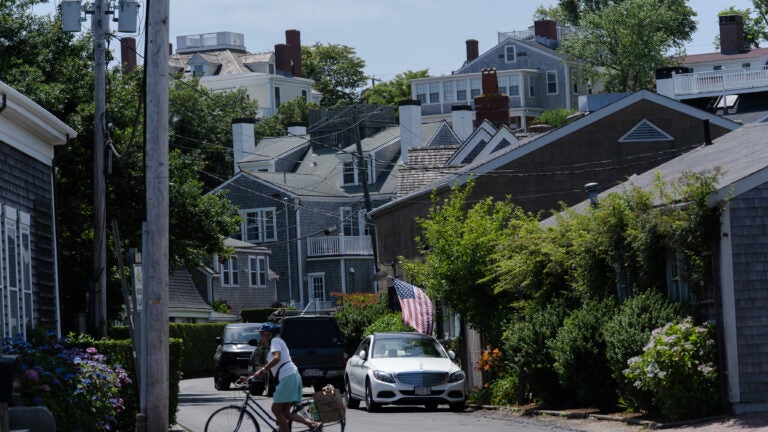
More and more year-round employees, from hospital staff to teachers and restaurant workers, are being priced out of the Cape and Islands, leaving communities scrambling to find ways to keep them housed.
Local officials say they’ve pursued nearly every option available — from state and federal housing grants to zoning reforms to even building out sewers to support more housing — but the problem keeps outpacing the solutions. Now, they say, it comes down to funding.
“The bottom line is, we can’t solve this problem without money,” said Jay Coburn, CEO of the Community Development Partnership, a local housing nonprofit.
Coburn said it comes down to simple math. “Without additional resources to close the gap between what people can afford and what it costs to create housing, we won’t solve the housing problem.”
Now, local leaders are pushing to get the state’s permission to impose real estate transfer fees, a tax on home sales, to fund the solution.
Imposing a real estate transfer fee to fund affordable housing isn’t new on the Cape and Islands. Nantucket and Martha’s Vineyard have been pushing for the option for nearly two decades through home-rule petitions, and other communities — including Boston, Cambridge, Somerville, Brookline, and Arlington — have tried to join them in recent years.
Gov. Maura Healey’s housing bond bill included a version of the proposal, allowing cities and towns to levy a 0.5% to 2% fee on property sales above $1 million or the county’s median home price. According to the administration, the seller would pay the cost, impacting fewer than 14% of residential sales while creating a new revenue stream for local housing projects.
But the effort hit a wall on Beacon Hill last year. A strong real estate lobby — led by the Greater Boston Association of Realtors — helped block the measure in the state Senate, arguing that it would drive up homeownership costs, discourage sales, and hurt both buyers and existing homeowners.
The final version of the Affordable Homes Act did offer some relief for “seasonal communities” by expanding access to housing funds and permitting smaller housing types like tiny homes. But local leaders from Cape and Island towns say it’s not enough.
Now, they’re renewing their push for transfer fee legislation — this time with broader regional backing.
Along with individual home-rule petitions from the Martha’s Vineyard Housing Bank, Nantucket, Provincetown, Wellfleet, and Eastham, state Sen. Julian Cyr, who represents the Cape and Islands, filed legislation in a similar vein that would cover all seasonal communities.
The Barnstable Assembly of Delegates is also considering a regional “Luxury Real Estate Transfer,” in which participating towns could set their own rate between 0.5% and 4% on sales above $1 million.
Towns could also define exemptions for first-time buyers or year-round residents, and direct 90 percent of revenues to local housing trusts. The remaining 10 percent could support regional housing initiatives and administrative costs.
“There are people who want to stay here but don’t make enough to buy a house. They don’t even make enough to rent,” said Susan Warner, the Yarmouth delegate for the assembly, at an Oct. 15 meeting.
She continued, “That will never be funded by the feds or the state.”
Cyr agrees, saying it’s a growing problem for the islands and increasingly on the outer and lower parts of the Cape — that if “you don’t own a home, you are not going to be able to afford to purchase a home” if you are a year-round worker.
“That is increasingly across the income spectrum, whether you’re in hospitality or tourism or health care or a municipal employee,” he said.
But not everyone supports the proposal.
“The transfer fee seems to be the cause that everyone thinks is going to solve the housing crisis,” said Betsy Hanson, CEO of the Cape Cod and Islands Association of Realtors. “We don’t agree.”
Hanson said the association recognizes the region’s housing challenges but believes a transfer fee would have a “detrimental impact on the market.” She also questioned its reliability as a steady revenue source, noting that the historically low housing inventory means fewer transactions — and, therefore, fewer potential fees.
According to the association’s data, Barnstable County saw 1,968 single-family home sales in September 2025, down from 2,050 a year earlier. The median sale price for single-family homes fell from $810,000 in 2024 to $775,000.
Supporters, however, say transfer fees have proven successful elsewhere. Nantucket and Martha’s Vineyard already use conservation land bank fees that have generated hundreds of millions for land preservation. Aspen, Colorado, funds housing with similar fees, and towns in the Hamptons now pay a “Mansion Tax” for affordable housing.
Laura Silber, island housing planner for the Martha’s Vineyard Commission, said luxury demand — not local needs — drives resort markets like the Cape and Islands. “So, there is no scenario in which increasing market-rate inventory will increase housing supply enough to bring prices down,” she said.
With the median home price on Martha’s Vineyard around $1.5 million, Silber said market-rate homes are “simply not accessible to most of the year-round working island population.”
The problem is even starker on Nantucket, where median home prices exceed $3 million, said Tucker Holland, executive director of the Nantucket Land Trust. “We have a $750 million problem in Nantucket alone, and I suspect other communities are in similar situations.”
Holland said that if transfer fees had been in place last year, Nantucket would have raised $5 million. He said the island has already raised more than $150 million over the past five years through town meetings, but “the problem can’t all be borne on the taxpayers’ backs.”
Holland said transfer fees could help close that gap — and that other towns are watching closely. “You can see the train wreck coming,” he said. “Why not give these communities the ability to avoid or fix it?”

Get everything you need to know to start your day, delivered right to your inbox every morning.



To comment, please create a screen name in your profile
To comment, please verify your email address
Conversation
This discussion has ended. Please join elsewhere on Boston.com