



Address Newsletter
Our weekly digest on buying, selling, and design, with expert advice and insider neighborhood knowledge.
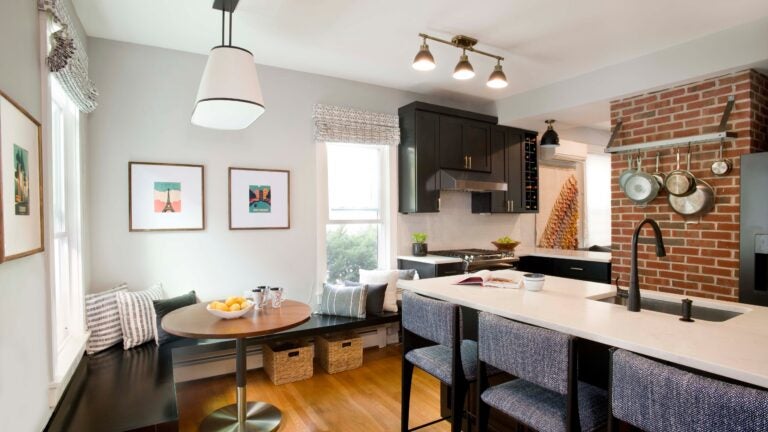
Something we have noticed from readers and clients recently is a greater awareness of lighting, and to a certain extent, switching.
For many years, most clients were happy to have a lighting plan put together by either a lighting showroom or the architect/designer. The thought was that the professionals knew best and clients didn’t have to think too much about it — as long as we had enough recessed lights on dimmers, the owners could simply add lamps into a room when they furnished the space. That seems to have changed with the advent of LED lights, smartphones, and a more tech-savvy homeowner who wants more than just recessed lights in a ceiling.
Before I get into a few of the trends we are seeing, a quick lighting glossary.
One of the trends that some of our clients are more interested in today is what is called layered lighting. Recessed lights are not going away anytime soon, but there is a movement afoot to use fewer of them and more surface-mounted lights for different tasks. A layered lighting plan would typically have three elements to it: ambient light, task light, and accent light.
Ambient light
The ambient light is considered the main light source in the room. Not long ago, this might have been eight recessed lights on a dimmer switch that basically disappear into the ceiling. More homeowners are now asking for surface-mounted ceiling lights that have some presence and add to the décor. There could still be some recessed lights around the perimeter of a large room, but they do not have to be the primary light source. Most surface-mounted lights come as integrated LED, so the color temperature can often be changed over the course of the day.
Task light
Task lights are things like a desk light, table or floor lamps for a reading area, and pendant lights for a kitchen island. In the kitchen, pendant lights for an island and under-cabinet lighting for work areas are great, but recessed lights to illuminate traffic patterns while prepping a meal are just as important.
Accent light
Finally, accent lights are a bit of a luxury if they work into your budget and floor plan. These range from mini-recessed lights to highlight artwork or cove lighting built into a perimeter valance that wraps around the room.
Another interesting new development in lighting is the use of CCT or Color Correlated Temperature. This is based on the concept of lighting following our bodies’ natural circadian rhythm. I have also heard it referred to as wellness lighting. When we get up in the morning, the light should be at a warmer temperature to mimic the soft morning light; the temperature switches to cooler, brighter light during the day, and in the evening, it changes back to warmer to mimic the sun setting and the skies darkening. We, as a company, have not installed this particular type of system, but I find the idea fascinating. It’s an exciting era we are living in right now.
With all these options, how on earth can we control it all? It could be as simple as integrated wall switches using compatible bulbs that control the lumens and temperature of the lighting. Most of these can be preset so you are simply touching the wall switch to change the look and feel of the room.
Taking it a step further, wireless home systems are easier to install and manage than ever before. Lighting and switching technology allows lights to be turned on automatically or through an app. The company Lutron is arguably the leader in this area and has a suite of products for residential use. Since most of the components are wireless, it can be retrofitted into an existing home with relative ease compared to years past.
As always, it’s important to hire a professional to do this work. The various lighting and switching components, when done right, can enhance our living experience; done improperly, they can have the opposite effect. Our electricians once had to go into a client’s home who joked her lights were haunted because they acted so erratically. They quickly found switches, bulbs, and controls that were incompatible with each other. Once the various pieces were swapped out with compatible products, everything worked. This technology is moving fast, so you do have to make sure that whoever you hire is staying up to speed with it all.
Mark Philben is the project development manager at Charlie Allen Renovations in Cambridge. Send your questions to [email protected]. Questions are subject to editing. Subscribe to the Globe’s free real estate newsletter — our weekly digest on buying, selling, and design — at Boston.com/address-newsletter.
Our weekly digest on buying, selling, and design, with expert advice and insider neighborhood knowledge.




Be civil. Be kind.
Read our full community guidelines.To comment, please create a screen name in your profile
To comment, please verify your email address