
My First Home: Buying the widow’s house, I felt like an intruder
My small Cape was more like a postwar-America time capsule than my 21st-century home.
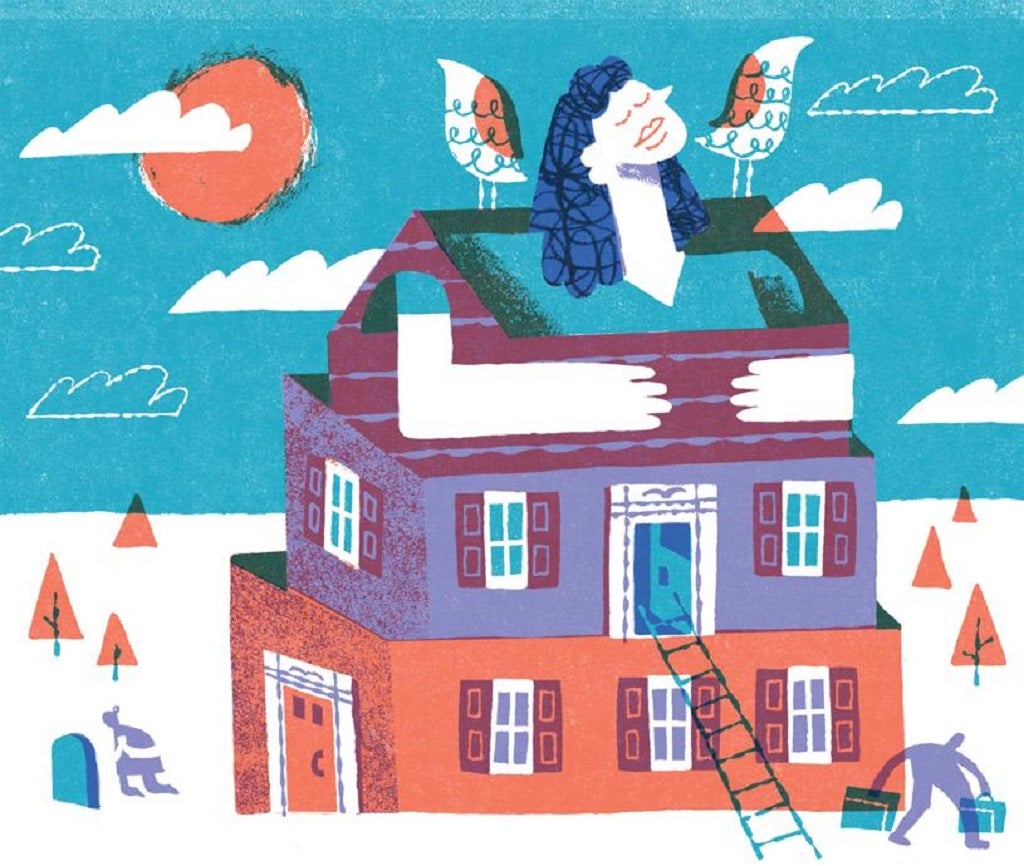
In the first years, I thought of the house as still belonging to the elderly Mrs. Hughes, owner since 1957. Indeed, my small Cape was more like a postwar-America time capsule than my 21st-century home: The bathroom blushed pink, from tile to sink to toilet; a tiny wall oven seemed a stand-in for the one on “The Brady Bunch.’’
Mrs. Hughes had been widowed relatively young. Perhaps she refused to modernize the place out of frugality or sentimentality. I’ll never know. I do know that it somewhat pained me to remove her black-slate house sign, decorated with wispy flowers and her surname. I felt like an intruder, violating her property. I wondered, too, at how many sorrows the house had known and whether joys had ultimately outweighed them. I wondered what kind of future the house would know with me.
Although our neighbors loved Mrs. Hughes, they were excited at the prospect of my husband and me, then thirtysomethings, taking over, slowly making cosmetic improvements. First came the inside painting: Greens, blues, and yellows transformed the rooms that had been covered in pinks and browns.
Then came the outside. We replaced the roof and windows. Next, we ripped out the boxwood hedges, substituting hollies and barberries to attract songbirds. The gardens expanded with vegetables and flowering perennials. We had no plan, merely planting what we liked. The Hughes family occasionally drove by to check on our progress; according to the son, we had his mother’s approval.
Frustrations came, however, when we chose an exterior paint. I could describe the original only as rust. Perhaps it was once red, but it had faded to a shade that was neither red nor orange nor brown. We couldn’t agree on a new color. He disliked blue; I didn’t like green; yellow was too common; white was too dull. In a moment of temporary insanity, we chose lilac, which lent the house an adorable English-cottage impression in summer. In winter, unfortunately, the white snow transformed our Cape into a flamboyant purple that made me blush as pink as my bathroom had once been.
Other exasperations followed. Neither of us was handy. Our do-it-ourselves attempts turned slipshod. The big jobs for which we wanted to hire professionals were too expensive. So we ignored the house for a few years, traveled some, and took up new interests. The more we ignored the house, the more we ignored each other.
Nearly 10 years to the day of Mrs. Hughes’s death, I experienced a death of my own: the official end of my marriage. I kept my house, buying it from my husband and vowing to make the much-needed improvements we had long put off.
This spring, I chose red siding for the outside, a nod to the hue Mrs. Hughes once had known. Now I reflect upon our similarities: When we moved into this space, neither of us imagined tending to it alone. Today, I consider the home fully mine — not belonging to Mrs. Hughes, not belonging to my husband.
I now know what heartaches and happiness my home has witnessed, and I can say honestly that they have been about equal in weight. Now that I am the sole owner, I am the sole architect, and I hope to build a future in which joy ultimately outbalances any regret.
Lori Ayotte, a freelance writer and English teacher, lives in Rhode Island. Send comments and a 550-word essay on your first home to [email protected]. Please note: We do not respond to submissions we won’t pursue. Subscribe to our free real estate newsletter — our weekly digest on buying, selling, and design — at pages.email.bostonglobe.com/AddressSignUp.




To comment, please create a screen name in your profile
To comment, please verify your email address
Conversation
This discussion has ended. Please join elsewhere on Boston.com