

Address Newsletter
Our weekly digest on buying, selling, and design, with expert advice and insider neighborhood knowledge.
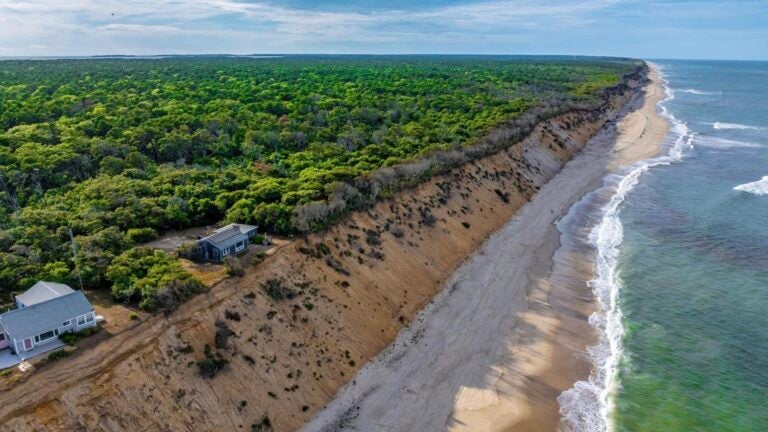
Would you buy a house located on an eroding bluff? For many, that would be a hard no, but, when it comes to overheated Cape Cod real estate, erosion is just another inconvenience.
Take the three-bedroom Cape located at 153 Brownell Road in Eastham. Perched above Nauset Light Beach within the Cape Cod National Seashore, it was 60 feet from the cliff edge five years ago. Today, it is a mere 16 feet away. Yet, it sold at the end of November.


“The couple who bought it knows what they are getting into,” said Jack Sullivan, a realtor with William Raveis Real Estate, who represented the buyers. “They paid $100,000, which is far below the selling price of area properties.”
Even after they saw pictures showing the house’s precarious location, many would-be owners pursued the sale.
Known as ‘The Outer Most House,” it has three bedrooms and one bathroom (plus an outdoor shower) within its 972 square feet.
“When it was first listed, I got hundreds of calls from interested buyers who believed that they’d stumbled onto a steal,” Sullivan said. “One man said that summer rentals in the area are so expensive that, even if it only stands here for a few years, the house would serve as a wonderful family vacation home.”


Once upon a time, “waterfront” was shorthand for the most desirable place in the world of real estate sales. But that was based on the assumption that land was permanent and immovable. Today, we see the ocean eating at pieces of Cape Cod and Nantucket, endangering house lots that are getting smaller as the water’s edge comes closer.
“The Cape is one huge sand bar, and erosion has been going on forever,” Sullivan said. “On the Cape Cod Bay side, property owners can build breakwaters and other forms of erosion mitigation. But the National Seashore has very strict rules.”
Property owners along the Atlantic shore in Provincetown, Truro, Wellfleet, Eastham, Orleans, and Chatham have to abide by two sets of laws: the various towns’ building codes, and the land regulations of the Cape Cod National Seashore. Created in 1961, it is part of the National Park Service and aims to keep this part of the outer Cape in its natural state. That includes disallowing new construction, as well as the removal of run-down and unsafe buildings of no historical significance.
“Any property within the Cape Cod National Seashore improved by a detached one-family dwelling constructed prior to September 1, 1959 is eligible for a certificate verifying suspension of condemnation authority,” said Linzy French, Public Information Officer for the National Seashore. “Residences built after September 1, 1959 on private property within the Seashore would not be eligible.”
Sullivan points out that, while erosion is a sure thing, it is unpredictable.
“A storm can take five feet off the edge of the bluff, and then, for two years, nothing happens at all.”
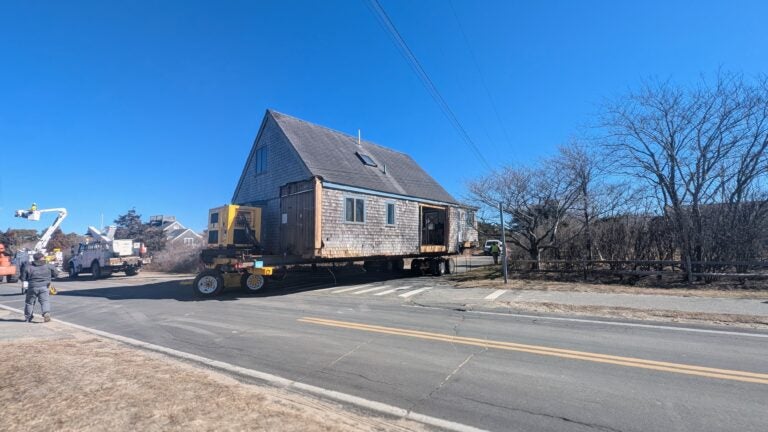
The previous owner of the property at 153 Brownell Road anticipated future erosion: he moved the septic tank and leaching field several years ago and, in 2025, dug a new well. An available adjacent lot presents the possibility of moving the house itself.

Down the road, at 157 Brownell Road, another house was listed for a comparable price at $99,000. This house is a bit bigger at 1,422 square feet with three bedrooms and two bathrooms. But here, the cliff’s edge is only eight feet away, and the well, septic tank, and leaching field are between the house and the water on a shrinking lot. Even so, the house just went under agreement.
“It’s a great opportunity for the right person,” said Compass realtor Matthew Burger, who listed it.
There are about 660 private properties within the National Seashore and, while most are not endangered, those threatened by erosion are the responsibility of the owner.
“The homeowner should work with the respective towns in cases of erosion threatening homes,” French explained.

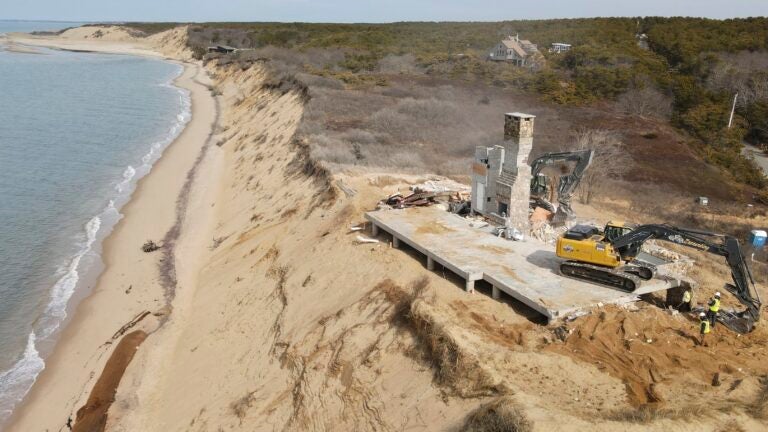
In February, a house in Wellfleet was demolished, putting an end to a months-long dispute over who would pay to remove the building before it fell into the water, the Associated Press reported.
“The building is being demolished under a permit from the town,” Town Administrator Tom Guerino told the AP via email at the time. “It is being deconstructed by the current owner’s representative.”
A waterfront house along the eroding edge of Cape Cod’s Atlantic shore may be the scenic vacation home of a family’s dreams, but it may also be far more expensive and far more temporary than planned.

Our weekly digest on buying, selling, and design, with expert advice and insider neighborhood knowledge.





To comment, please create a screen name in your profile
To comment, please verify your email address
Conversation
This discussion has ended. Please join elsewhere on Boston.com