
Sign up for the Today newsletter
Get everything you need to know to start your day, delivered right to your inbox every morning.
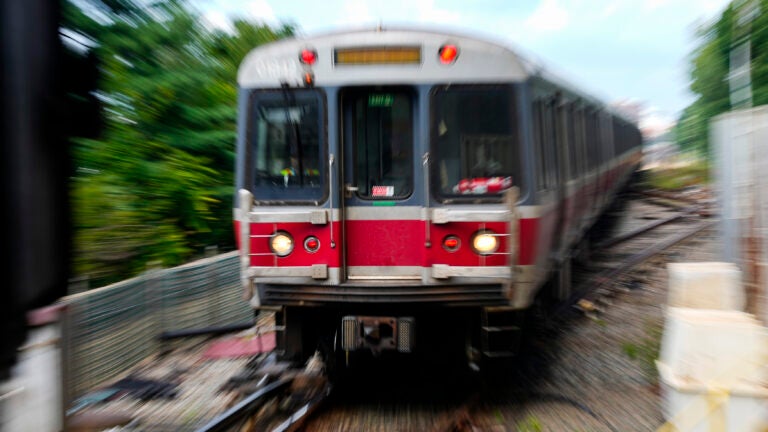
When an Orange Line train caught fire over the Mystic River in 2022, it seemed an appropriately grim metaphor to symbolize riders’ bleak view of the MBTA and its aging infrastructure.
The hits kept coming: The same month, federal regulators released a scathing report critical of the T’s safety culture. Sens. Elizabeth Warren and Ed Markey publicly chastened then-General Manager Steve Poftak and the head of the state agency responsible for overseeing the MBTA. Ridership remained slow to bounce back following the pandemic.
So when Phil Eng took over as general manager in 2023 and vowed, just months into his tenure, to eliminate 191 subway speed restrictions by the end of 2024, his lofty goal was met with some initial skepticism. Just over a month out from that deadline, however, data shows Eng’s ambitious vision is netting real wins for T riders.
“Right now, things are operating, I think, very close on a lot of stuff to where it was pre-pandemic, and I think even — in a lot of cases — better,” said Chris Friend, a board member of the public transportation advocacy group TransitMatters.
As of Wednesday, there were just four speed restrictions remaining throughout the entire subway system, spanning less than three-quarters of a mile of track. The total slow time for the Red, Orange, and Blue lines has dropped substantially; where riders on the Red Line faced more than 35 minutes of slow time on Nov. 20, 2023, today they face mere seconds, per TransitMatters data. (Slow time data is not available for the Green Line.)
“I feel a great sense of pride for what the workforce has done, but also really for the ability to follow through on what we promise our riders, and that’s to give them a better trip, maintain safety, more frequent trips, and give them time back in their day,” Eng said in a phone interview. “And with each one of these diversions and elimination of these speed restrictions, that’s what we’ve done.”
The T’s next Herculean effort will be maintaining those gains while forging ahead on other projects. And with a looming budget crisis and some post-election uncertainty, that’s easier said than done.
“The intent is to not fall backwards now, right?” Eng said. “We have seen what happens when you don’t invest in our infrastructure, but we’ve also seen the benefits you can reap when you give the workforce the access that they need to do the work properly.”
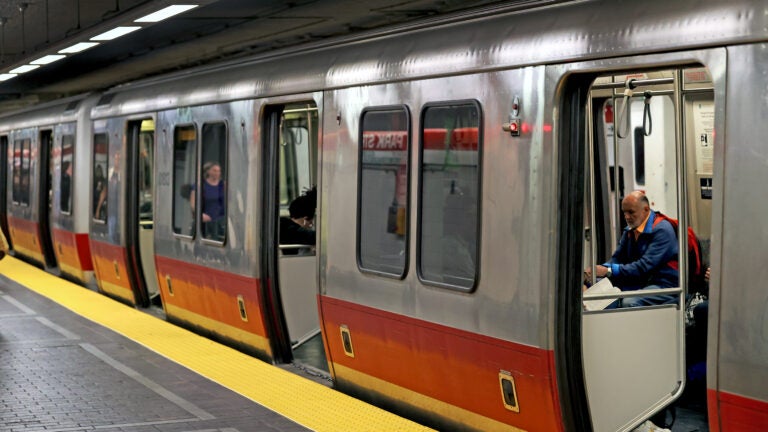
Flanked by Gov. Maura Healey, Lt. Gov. Kim Driscoll, and Transportation Secretary Monica Tibbits-Nutt, Eng began his victory lap earlier this month with a stop at Haymarket Station to greet riders and thank the T workers who helped rid the Orange Line of speed restrictions as part of the agency’s Track Improvement Program.
“This is a big deal, because we’re … giving people time back in their lives, because we know that for far too long, people would have to wait on the T because of these slow zones,” Healey said of the milestone.

Speaking to Boston.com, Eng said a major turning point came during the Boston Celtics championship parade back in June, when the T was able to deliver rush-hour subway service all day, plus extra commuter rail cars — a feat he said the agency couldn’t have pulled off even a year prior.
“The need to deliver the level of service that we did all day long, on all of our modes, and the fact that we were able to do it seamlessly that day really kind of just hammered home that we were definitely moving in the right direction,” he recalled.
Given the agency’s track record, it’s “easy to be a little more disillusioned” when it comes to the T’s ability to live up to its promises, Friend acknowledged. “But I think it’s always impressive when you can say you’re going to do something and you complete it.”
The Orange Line shutdown two years ago offers a clear contrast between today’s MBTA and the T of old: While crews in 2022 were only able to replace 6,000 linear feet of rail in 30 days, September’s 24-day Red Line shutdown managed to replace nearly 70,000. Today, the Orange Line is running free of slow zones for the first time in 15 years, and the Blue Line has been without speed restrictions since May. The T is chipping away at headways — the time between trains — and daily round trips are on the uptick, too.
“This fall especially, you’ve seen some really good improvement on some of the ridership numbers, the Orange Line being a really good example,” Friend said, adding, “The more service you provide, the faster it is, the more, I think, likely people are to take it.”
Speaking to the MBTA Board of Directors in July 2023, TransitMatters Executive Director Jarred Johnson declared confidence in the T was at an “all-time low.” While public trust is difficult to gauge, Friend noted returning ridership is an indication of growing faith in the T.
“I think that’s probably a big vote of confidence that people have for the T … and for the subway system, is that they’re using it more,” he said.
And as service has steadily improved, Eng has attracted a sort of fan club eager (half-jokingly) to see his face and name plastered on statues, presidential ballots, magazine covers, and even patron saint candles.
“I’ve seen them, and I’m flattered by them,” Eng said of the memes. With a nod to Healey’s administration, the state Legislature, and the T’s workforce, he added, “it has been truly a team effort.”
Yet it hasn’t all been smooth sailing. In September, the Track Improvement Program came under Federal Transit Administration scrutiny due to the number of maintenance vehicle derailments, The Boston Globe reported. The following month, a Green Line trolley derailed near Lechmere Station after its operator allegedly sped into a 10 mph zone at 36 mph and failed to stop for a signal.
Eng said he ultimately envisions a T that puts safety first, but one that is also focused on delivering meaningful results for riders. He’s vowed to keep up the momentum from the Track Improvement Program and said if and when speed restrictions reoccur, the T expects to “tackle them quickly, tackle them promptly, and not let them build up like we … did in the past.”
Staying on top of that day-to-day maintenance also keeps costs down over time, Eng said.
“Doing cyclical work, planning it in advance, letting the public know when it’s coming, and figuring out how can we be more creative with delivering the robust level of service and doing work differently in the future is also how we plan to tackle this,” he said.
Complicating matters is the $700 million budget gap expected to hit the MBTA next fiscal year. Those funds are desperately needed; last year, the agency said it would cost an eye-watering $24.5 billion to address the massive backlog of work needed to bring the T into a state of good repair.
“The T is going to need a continuing source of operating revenue, and, you know, we’re looking at that now, on both the short-term and long-term,” Healey acknowledged during the Nov. 8 Haymarket event.
Speaking during September’s Globe Summit, Eng didn’t outright deny fare increases could be on the horizon, though he emphasized the T can’t be funded “on the backs of our riders and the public.” Eng told Boston.com the agency is now taking a hard look at its finances.
“We’re reviewing our spending, and we’re making sure that things that we need today, we manage it and we deliver it,” he said. “The things that maybe, perhaps, can be managed a little differently, maybe even wait a little longer — you know, those are the types of decisions that we’re making internally here as we review how best to keep moving forward and maintain the level of service that the public actually needs and deserves.”
Another component, he said, is “making sure that when we spend dollars, we spend them wisely.” That is, finding ways to stretch the T’s budget further to make it a more cost effective operation.
He cited signals, power systems, and rolling stock, or vehicles, as a few examples of top MBTA priorities to follow the Track Improvement Program.
“I just want everyone to know that the organization that we’re building is not only looking to rebuild for near-term, we’re looking to rebuild long-term, make this organization sustainable and develop that in-house knowledge and skills that can help us manage the system the public expects and deserves,” Eng said. “And we’re on our way to doing that.”

Get everything you need to know to start your day, delivered right to your inbox every morning.



To comment, please create a screen name in your profile
To comment, please verify your email address
Conversation
This discussion has ended. Please join elsewhere on Boston.com