
FBI is investigating cases of 10 scientists ‘who have died or mysteriously vanished,’ including two in Mass.
What began as an internet conspiracy theory — unconfirmed speculation that the deaths or disappearances of at least 10 scientists may be connected — is now the subject of a federal investigation.
The FBI said in a statement Tuesday it is “spearheading the effort to look for connections into the missing and deceased scientists,” all of whom had ties to sensitive information. A day earlier, Republican leaders of the House Oversight Committee said they are seeking information from several federal agencies, including NASA, the Department of Energy, and the Department of Defense, “about the scientists and other personnel connected to U.S. nuclear secrets or rocket technology who have died or mysteriously vanished in recent years.”
While any links among the cases remain unconfirmed, the reports “raise questions about a possible sinister connection” between them, the Republican lawmakers said.
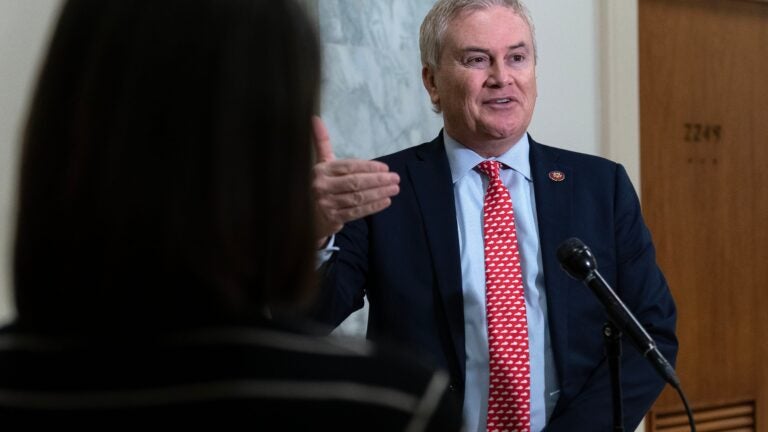
“If the reports are accurate, these deaths and disappearances may represent a grave threat to U.S. national security and to U.S. personnel with access to scientific secrets,” Representatives James Comer of Kentucky and Eric Burlison of Missouri said in a statement.
The circumstances surrounding each of the deaths and disappearances vary. But online speculation has grown in recent months until reaching the halls of Congress and the White House.
The events in question began in 2023 with the death of Michael David Hicks, a Boston University graduate who worked as a scientist at the NASA Jet Propulsion Laboratory from 1998 to 2022, the lawmakers said.
Another NASA scientist, Monica Reza, disappeared while hiking in California in June 2025 and remains missing, the lawmakers said. In February, retired Air Force General William Neil McCasland disappeared from his Albuquerque, N.M., home with a gun and remains missing.
Without identifying them by name, the lawmakers also mentioned “an MIT scientist working on nuclear fusion,” and “a pharmaceutical researcher,” believed to be MIT professor Nuno F.G. Loureiro, who was killed in his Brookline home in December, and Jason Thomas, a scientist from Wakefield who worked for a pharmaceutical company in Cambridge.
The White House said last week it was working with federal agencies to probe any possible links, according to CNN. President Trump referred to the matter as “pretty serious stuff,” the news outlet reported.
“I hope it is random, but we are going to know in the next week and a half,” Trump told reporters on April 16.
This week, a number of experts expressed strong doubts that the cases are part of a broader conspiracy.
“I haven’t actually seen anything that connects the dots between these things,” said Cole Donovan, a former Biden administration research security official who until recently worked at the Federation of American Scientists.
Donovan said the known cases appear to stem from very different circumstances, pointing in particular to the killing of Loureiro, who was shot and killed at his home in Brookline on Dec. 15 by Claudio Manuel Neves Valente.
Authorities say that Valente killed two Brown University students in a mass shooting at the Rhode Island college two days earlier. The two were former classmates at a university in Lisbon.
“That seemed like it was actually an interpersonal thing between the two individuals,” he said.
More broadly, Donovan said the US does not have a history of targeted killings of scientists, unlike some other countries.
“We don’t really have a history of people going down and tracking down scientists” in the US, he said, contrasting it with cases such as the killings of Iranian nuclear scientists abroad.
While scientists working on classified research can face risks such as surveillance, thousands of people hold security clearances and the value of sensitive scientific knowledge often diminishes over time.
“There are literally thousands of people who hold these clearances throughout the government and around the country,” Donovan said.
Sheila Jasanoff, who directs the Program on Science, Technology and Society at Harvard University’s John F. Kennedy School of Government, also cautioned against searching for connections without evidence.
“The search for meaning in random events is as old as humanity,” she said, noting that people naturally look for some semblance of order even when events seem unconnected.
The death of Thomas, who worked as a senior investigator for Novartis Institutes of BioMedical Research in Cambridge, has also been mentioned in speculation about a possible conspiracy.
He was reported missing in mid-December and his body was recovered from Lake Quannapowitt in Wakefield in March after a monthslong search.
A spokesperson for the Middlesex District Attorney’s office said Wednesday that the state medical examiner has not yet ruled on the manner and cause of Thomas’s death, but authorities do not suspect foul play.
In their letters, the Republican lawmakers referenced unverified reports involving two individuals linked to Los Alamos National Laboratory in New Mexico and a government contractor at a nuclear weapons facility.
The House Oversight Committee said it is seeking information not only about the individual cases but also about how agencies protect scientists with access to classified or sensitive material.
Jasanoff warned that attempts to link the deaths carry broader risks.
“In a time of political fracture and polarization, anything that adds to suspicion of science and scientists further undercuts society’s ability to agree on facts and knowledge,” Jasanoff said. “This leads to more social brittleness and vulnerability to public lying. These are serious worries in a democracy.”
David Keith, a former Harvard environmental science and engineering professor who recently moved to the University of Chicago, dismissed the probe into whether the deaths are connected as “nonsense.”
“A society cannot govern itself if it cannot distinguish reality from nonsense,” he said.
Robert Langer Jr., a pioneering MIT biomedical engineer known for breakthroughs in drug delivery and tissue engineering, said it’s impossible to determine whether the cases are connected.
“I wonder if some type of statistical analysis could be done,” he said. “I think if there are unexplained deaths, someone should investigate.”


Be civil. Be kind.
Read our full community guidelines.To comment, please create a screen name in your profile
To comment, please verify your email address