
A new 50-state poll shows appetite for third-party candidates. But will it be too little, too late?
The Washington Post released a—as Donald Trump would put it—yuge 50-state poll Tuesday, as the marathon presidential campaign enters the home stretch.
The poll, which finds Hillary Clinton maintaining a slight lead, is impressive in scale. The Post surveyed more than 74,000 registered voters over three weeks, with individual state samples ranging from 550 to over 5,000.
Yet perhaps most striking is how low Clinton and Trump’s numbers are in some states with just two months left in the race.
The two major-party presidential nominees’ historic unpopularity, combined with inroads from third-party candidates, appear to have driven Clinton and Trump’s support percentage into the 30s, if not 20s, in many states.
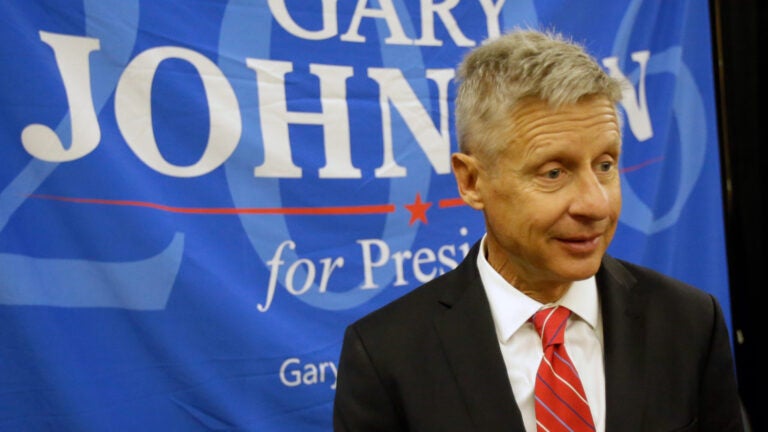
In Maine, for example, Clinton leads Trump 37 percent to 34 percent, with Libertarian candidate Gary Johnson receiving 15 percent support and Green Party candidate Jill Stein notching 8 percent.
Johnson, a former Republican governor of New Mexico, receives more than 15 percent support in 15 states, including Maine and Rhode Island. In some of the Mountain West states, Johnson is actually within striking distance of second place with more than 20-percent support, according to the poll.
In Massachusetts, the home state of Stein, as well as Johnson’s running mate, former Republican Gov. Bill Weld, the third party candidates aren’t getting much of a home-field boost.
Clinton leads in the Bay State 48 percent to Trump’s 29 percent, with Johnson and Stein receiving 11 percent and 5 percent, respectively—not much more than their national support in recent polls.
In Tuesday’s poll, Stein received 7 percent in 10 states, three of which were in New England.
Out of all 50 states, Stein tops out at 10 percent in Vermont, the home state of former presidential candidate Bernie Sanders, whose supporters the Green Party candidate has hoped to poach from Clinton. Clinton, for her part, has a comfortable lead in the Green Mountain State—leading Trump 45 percent to 24 percent. Johnson grabs 11 percent support in Vermont.
For all the regional inroads being made, it could be “game over” for the third party candidates if they don’t achieve the national 15-percent support threshold necessary to make it into the presidential debates (the first of which is September 26).
A Politico analysis of the polls being used by the debate commission found that Johnson’s average is currently at 9.2 percent. And as Politico noted, that figure is not a marked increase from two months ago.



To comment, please create a screen name in your profile
To comment, please verify your email address
Conversation
This discussion has ended. Please join elsewhere on Boston.com