
Deval Patrick denounces Donald Trump in newspaper published by Trump’s son-in-law
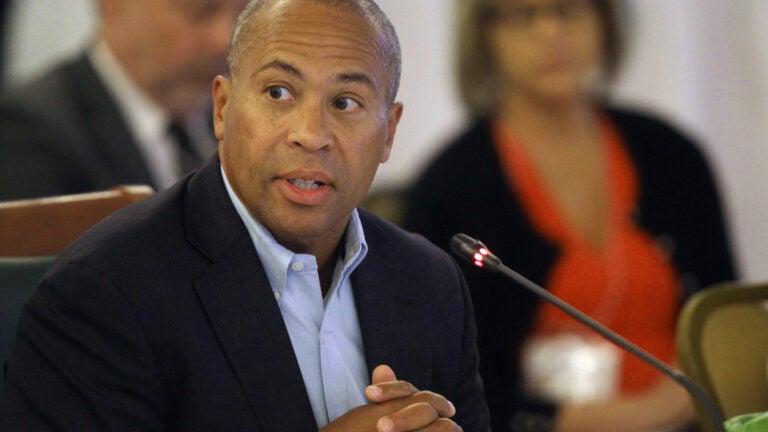
Deval Patrick has seen this before.
The “Trump phenomenon,” as described by Patrick in a The New York Observer interview, carries unfortunate themes that he is all too familiar with—whether in historical accounts or anecdotes during his time as governor of Massachusetts.
The former governor picked a curious outlet to denounce Trump’s demagoguery; The Observer is published by Trump’s son-in-law Jared Kushner.
In the interview published Thursday with Boston attorney Jeff Robbins, Patrick tried to put Trump’s rise in historical context, but admits that the Republican nominee’s brand is concerning:
“I’m feeling as though there are two forces around the world that are on the rise,” Patrick says. “One is intolerance. The other is bully-style leadership. In the past, when both occur at the same time it has been a calamity. Historically, the United States has served as antidote to these phenomena. So what is most worrying is whether the United States will be an antidote again.”
Patrick said his concerns about intolerance pre-date Trump’s campaign and recalled a personal experience during his time as governor.
In 2014, he offered to temporarily shelter up to 1,000 children who had immigrated to the United States illegally. The offer—which was never taken up by the federal government—set off vocal protests from the local conservative community and media.
On one Saturday morning, Patrick told the Observer, he clandestinely ventured out alone to a local Home Depot for an errand. His cover (a sweatshirt and baseball cap) was quickly blown at the store, where he was then loudly accosted by an individual customer enraged by Patrick’s “sanctioning” of illegal immigration.
Patrick heard him out, told him that he understood his position, and eventually walked to the back of the line of customers waiting for the cashier to ring them up. As he did, he recalls, one after the other of the customers leaned over to whisper to him “I’m with you on those children” or “I agree with you on those kids.”
Patrick said his takeaway was that moments of anger, often expressed more loudly than that of charity, weren’t always representative of the whole.
“We need to find a way to flip that the other way,” the former governor said. “We’ve learned to shout our anger and whisper our kindness. We need to flip it around and shout our kindness and whisper our anger.”





To comment, please create a screen name in your profile
To comment, please verify your email address
Conversation
This discussion has ended. Please join elsewhere on Boston.com