
Sign up for the Today newsletter
Get everything you need to know to start your day, delivered right to your inbox every morning.
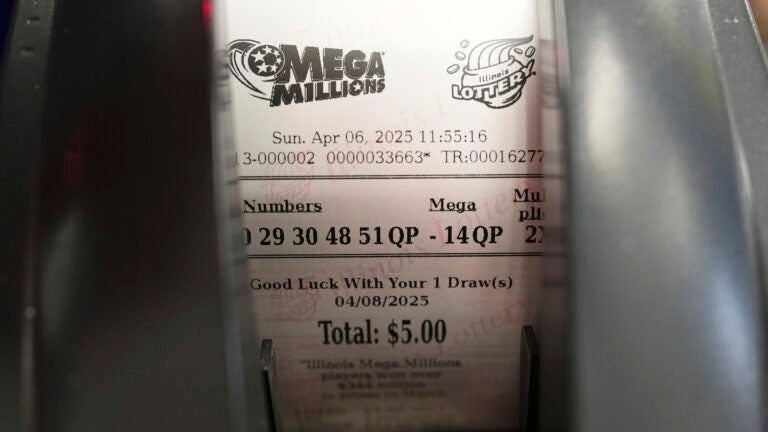
It’s been an unlucky streak for Mega Millions in Massachusetts, where sales have fallen 25% since ticket prices jumped from $2 to $5 one year ago.
There are several reasons sales continue to lag, according to Mark Bracken, executive director of the Massachusetts Lottery Commission.
When tickets cost $2, customers would often buy up to three at a time for a total of $6. Now, they are more likely to buy just one ticket for $5, he said.
Additionally, with an almost unheard-of six winners nationally last year, the jackpot has remained relatively low, meaning casual players are not as willing to get in on the game. The probability of the game hitting the jackpot six times in a year nationally is 4%.
“The odds weren’t on our side,” Bracken said. “Because it did get hit six times.”
But Bracken isn’t concerned about the dip in sales. After all, Mega Millions accounted for only 1.8% of total revenue last year. The vast majority came from the sale of instant tickets (or scratch tickets), which brought in close to $4 billion last year. By comparison, Mega Millions only brought in $1.8 million.
The next biggest revenue source is Keno, which brought in $1.3 billion last year, accounting for over 20% of sales.
The reason behind the discrepancies is that Massachusetts has the highest prizes in the nation for scratch tickets, Bracken said. Those prizes can change people’s lives, he added.
In many other states, the only chance for someone to become a millionaire is through the lottery. But not here in Massachusetts. The $50 instant ticket Mega Money has a top prize of $25 million.
Last year, Massachusetts residents received $4.4 billion in prizes.
“We’re like an anomaly out in the industry in terms of how our players can win,” Bracken said.
Anecdotally, Bracken said he has heard players do not like the new changes to Mega Millions, but they are winning more money.
In the year leading up to the change in April 2025, the Mass Lottery had $111 million in sales, paying out around $14 million in prizes. (Granted, three people each won $1 million in this timeframe).
In the year since the change, the Mass Lottery had $85 million in sales but paid out $15 million in prizes, for a collective $1 million more in prize money, mostly won in low-tier prizes.
So players are winning more money – and with the Mega Ball dropping from 25 to 24 and the odds changing from 1 in 302 million to 1 in 290 million, they have more chances to win.
But to increase sales, Bracken said, you need a high jackpot. So far this year, the highest is $163 million. To get casual players to buy, it needs to hit at least $700 million if not more, with week-over-week sales increasing as the jackpot rolls over.
Why do sales matter? The Mass Lottery distributes the revenue as unrestricted local aid to the cities and towns in the Commonwealth that use it for education, road improvements, public safety, and senior services. Over $1 billion in net profit was generated last year.
But there is more competition than ever. There are casinos, sports betting, crypto markets, and prediction market betting all pulling at the purse strings of residents.
Other lottery games offered in the state, Powerball and Megabucks, remain at $2 per ticket with similar low-tier prizes.
Add on an uncertain economy and high energy costs, and there is only so much left to buy lottery tickets, Bracken said.
“Unless we get that jackpot, it’s tough for these sales,” he said.

Get everything you need to know to start your day, delivered right to your inbox every morning.




Be civil. Be kind.
Read our full community guidelines.To comment, please create a screen name in your profile
To comment, please verify your email address