
Sign up for the Today newsletter
Get everything you need to know to start your day, delivered right to your inbox every morning.
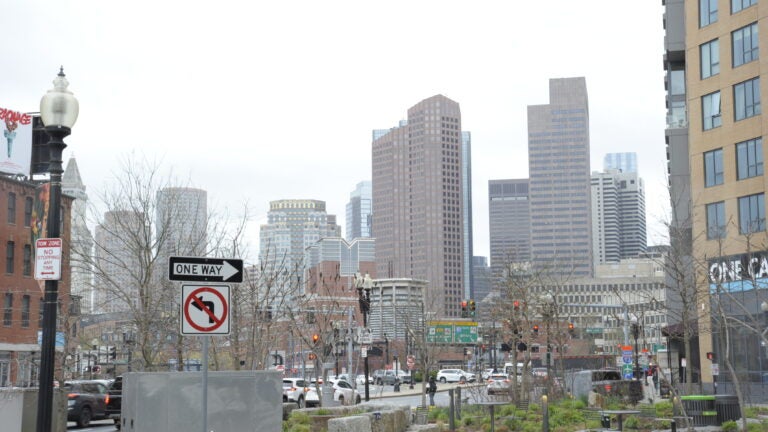
From the outside, 281 Franklin St. looks like any other downtown office building, with a Mediterranean grill on one corner and a shoe repair shop on the other. But upstairs, where office workers once sat, there are now 15 new apartments.
The building is the first completed project in Boston’s office-to-residential conversion program, launched in 2023 and extended twice as the city pushes to transform underused office space into much-needed housing.
So far, the initiative has approved 29 buildings for conversion, a pipeline of 1,730 residential units, with six projects under construction and the one completed on Franklin Street.
“I view it as being a win-win, especially for Boston today,” says John Weil, who heads the city’s office-to-residential efforts.
The city’s conversion program is designed to make office-to-residential projects easier and more appealing. It offers developers a 29-year, 75% residential tax abatement, as-of-right zoning downtown, and a streamlined Article 80 permitting process, all intended to cut costs and speed construction.
Paired with the recently approved zoning changes that now allow residential use in every downtown district, city officials say the program could open the door to a wave of new housing.
But with vacancies still hovering around 20%, a larger question remains: Will these new apartments make a real dent in the housing shortage or the hollowed-out office market?
“Candidly, this program was never meant to be a panacea that’s going to solve the office vacancy problem,” Weil said. But by creating new housing and consolidating office demand into fewer buildings, he added, the program could leave both markets in a stronger position.
Nationally, office-to-apartment conversions continue to surge. More than 90,000 units are now in the pipeline with a 28% increase from last year, according to Yardi Matrix Research. The boom, which began four years ago in response to the post-pandemic glut of office space, is concentrated in older, more affordable Class B and C buildings.
New York City leads the nation with more than 16,000 planned conversions, followed by Washington, D.C., with nearly 8,500. Chicago and Los Angeles trail close behind at roughly 4,300 each.
Boston, however, didn’t crack the top 20, in part because Yardi excluded projects under 50 units and only counted those active at the start of the year.
Cost is a major driver for the increase in conversions. Demolishing and rebuilding is far pricier than converting what already exists, said Doug Ressler, senior research officer at Yardi Matrix.
“It costs more to knock down a building and then rebuild it with the new labor and material rates that you got today,” he said.
Many cities are adding incentives to encourage conversions. New York’s 467-m program offers up to 35 years of tax relief for projects with 50 or more units. Washington, D.C., provides a 20-year tax abatement for downtown conversions and a 15-year tax freeze under its Office-to-Anything program.
While Boston trails other major cities in the number of new units, Ressler said the city is moving in the right direction by streamlining Article 80, updating zoning, and offering a competitive abatement program.
“Faster time equals money, and people are beginning to realize that,” he said.
Converting offices into housing isn’t simple, said Adam Burns, owner of Burns Realty & Investments and developer of the Franklin Street project and the 63 Summer St. conversion now underway.
Some elements like foundations, windows, and utilities can be reused. But major challenges remain, especially bringing natural light into deep floor plates, where every bedroom requires a window.
Layout also matters. Elevator and stairwell placement can complicate design, and the cost of bringing older buildings up to residential code can quickly make projects unworkable.
“I like to say it’s geometry and geography,” Burns said.
He added that the city’s program made both projects feasible and could again, under the right conditions.
Asked whether he would do this again, Burns said, “The short answer is yes. The longer answer depends on the building.”
Demand to live downtown is growing, even as the area transitions from a workplace hub to more of a residential neighborhood, said Darin Thompson, founder and CEO of Stuart St. James.
“As Mayor Wu has noted publicly, Boston’s housing shortage isn’t measured in single units or even hundreds — it’s tens of thousands of units,” he wrote in an email to Boston.com.
At 281 Franklin St., studios are renting for about $3,150 a month, which Thompson said is competitive. Still, he doesn’t expect conversions alone to bring prices down. Adding units to what he called a “near-zero residential inventory,” however, should put “downward pressure over time.”
The early renters will likely be young professionals drawn to walkability — people willing to trade space for proximity to jobs, restaurants, and the waterfront. Amenities remain limited, but more residents could change that.
“It’s a bit of a chicken-and-egg situation,” Thompson said.
Industry leaders say the shift is already underway. “If conversions can happen, they will happen,” said Greg Vasil, CEO of the Greater Boston Real Estate Board, noting that demand to live in Boston remains strong.
More residents, Vasil added, will bring more retail and services, though affordability remains the biggest challenge.
With new housing supply slowing to a “trickle,” any added units help, Vasil said.
For downtown advocates, the payoff goes beyond housing numbers. “We’ve taken an office-to-everything approach,” said Michael Nichols, president of the Downtown Boston Alliance, pointing to conversions into hotels, dorms, and cultural spaces.
But the biggest impact, he said, will come from adding residents.
“There’s nowhere in the city that has more to offer,” Nichols said, citing the area’s density of shops, restaurants, and transit. “It’s the most accessible place … to live, work, and play all in one location.”

Get everything you need to know to start your day, delivered right to your inbox every morning.





Be civil. Be kind.
Read our full community guidelines.To comment, please create a screen name in your profile
To comment, please verify your email address