
Sign up for the Today newsletter
Get everything you need to know to start your day, delivered right to your inbox every morning.
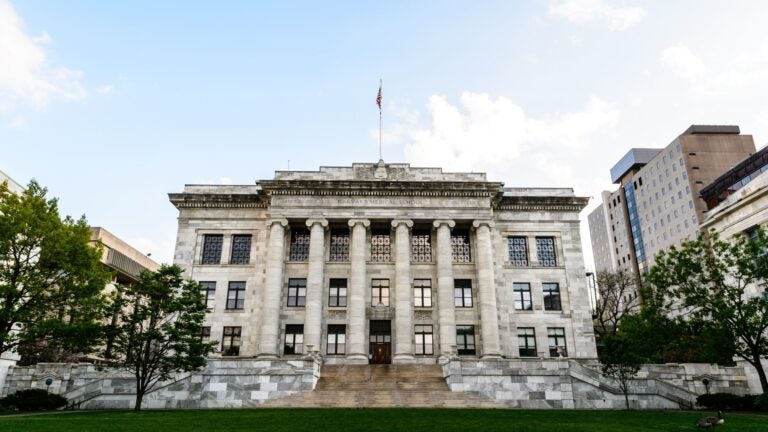
Nearly 200 Harvard faculty, students, staff, and alumni have submitted discrimination complaints to the university after its medical school cancelled a panel featuring Gazan patients receiving care in Boston.
Their complaints allege a “pervasive pattern of bias against and selective silencing of the voices of Palestinians” at Harvard, which they say creates “a hostile environment on campus for Palestinians, Arabs, and Muslims, as well as Jewish and other community members who support Palestinian human rights,” according to a release from Concerned Harvard Faculty, a group that emerged after pro-Palestinian student activists camped in Harvard Yard in May.
A planned lecture on wartime healthcare and a panel with patients from Gaza were cancelled the day they were supposed to happen by Harvard Medical School Dean George Q. Daley, after fielding complaints that students would hear from Gazans but not also Israelis, the Harvard Crimson reported.
The complaints — of which 36 are from students, 32 from faculty, and 30 from staff — call on Harvard to issue a formal apology to students and patients for cancelling the lecture and panel and to condemn hate speech against Harvard institutions studying Palestine. They also want Harvard to found an Institute of Palestine Studies, launch a university-wide investigation into systemic anti-Palestinian bias, and require university-wide training against anti-Palestinian bias by an organization such as the Institute for the Understanding of Palestinian Racism.
“We have seen that in the case of Palestine, instead of protecting academic integrity and academic freedom, Harvard picks a side,” said Dr. Titi Afolabi, a graduate of Harvard Medical School and a physician at an HMS-affiliated hospital, in the release.
Last month, Jay Ulfelder, a political scientist who led the Harvard Kennedy School’s Nonviolent Action Lab, resigned from his position “in protest of Harvard University’s response to the genocide in Gaza and deepening repression of campus activism against it.”
In his letter of resignation, which he shared on Bluesky, he said what is happening in Gaza is “one of the worst humanitarian and human-rights catastrophes in my 55-year lifetime.”
“I help lead a program that studies civil resistance at a research center committed to advancing democracy; and my employer, an internationally renowned institution ostensibly committed to academic freedom, will not allow me or my colleagues or its own students to speak freely about these things, lest we offend people who support them, or who misunderstand or intentionally misconstrue principle criticism of Iasraeli apartheid and genocide and the ideology underpinning them as antisemitic,” he wrote.
There have been additional resignations in other parts of the university, the release said, including a Muslim faculty member who said they have been “acutely aware of the anti-Muslim bias” since they were a student at Harvard decades ago.
“That bias has only gotten worse,” they wrote.
In a statement from its media relations team, Harvard Medical School maintained its commitment to finding ways to “constructively explore” the ways in which medical and healthcare are impacted by war and geopolitical conflict.
“Such explorations should always occur in an educational context with a pedagogic goal in mind,” the statement said. “With core tenets of academic freedom in mind, we seek to ensure all of our educational programming satisfies our learning objectives.”
Last week, the university entered an agreement with the Department of Education, which had found that Harvard had failed to respond accordingly to harassment incidents against Arab, Muslim, and Palestinian students. The school pledged to send a voluntary “climate survey” to its students and faculty, improve its records, and keep track of calls to its anonymous reporting hotline.
Besides failing to respond accordingly to harassment incidents against Arab, Muslim, and Palestinian students, the DOE said that the school did not have a sufficient procedure to handle Title VI harassment complaints, failed to respond promptly to reports of hostile environments, and did not have adequate records to determine Title VI compliance.
Get everything you need to know to start your day, delivered right to your inbox every morning.



To comment, please create a screen name in your profile
To comment, please verify your email address
Conversation
This discussion has ended. Please join elsewhere on Boston.com