
Sign up for the Today newsletter
Get everything you need to know to start your day, delivered right to your inbox every morning.
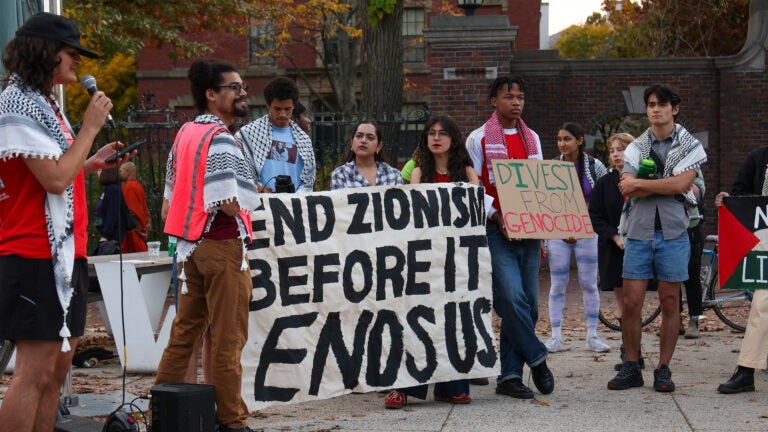
Harvard University has agreed to adopt a controversial definition of antisemitism as part of a settlement to resolve two lawsuits that accused the school of not doing enough to curb anti-Jewish discrimination and harassment on campus.
The agreement comes after more than a year of turmoil for Harvard, which weathered campus protests and national scrutiny amid debate over Hamas’s 2023 attack on Israel and the subsequent war in Gaza.
As part of the deal, Harvard turned to the International Holocaust Remembrance Alliance definition of antisemitism, which says certain criticism of Israel and Zionism can be antisemitic, such as “claiming the existence of a State of Israel is a racist endeavor” and “drawing comparisons of contemporary Israeli policy to that of the Nazis.”
“However,” the IHRA notes, “criticism of Israel similar to that leveled against any other country cannot be regarded as antisemitic.”
Harvard will now “consider” the IHRA definition and examples when evaluating complaints alleging antisemitic discrimination or harassment, the university said in a press release Tuesday. That’s in addition to providing training on the definition and combating antisemitism to staff who review discrimination complaints.
Critics say the IHRA definition conflates criticism of Israel and Zionism with antisemitism and could have a chilling effect on pro-Palestinian speech and protest. Kenneth Stern, director of the Bard Center for the Study of Hate and the definition’s lead drafter, has said it was meant to help governments collect data on antisemitism and “was not drafted, and was never intended, as a tool to target or chill speech on a college campus,” The New Yorker reported last year.
Harvard’s decision prompted sharp criticism from campus pro-Palestinian groups.
“Rather than listening to wide-supported demands to divest from companies directly complicit in genocide, the university is doubling down on its commitment to draconian measures against organizers,” the Harvard Undergraduate Palestine Solidarity Committee said in a statement. “But that will never stop our solidarity with Palestine.”
The Harvard Graduate Students Union’s Boycott, Divestment, and Sanctions Caucus accused the university of “intensifying its assault on campus free speech” and said its adoption of the IHRA definition “undermines the constitutionally-protected rights of its community members.”
“Instead of upholding the constitutional principle of the freedom of speech, Harvard’s administration has chosen to participate in the Republican- and billionaire-led attack on their own students, student workers, staff, and faculty,” the group asserted.
In settling the lawsuits, Harvard said it will clarify on its website that both Jewish and Israeli identity and Zionist beliefs are covered under its discrimination and bullying policies. The university will also post examples of conduct that could violate those policies, such as “excluding Zionists from an open event, calling for the death of Zionists,” and “using or disseminating tropes, stereotypes, and conspiracies about Zionists.”
Additional steps in the agreement include reporting annually for the next five years on the university’s response to discrimination or harassment, hiring someone to consult on all antisemitism complaints, investing additional resources in studying antisemitism, and establishing an official partnership with a university in Israel.
“We will continue to strengthen our policies, systems, and operations to combat anti-Semitism and all forms of hate and ensure all members of the Harvard community have the support they need to pursue their academic, research and professional work and feel they belong on our campus and in our classrooms,” a Harvard spokesperson said in a statement.
Students Against Antisemitism brought one of the lawsuits against Harvard, and The Louis D. Brandeis Center for Human Rights Under Law and Jewish Americans for Fairness in Education filed the other. Harvard’s settlement with the groups includes unspecified “monetary terms,” though the university has not admitted to any wrongdoing.
One of the original plaintiffs, Harvard Divinity School student Alexander “Shabbos” Kestenbaum, declined to join the settlement and continues to pursue his claims against Harvard, the university noted.
“When fully and faithfully implemented, this agreement will help ensure that Jewish students are able to learn and thrive in an environment free from anti-Semitic hate, discrimination, and harassment,” Kenneth L. Marcus, founder and chairman of the Brandeis Center, said in a statement.
A spokesperson for Students Against Antisemitism said the settlement demonstrates Harvard’s “leadership in the fight against antisemitism and in upholding the rights of Jewish students.”

Get everything you need to know to start your day, delivered right to your inbox every morning.




To comment, please create a screen name in your profile
To comment, please verify your email address
Conversation
This discussion has ended. Please join elsewhere on Boston.com