
This Is Why the T Is Free Friday
In case you forgot.
After two weeks of beautiful spring days, it’s tempting to put aside the painful memories of this year’s traumatic, terrible winter.
But with the MBTA offering a day of free fares Friday and discounted weekly and monthly passes for the month of May to make for up their abysmal service record this winter, let’s take a look back at what we all went through:
It was bad.
[fragment number=0]
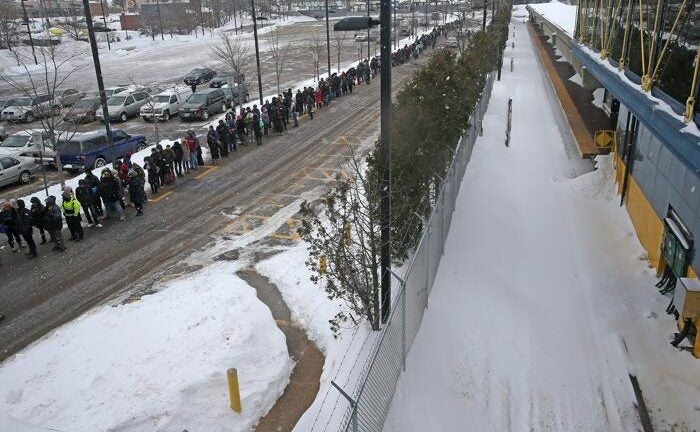
Commuters faced hours-long delays.

Passengers wait up to two hours for a ride at North Quincy station on Feb. 11.
Canceled rides.

Cancellations mount up at South Station in this Feb. 10 photo.

Commuters wait for their trains at North Station on Feb. 23.
Stranded trains, like this one between the Red Line’s Quincy Center and Quincy Adams stations.

Passengers disembarking from a disabled Red Line train in Quincy.
Along with tons, and tons, and tons of snow. Ultimately, Boston saw over 110 inches of snow this winter, a new city record.

Lee Anderson adds to the pile of snow beside the sidewalk in front of his house in Somerville on Feb. 10.
Halfway through the month, then MBTA General Manager Beverly Scott told reporters she would resign.

Then MBTA General Manager Beverly Scott, seen here during a Feb. 10 press conference, was often fiery in her response to questions about T operations and her performance.
Keolis Commuter Services, a private company that operates the system’s commuter rail line, was fined $434,425 after 65 percent of their commuter rail trains were late in February, with full service taking over five weeks to return.

A commuter rail travels through snow.
With the agency strapped for buses, Peter Pan even started shuttling commuters between certain Red Line stops. The city also employed labor from police cadets, union workers, and prisoners to help shovel snow off of public property.

Suffolk County prisoners in the Community Works Program (CWP) helped shovel out Boston.
Does a day of free rides and some discounts may not make up for one of the worst transit crises in the city’s recent memory? Probably not. But agency spokesperson Joe Pesaturo told BDCWire that the cost of the discounts would be about $5 million — $1.4 for the free rides and $3.6 million for a monthly pass discount — so taxpayers may as well get their money’s worth.
If you really want to reap the benefits, riders can also show their CharlieCard to local retailers for some small discounts Friday.



To comment, please create a screen name in your profile
To comment, please verify your email address
Conversation
This discussion has ended. Please join elsewhere on Boston.com