
Newsletter Signup
Stay up to date on all the latest news from Boston.com
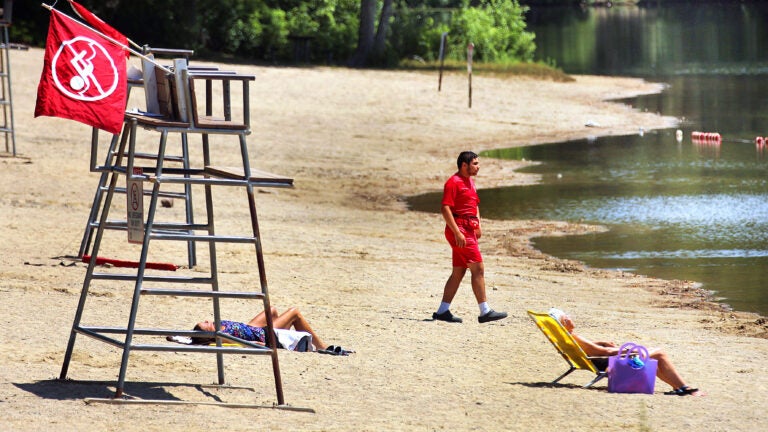
Water quality in Boston’s major rivers is improving, but choose your swimming spot carefully.
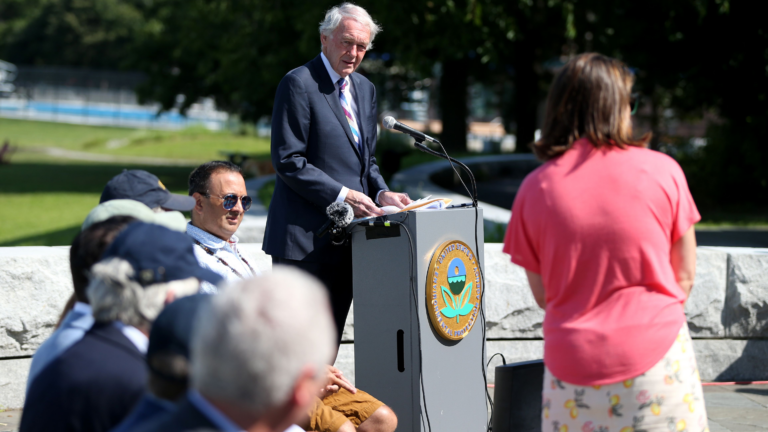
Sen. Ed Markey, Cambridge Mayor Sumbul Siddiqui, and representatives from local watershed associations gathered at Magazine Beach in Cambridge on Thursday to announce the newest water quality report cards for Boston’s three rivers, the Charles, Mystic, and Neponset.
The report cards measure how safe different parts of the rivers are for recreational use (aka swimming). To create them, the EPA used 2022 data on E. coli bacteria concentrations, precipitation levels, and — in the case of the Charles — incidence of cyanobacteria blooms and sewer overflows to assign grades of A to F to different sections of the rivers.
All three rivers felt the effects of climate change last year, with prolonged droughts increasing bacteria concentrations in the water and heavy precipitation causing sewer overflows that washed gasoline, waste, and polluted runoff into the rivers.
Despite these challenges, the EPA said in a press release that all three rivers “show vast overall improvements” from the previous year. Most segments of the rivers got As and Bs, but all three had problem areas.
The Charles scored mainly As and Bs. The EPA reported that “while the grades show vast improvements from 1995, progress has largely stalled” due to drought-induced bacteria growth and pollution from sewer overflows.
Water quality in the Mystic River watershed stayed consistent with previous years, the EPA reported. Trouble areas that received D grades, including the Alewife Brook and Malden River, dealt with sewer overflows last year.
The main channel of the Neponset got As and Bs, but many of its tributaries that flow through cities and towns got Cs and Ds, largely due to high precipitation and drought.
The only areas of the rivers that received A+ grades were Upper Mystic Lake on the Mystic, and Turner’s Pond, Crackrock Pont, and Willett Pond on the Neponset.
At Thursday’s press conference, EPA New England Regional Administrator David W. Cash acknowledged that water pollution continues to disproportionately impact the region’s underserved communities.
“Today’s report card … underscores that when communities, governments at all levels, and organizations come together, we can solve long-standing environmental and equity challenges to create healthier rivers,” Cash said. “But the report also highlights rivers that are polluted especially in underserved and overburdened communities that deserve to enjoy a clean and healthy environment. More work is needed to bring environmental justice to these communities.”
Markey thanked the EPA and commended local officials’ work to improve water quality in Greater Boston.
“From historic drought to record-breaking floods, communities across Greater Boston are bearing witness to the climate crisis each and every season,” Markey said. “I look forward to the day when every resident of Greater Boston has access to an A+ river or stream in their community.”
Swimmable urban rivers do exist, just not in Boston (yet). Cities like Paris and Munich are making herculean efforts to clean up their waterways for recreational use by implementing aggressive testing regimens and installing water purification systems.
The Charles, Mystic, and Neponset river watershed associations want Boston to be next, and have urged local officials to commit to cleaning up the rivers and “greening” their infrastructure to reduce toxic runoff.
At Thursday’s press conference, Siddiqui agreed that there’s more work to be done.
“Our residents deserve access to these urban gems and it is our responsibility to provide it,” Siddiqui said.
You can view the full water quality report cards here.
Stay up to date on all the latest news from Boston.com





To comment, please create a screen name in your profile
To comment, please verify your email address
Conversation
This discussion has ended. Please join elsewhere on Boston.com