
Newsletter Signup
Stay up to date on all the latest news from Boston.com
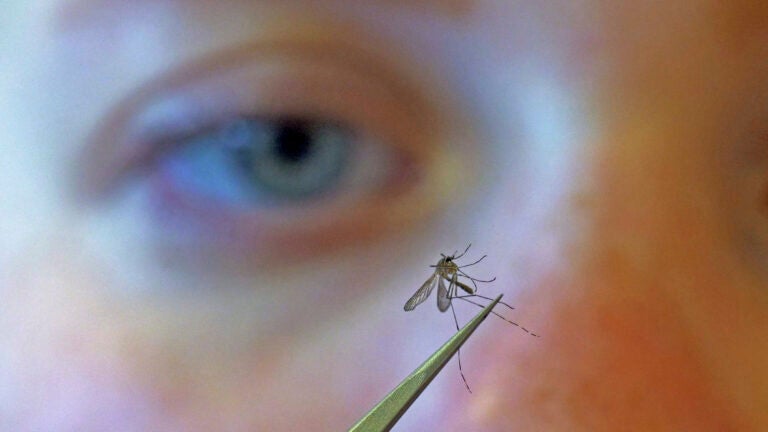
The risk of people being infected by West Nile virus is increasing, according to Boston officials.
The Massachusetts Department of Public Health raised the city’s risk level for West Nile from “low” to “moderate” on Friday. While no human cases of the virus have been detected in Boston residents, officials are reporting an uptick in infected mosquitos in neighboring cities and towns.
The Boston Public Health Commission said it is “likely” that Boston residents will get infected, and it is possible that some people in the city are infected without knowing it.
West Nile virus is spread through mosquito bites. The insects pick it up from infected birds, before transmitting it to humans and other animals.
According to the CDC, 80% of people infected with the virus do not develop any symptoms. About one in five infected people develop a fever with symptoms like headaches, rashes, and body aches. Most who get mildly sick from the virus recover completely, but fatigue associated with the virus can last for months.
About one in 150 infected people develop a severe illness that impacts the central nervous system. Inflammation of the brain or the membranes surrounding the brain can occur in these cases. People of any age can get very sick from West Nile, but those over the age of 60 are at greater risk.
Current West Nile levels are measured by mosquito collection and testing. From 2000 to 2008, state officials urged the public to report dead birds, which were then tested, as a way to monitor West Nile virus activity. But today that method is not believed to be particularly effective, especially compared to mosquito collection.
In Boston, West Nile risk levels typically rise as the summer goes on. Officials say the best way to prevent infection is to prevent mosquito bites altogether.
“During this time of the year and into the fall, we encourage residents to protect themselves by using insect repellant and wearing long-sleeve clothing when outside from dusk to dawn for prolonged periods of time,” Commissioner of Public Health Bisola Ojikutu said in a statement.
West Nile virus was first detected in Massachusetts this year on July 6 in Brookline. Only 10 human cases of the virus were detected in 2022, but this year’s abundance of rain and hot temperatures could cause an increase in mosquito numbers. On top of that, the mosquitos that carry West Nile are becoming more resistant to insecticides, NBC News reported.
Mosquitos rely on water to breed, and can grow into adults in just a week. Officials recommend that people keep an eye on anything that can catch water around their homes, such as flower pots, gutters, garbage cans, pools, and old tires.
There have been 69 total confirmed cases of West Nile in humans nationwide so far this year, according to the CDC. Those cases are spread across 16 states, with most of them coming in Arizona.
Stay up to date on all the latest news from Boston.com





To comment, please create a screen name in your profile
To comment, please verify your email address
Conversation
This discussion has ended. Please join elsewhere on Boston.com