
Newsletter Signup
Stay up to date on all the latest news from Boston.com
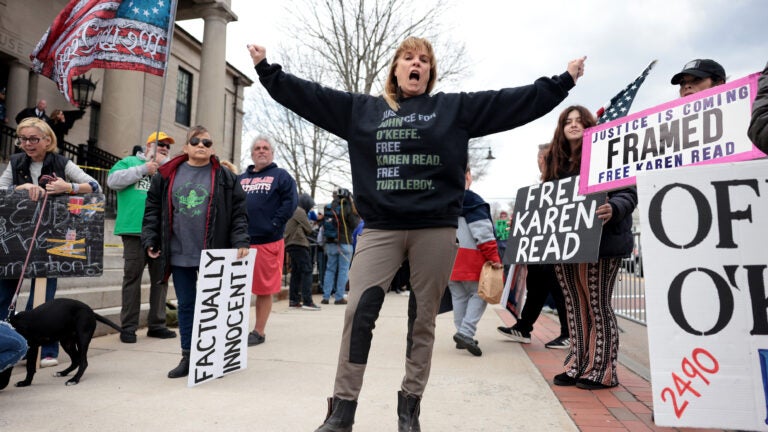
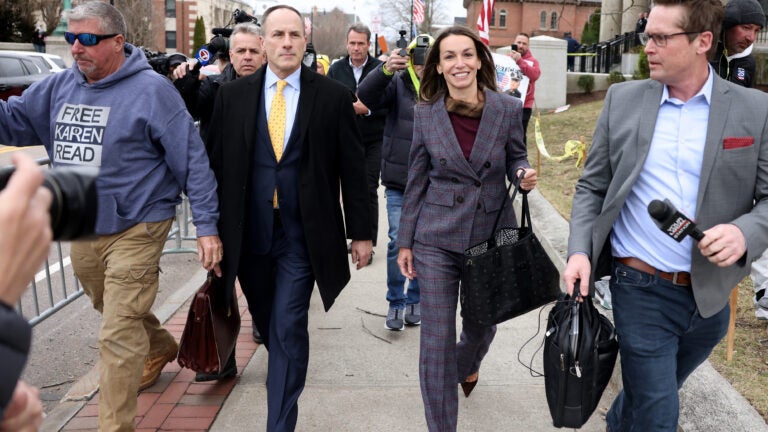
Prosecutors in the Karen Read murder case are asking a judge to curtail the zealous crowds that swarm Norfolk Superior Court during Read’s court dates, clad in “Free Karen Read” shirts and hoisting signs that riff on key pieces of evidence from the case.
In a motion filed Tuesday, prosecutors asked Judge Beverly Cannone to establish a buffer zone around the courthouse in Dedham during Read’s trial, which is slated to begin April 16.
“There is a substantial risk to both the defendant and the Commonwealth’s rights to a fair trial that would be jeopardized if prospectives [sic] jurors are exposed to the messages contained in the demonstrations, especially before this Court has had the opportunity to instruct trial jurors about their obligations to remain fair and unbiased,” Assistant District Attorney Adam Lally wrote in the filing.
Read, 44, is accused of killing her boyfriend, Boston Police Officer John O’Keefe, and leaving him to die in the snow outside a fellow police officer’s home in Canton in 2022. Her lawyers say she was framed, alleging a widespread cover-up by witnesses and law enforcement.
There have been frequent demonstrations on the courthouse steps and nearby sidewalks on days when Read or Turtleboy blogger Aidan Kearney — the unofficial face of the “Free Karen Read” movement — are back in court. Kearney is facing separate charges for allegedly intimidating witnesses in Read’s case, though he argues that his actions were protected under the First Amendment.
During the courthouse demonstrations, “individuals often carry ‘Free Karen Read’ signs or posters with their interpretation of the evidence,” Lally noted. “Individuals have also amplified their voices with bullhorns to yell at potential witnesses or promote their theory of the case.”

Lally asked that copies of the state law on picketing a court, judge, juror, witness, or court officer be posted prominently in and around the courthouse as Read’s trial approaches, alerting protesters to the possibility of criminal charges should they choose to picket.
He also requested an order “prohibiting any individual from demonstrating in any manner, including carrying signs or posters, or making statements about the defendant, law enforcement, the Norfolk District Attorney’s Office, potential witnesses, or the evidence” within 500 feet of the courthouse.
The motion further asks Cannone to bar people from wearing apparel or carrying signs or accessories with “any images or writing that suggests a favorable or unfavorable opinion of either party” in places where prospective jurors may gather or walk to the courtroom.
Most notably, prosecutors requested a ban on “buttons, shirts, or insignia related to the defendant, the victim, or law enforcement,” including department-issued uniforms or police emblems for members of law enforcement who testify or sit in on the trial.
Read was back in court Tuesday for a motions hearing — check out the latest updates on Boston.com.
Karen Read Case – Prosecutors’ Buffer Zone Motion

Stay up to date on all the latest news from Boston.com




To comment, please create a screen name in your profile
To comment, please verify your email address
Conversation
This discussion has ended. Please join elsewhere on Boston.com