
Newsletter Signup
Stay up to date on all the latest news from Boston.com
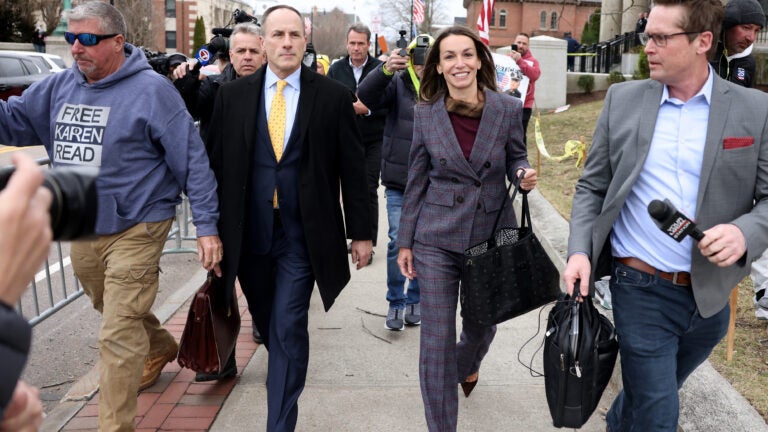
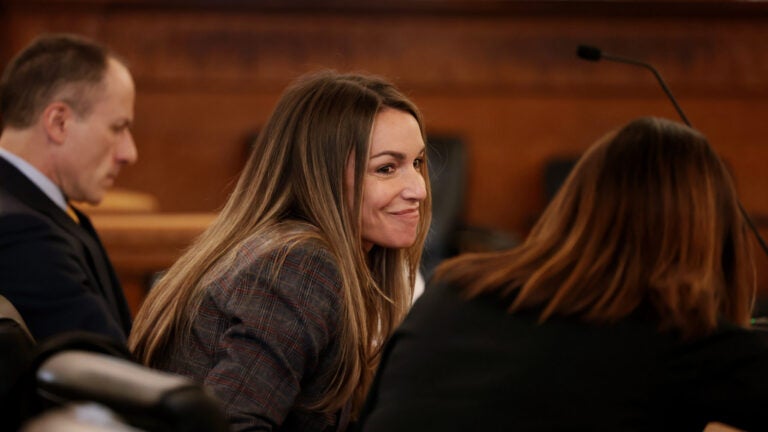
Her April 16 trial date looming, murder defendant Karen Read returned to court Tuesday for yet another battle over pretrial motions.
The brief hearing focused largely on the remaining non-evidentiary motions, with prosecutors also providing a brief update on the status of DNA testing for an apparent hair found on the back of Read’s car.
Read, 44, is accused of striking her boyfriend, Boston Police Officer John O’Keefe, with her SUV on Jan. 29, 2022. Prosecutors allege the Mansfield woman left O’Keefe to die in the snow outside a fellow Boston officer’s home in Canton following a night out with friends. Yet Read’s lawyers say she’s the victim of a widespread cover-up, pinning the blame on other afterparty guests and suggesting that O’Keefe was actually beaten inside the home.
Prosecutors previously said trace analysis and forensic testing identified O’Keefe’s DNA on Read’s broken tail light and microscopic pieces of red and clear plastic on his clothing. Investigators also allegedly discovered an apparent hair on Read’s car, though the small size of the sample complicated efforts to test it for DNA.
According to Assistant District Attorney Adam Lally, Virginia-based Bode Laboratory said it should know whether it can generate a mitochondrial DNA profile from the sample by the end of March. If Bode is able to generate a DNA profile from the hair and compare it to O’Keefe’s DNA, the lab could issue its report by mid-April at the earliest, Lally said.
The delayed testing has tied up prosecutors’ request for reciprocal discovery — the evidence defense attorneys supply prosecutors before trial — because the prosecution must fulfill its own discovery obligations first.
“Given that we have an April 16 trial date and I have nothing as far as any sort of reports or notice of experts or testing or anything really at all, I’d appreciate being able to get that, review that, or at least see it prior to the day we’re impaneling,” Lally said.
Earlier this month, Judge Beverly Cannone heard defense motions to dismiss the case against Read, sanction prosecutors, and request phone records from witnesses and others connected to the high-profile case.
Cannone has yet to issue a ruling on the motions for dismissal and sanctions, explaining in court Tuesday that she held off after Read’s lawyers said they planned to file a separate motion to dismiss the case based on “egregious government misconduct.”
However, the defense never followed through on the filing — a “strategic decision,” according to defense attorney Tanis Yannetti. Had she known earlier that the motion was off the table, Cannone said she would have already made a decision on the requests for dismissal and sanctions.
The defense team also requested notes, reports, and meeting logs from conversations between prosecutors and witnesses. In a response filed Monday, prosecutors argued that the Norfolk County District Attorney’s Office has already provided witness statements and exculpatory evidence to the defense, and that the requested material is work product.
Speaking in court Tuesday, Lally gave further insight into the conversations in question.
“Any meeting with a witness post-grand jury was in reference to either harassment that they were sustaining as a result of actions of others in this case, or as a result of a simple explanation as to Rule 17 motions that have been filed for individuals’ phones or phone records, or other third party records that they were the subject of,” he said.
Lally added: “It was, in large part, me talking as far as explaining the law and things of that nature. There were not any statements related to the case or any testimony that was discussed or anything of that nature.”
He acknowledged one meeting to prepare a witness ahead of a grand jury appearance, but said the witness’s statements are already covered in the grand jury minutes and police reports.
The defense alleged last week that Brian Albert — who owned the home where O’Keefe’s body was found — was worried that a fellow witness had “flipped” on him in light of a pending federal investigation. According to defense attorney David Yannetti, Albert enlisted his brother Kevin, a Canton police officer, to reach out to the witness, Brian Higgins.
Yannetti alluded to the legal frenzy surrounding Turtleboy blogger Aidan Kearney, who’s charged with intimidating witnesses in Read’s case.
“My goodness, with all the allegations of witness intimidation thrown around by this DA’s office and special prosecutors they appoint, why has Kevin Albert never been investigated for witness intimidation?” he asked. “And for that matter, why has Brian Albert never been investigated?”
But in a court filing Monday, Peter Pasciucco, an attorney for Kevin Albert, denied the defense team’s allegations as “reckless and disparaging.”
The defense request for phone records between Brian Albert, Kevin Albert, and Brian Higgins is “based on conclusory statements, imagination and nothing else,” he wrote.
Pasciucco also cited Kevin Albert’s privacy rights and argued that the motion’s broad timeframe — April 2023 to the present — “is wildly overboard and just more evidence of the fishing expedition that the defense is trying to take everyone on.”
Video via Boston 25 News.

Stay up to date on all the latest news from Boston.com




To comment, please create a screen name in your profile
To comment, please verify your email address
Conversation
This discussion has ended. Please join elsewhere on Boston.com