
Forget free coffee. What matters is if workers feel returning is worth it.
Commutes are still painful, readers say. And it’s hard to give up the joys of working from home. But many of those who have gone back to the office say they like it.
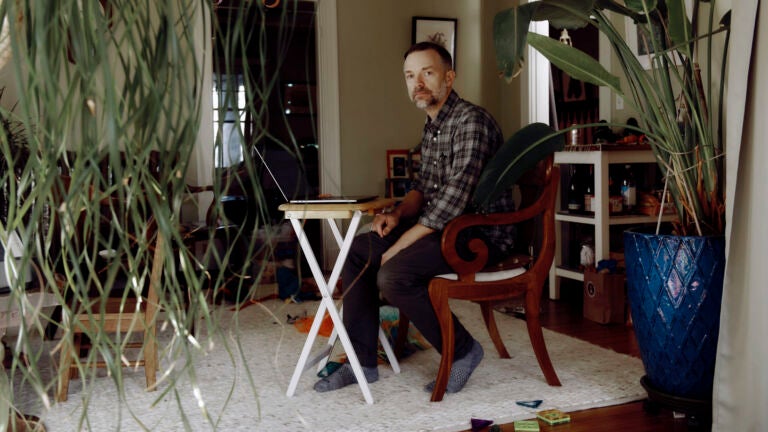
Commuting used to be such a part of Tim Hirzel’s routine that he did it without much thought. Then, in the pandemic, he worked from home in Quincy, Massachusetts, and got used to a different lifestyle. Now, he’s back to commuting, but it requires so much time and effort — showering, getting dressed, packing his things, traveling — that he blocks time on his calendar to do it.
Hirzel works for a tech startup in Boston that has given employees the flexibility to come in when they want. But Hirzel, who also has to get his children to school, hasn’t chosen to stay home completely. He said he goes to the office when it makes sense to be there — when he’s meeting new hires or working in person with colleagues. And, assuming he has a reason to be there, he likes it.
“The feeling of being in a room with three or four people and a whiteboard, it’s amazing,” he said. “You can see people’s body language, you can hash it out.”
Many workers dreaded going back to the office. It’s why they fought policies bringing them back and lobbied for more flexibility. Now that the long-anticipated return is here, the big question is: How is it going?
In response to questions from The New York Times, a variety of readers who were working remotely and are now in an office at least part of the time said their lives changed during the pandemic, and they have had to unravel their at-home lifestyle. It’s been hard to sort out child care and find time to keep exercising. Multiple people said the dog is not happy.
The return to the office after so long away was always going to be a jarring transition, no matter what free snacks a company provided. But the responses revealed that there was something helping with this major change: if workers believed that being at the office made sense, and if they could maintain some control over their time.
Megan Lynch, an analyst for the federal government in Washington, said the pandemic had enabled her and her family to live an easier lifestyle — to spend more time in sweatpants, or to sit next to a window with a heating pad. She did not want to return, but she has also recognized that her commute isn’t terrible, no one in her family is immunocompromised, and being with colleagues is good for her and her work.
“We kind of forget that those unplanned interactions, when you see someone in the hall or restroom and you start talking, how many good or dynamic things can come from that,” she said.
Besides, the managers at her office have shown that they care, listening to employees vent, checking in with people to see how they can make the return better and being flexible about which days employees need to be at the office.
When commutes recommenced, so did the frantic logistical after-school juggle that so many parents are familiar with — the confounding question of what happens between the end of the school day, the end of the workday and the tiny sliver of time in which dinner then has to be on the table.
That was the part that many parents of school-age children were most nervous about, and it remains a challenge, particularly for women. Working parents said the return to an office brought back the herculean task of arranging a family’s schedule and figuring out car pools, with some mothers feeling as if the burden fell disproportionately on them.
The pandemic also gave people a chance to spend more time with their families, take lunchtime walks, fit in therapy appointments and get proper sleep. Life could be lived differently.
Despite the disruption to their at-home lifestyle, readers who saw the value in being back said they agreed with their office’s return policy. Some even expressed pleasure in being back — when it was on terms that accommodated at least part of their pandemic habits.
“As a hybrid worker, I believe I get the best of both worlds, and I appreciate each type of workday,” wrote Mel Burt-Gracik, a learning and development manager at a manufacturing company in Southern California. “I love the flexibility on my homework days (as my kids call them), taking breaks as I see fit, adding in time for exercise while I’m not commuting, and making healthy meals for my family.
“On real work days (also named by my progeny) I love dressing up, seeing people in meetings or in the hallway, and all the ways I can contribute to a culture of connection and care by being present with people.”
Many people are finding that the offices they were nervous about coming back to aren’t the offices they left. They wrote about work environments that were less rigid and that catered more to their needs. They no longer felt pressure to respond to emails at all hours and were permitted to come in late or leave early.
Sarida Scott, an assistant professor of architecture and department director at the University of Detroit Mercy, said she was excited to be back in person because she had a new position and “teaching virtually is just not the same.” But after developing a pandemic habit of working out every morning, she has made sure not to lose it.
For Brenda Twehues in Lafayette, California, returning to the office half of the week — as she is expected to — also means returning to an hourlong commute each way. So her manager doesn’t demand a strict number of days in the office from her, and, in turn, she is flexible with the people who report to her.
But employees who felt that their jobs could be done just as well from home, or who returned to empty or noncollaborative offices, told us they resented being back.
For those workers, being in person didn’t justify all that they had to give up — time to meditate or go for runs, walking their children to school or taking care of relatives. They described being at the office as a bureaucratic requirement that wasn’t worth all the hassle and expense.
Kristie Rogers, a management professor at Marquette University, researches respect at work and said that during moments of change like this, people are acutely aware of what is happening around them and how they are being treated, and that this puts pressure on bosses.
Managers should fully explain to their employees why they want them back in the office, and bring them into the process of figuring it out, she said.
“If you are navigating a hybrid work arrangement, it’s critical for employees to understand that there is real value in being together,” said Rogers, who now teaches both in person and remotely, and works on research mostly from home. “If we don’t all see that value, people are going to feel slighted; they are going to feel misunderstood.”
The value of being in an office can be hard to convey, but readers spoke of more efficient in-person meetings, more effective brainstorming and an easier time getting to know colleagues.
All of which goes a long way toward making them feel better about not having as much control over their time.
This is a particularly fraught moment for those who feel they have no choice but to return to an office, said Allison S. Gabriel, a professor at the Eller College of Management at the University of Arizona.
“People had all this autonomy, and now they’re going back to work and feel like that’s been stripped away from them,” Gabriel said.
Managers need to find ways to give employees more opportunities for social connection, another motivating factor, while preserving some of the control they’ve had over their work for the past couple of years, she said.
This may be especially important for those whose lives changed in big ways during the pandemic.
“People in this void of time have picked up new identities,” said Gabriel, who became a parent in March 2020. “It has fundamentally changed the person who is returning to work.”
Workers want to feel that they belong, and that their managers see the challenges they face and recognize the ways their lives may now be different, Rogers said. When people don’t feel welcomed or accepted for who they are, she said, they are likely to question whether they want to stay.
For people who don’t see the value in returning to their old office life, where noise-canceling headphones abound and the workday ends right when dinner needs to be on the table, there is one solution: finding a different office.
Nick Kreilein moved to San Francisco to work for a commercial insurance broker, but he was disappointed that so few others went into the office. He is 28, has no children and wanted to be in an office with colleagues so he could learn more.
He left that company and took a new job in early October for a competitor with an in-office culture. His new employer does not require in-person attendance, but Kreilein chooses to go in three to four days a week.
“I want to take the next step, not just sit behind a screen for the rest of my career,” he said.
This article originally appeared in The New York Times.



To comment, please create a screen name in your profile
To comment, please verify your email address
Conversation
This discussion has ended. Please join elsewhere on Boston.com