
Sign up for the Today newsletter
Get everything you need to know to start your day, delivered right to your inbox every morning.

Margo Price, with Pearl Charles, at Royale, Saturday, Feb. 22.
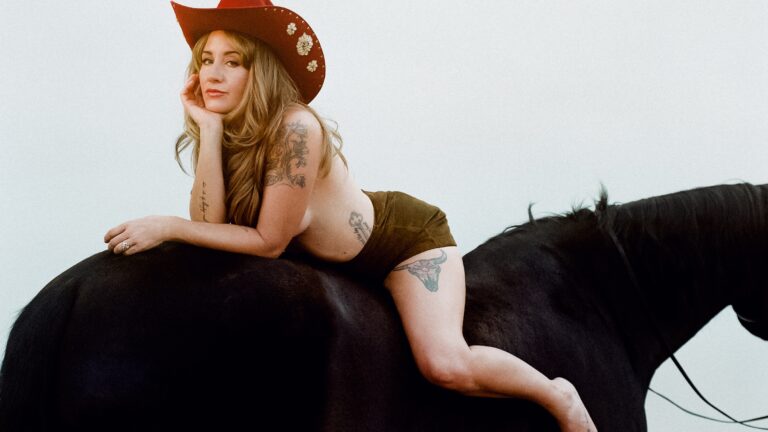
Margo Price is in Nashville but not of it. “I’ve lived there long enough that I’ve earned the right to hate it,” the singer said several songs into her performance Saturday at Royale. She was about to launch into “Love Me Like You Used To Do,” a slow grasp at what once was, performed as a duet with her guitarist Logan Ledger. It was indisputably country, even without the fringed floor-length dress Price was wearing and the patterned cowboy shirts on most of her backing band.
But the country that Price plays and the country played on mainstream radio are vastly different things. Price’s conception of the genre is so much a throwback that she’s essentially the equivalent of an indie band emulating 1960s garage rock in a world of grinding guitars and growls. So it’s no surprise that she has complicated feelings towards the city she continues to call home.
But complicated feelings are part and parcel of country of all eras, even when they seem brutally simple. After all, the leadup to the title of the heavy-footed stomp-and-strum of “Kissing You Goodbye” was “Get your tongue out of my mouth,” and while Price had had enough in the spitfire “Four Years Of Chances” — with a drumbeat and wah-wah guitar that tossed in elements of disco — a full election cycle is a long time to hang on to hope that things will get better.
Not a lot of that found its way into Price’s performance itself, which was simply a spirited runthrough with a crack band. With Alec Newnam’s soft bass plonks and Brandon Combs’s gentle drum clicks pushing it forward, opening song “Hands Of Time” didn’t get much above a burble, but its inertia pressed it forward regardless. Against Tex-Mex guitar flourishes and a beat that felt like sands shifting underfoot, Price sang “Wild At Heart” with a tight country contralto, a twang that she used to poke when it could have easily pierced.
That was Price all evening, fired up without ever becoming fully electric. The ominous and gently clomping “Tennessee Song,” the slow and resigned pleading of “Nowhere Is Where,” and the double birds she flipped after singing “He’s the president, but I don’t care” in Blaze Foley’s “Oval Room” all worked as they were meant to and didn’t push an inch further. Towards the end of the honky-tonk speed-clomp of “Don’t Let The Bastards Get You Down,” Price maneuvered around guitarist Sean Thompson’s zippy Telecaster runs to snort deeply after the line, “All the cocaine in existence couldn’t keep your nose out of my business,” and then blow white powder off of a paper plate gamely held out by a roadie. It was cute stage business instead of the biting kiss-off it was meant to be.
Even so, Price and her band were plenty engaging regardless. The clattering midtempo lope of “Don’t Wake Me Up” offered up dynamics without indulging in drastic shifts, instead ramping up and down organically like breathing before melting into cosmic expressiveness. And Price was canny enough in the same song to change the city in the line “I can dream in a snowstorm, stuck out in Bozeman” to Boston. (The blizzard, alas, didn’t need any changing.) The Beantown reference in “Don’t Let The Bastards Get You Down,” meanwhile, was already baked right into the lyrics.
After leaving the stage for Ledger to sing his own “All The Wine In California,” Price returned in a red and blue sequined and fringed acrobat outfit as if she was about to jump from a very high platform into a very small tub, and kicked into a final run that began with George Jones’s “I Just Don’t Give A Damn.” She closed with Bob Dylan’s “Maggie’s Farm,” another song (along with the United Farm Workers-adopted folk song “De Colores” and Woody Guthrie’s “Deportee (Plane Wreck At Los Gatos)”) associated with agricultural abuses.
Price, Thompson, and Ledger sang three-part harmony around a single old-timey microphone before the band tore off into a cut-time train-track roll. Price may hate the country-music capital, but not the promise of the music itself.
With just two acoustic guitars to fill out her sound and singing every one of her songs with a laid-back smile in her voice, Pearl Charles opened with an ambling take on the ’70s-style Pacific coast folk-pop that served as hippie-hangover music.
Marc Hirsh can be reached at [email protected] or on Bluesky @spacecitymarc.bsky.social.
Get everything you need to know to start your day, delivered right to your inbox every morning.



To comment, please create a screen name in your profile
To comment, please verify your email address
Conversation
This discussion has ended. Please join elsewhere on Boston.com