
Keeping Your Pets Safe During the Blizzard
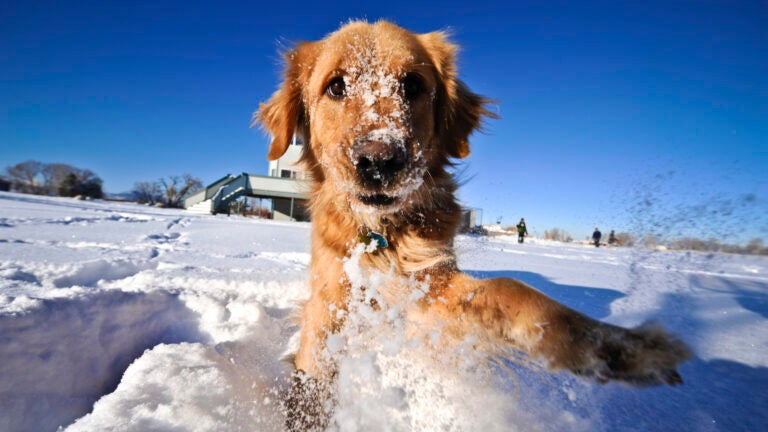
If you’re worried about the animals in the shelters today, don’t.
Animals at the Massachusetts Society for the Prevention of Cruelty to Animals and the Animal Rescue League of Boston, for example, are well cared for in this blizzard by workers and volunteers who offered to spend the night and brave the storm with them.
So let’s turn our attention to the animals you have at home. We asked the experts at the MSPCA and ARL for tips on how to keep your animals safe during the blizzard.
First of all, bring your outdoor animals in, even if it’s just into the garage or basement.
“Usually we recommend, whether it’s snowing or not, if it falls below 20 degrees and if there’s really severe weather, you should bring them inside,’’ said Ami Bowen, director of marketing and development at the Animal Rescue League of Boston.
And puppies, kittens, and short-haired pets should be brought in when the temperature drops below 40 degrees. Also, shorthaired dogs such as Greyhounds, Beagles, and Chihuahuas should wear protective clothing. So bust out those adorable winter sweaters.
When you inevitably take your dog out in the snow to do his business, make sure your animal is leashed. And keep the trip short.
“Dogs can definitely become disoriented during a snowstorm,’’ said Bowen.
Also, don’t bring your dog near any body of water, even if it appears frozen, warns Bonnie Jarm, director of marketing at Angell Animal Medical Center.
While out and about with your animal, be aware that products that help people out during storms can be toxic to pets. For example, Ice Melt on the sidewalk and antifreeze products for your car that contain ethylene glycol can make your pet sick.
“Make sure to wipe their paws and stomach once they come back inside,’’ said Bowen. “Some Ice Melt is pet safe but, in some cases, there are chemicals in them that can burn and irritate their paws and skin. It’s definitely not something you want them licking or ingesting.’’
Antifreeze products containing ethylene glycol are highly toxic for animals and can be life threatening if ingested, reports the MSPCA. Many windshield washer products contain methanol and can give your pet antifreeze poisoning, which can result in drooling, vomiting, drunkenness, and severe central nervous system depression.
If you lose power, reassure your animal.
“Sometimes pets can be nervous. Make sure to make them comfortable and know you are close by,’’ said Bowen.
Just like people, pets are drawn to the heat when they are cold. So watch that your animal doesn’t get too close to a fireplace, space heater, or wood stove. if you are lighting candles, keep a close eye on your furry friend around the flame.

Keep a close eye on animals around your fireplace.
“I’m always concerned with my cat,’’ said Bowen. “He’s always jumping up on the table. He’s unaware of the dangers of fire.’’
Before your start your car, pound on the hood and do a visual check. Cats have been known to crawl up underneath car hoods to escape bad weather. Turning the car on while a cat is up in there can potentially burn or harm her.
And, speaking of cats, feral cats are on a lot of peoples’ minds during storms, said Bowen. People worried about the homeless felines in their community often call the shelter with concerns about their welfare.
“If you can, bring the animal into your house, into the basement or garage,’’ said Bowen. Even if it’s not heated, it still gets them out of the cold or wind.’’
If you have an animal emergency, Angell Animal Medical Center’s Emergency and Critical Care Service in Boston and Waltham will be open 24 hours a day throughout the blizzard, said Jarm.



To comment, please create a screen name in your profile
To comment, please verify your email address
Conversation
This discussion has ended. Please join elsewhere on Boston.com