
Sign up for the Today newsletter
Get everything you need to know to start your day, delivered right to your inbox every morning.
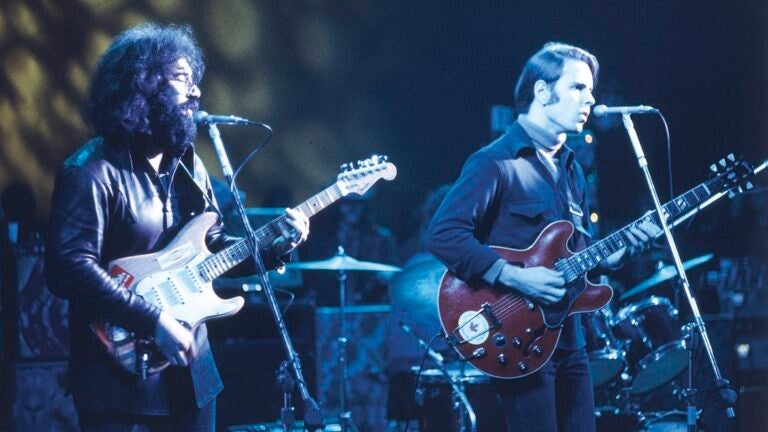
“New England Deadheads are a rabid bunch, in a good way,” Grateful Dead archivist and legacy manager Dave Lemieux tells me from his home in British Columbia.
“I love talking Grateful Dead with New England Deadheads,” he says. “They always have so much insight, and so many good memories.”
We do.
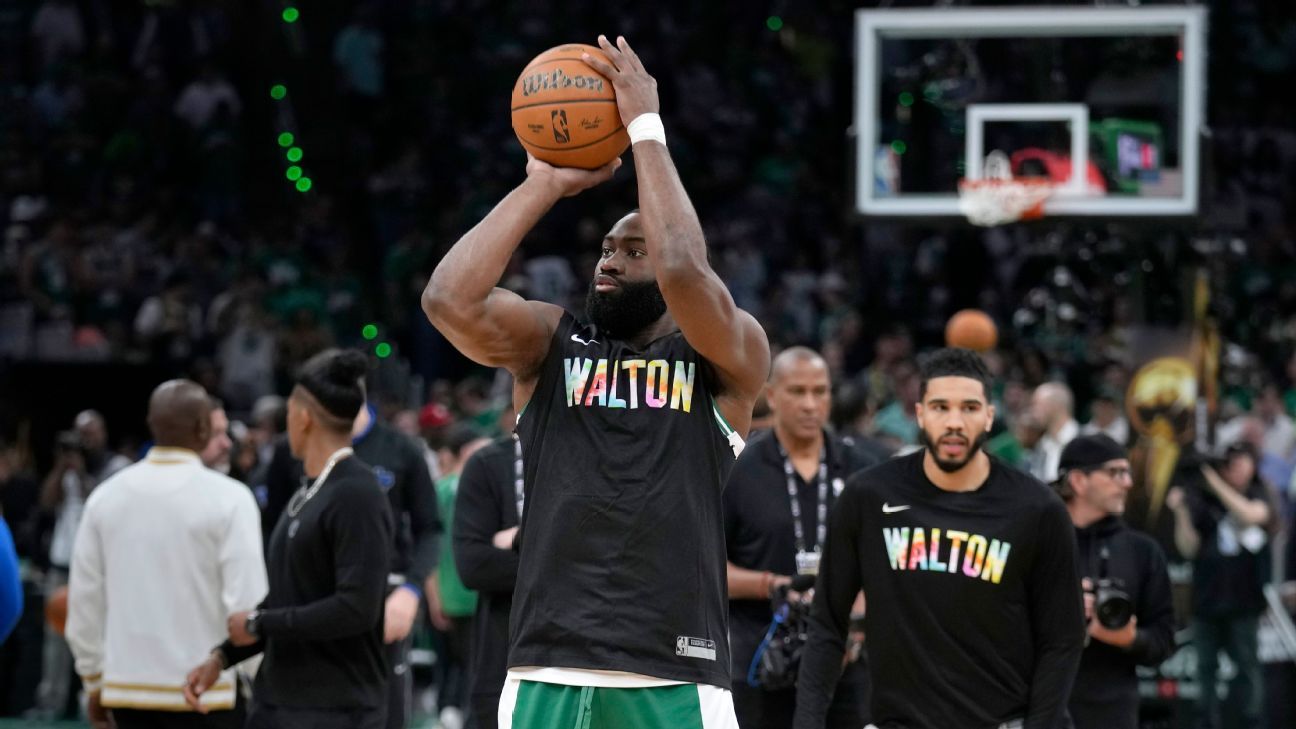
Maybe like many millennials, I never saw the Grateful Dead with Jerry Garcia. But I covered the local Dead & Co era-scene, with New England’s own John Mayer playing in the band, interviewed Bob Weir and Mayer, Oteil Burbridge, and Boston’s biggest Deadhead, the late Celtic Bill Walton, who left his tie-dye mark on our team.
We were the weirdos who created our own Shakedown Street near Fenway Park. Filled it with grilled cheese, stickers, incense, tie-dye dresses, tees, and any tchotchke you could slap a stealie on.

In Foxborough, we turned Gillette’s parking lot into The Lot. You could smell the skunky pot, old incense and lot cheese from Trader Joe’s. Couldn’t count the tie-dye Red Sox jerseys. Pats, Celtics and Bruins stealies plastered beat-up pick-ups.
At Xfinity (it will always be Great Woods to me), we waited in frozen traffic for gates to open, “St. Stephen,” “Ripple,” “Jack Straw ” pumping from every car speaker for miles down a Mansfield road.
We watched Phil Lesh, the year before he died, play his heart out in a Boston thunderstorm, sheets of rain flooding Leader Bank Pavilion, Phil’s bass blasting against thunder and lightning until they had to shut the place down.
Today — with Garcia, Bob Weir and Lesh all dead — there are so many Dead cover bands in Massachusetts and Rhode Island alone, you can twirl to “Cassidy” or “Sugar Magnolia” almost every day of the week.
That love went both ways, the archivist tells me.
“The Dead in New England, I don’t know what it was, something in the water. They played really well in New England,” he says. “I think the Dead just really liked New England.”
Thus, we have our share of great shows.
For Record Store Day this year, Lemieux released Boston Music Hall 6/11/76 as a 5 LP, 180-gram vinyl set. The Rhino record, produced for release by Lemieux and recorded by Betty Cantor-Jackson, saw a limited release of 7,600.
If you didn’t snag a copy, you can listen to that show — and so sooo many more — on Relisten.net.
Also: Play Dead was born last week. The first official Grateful Dead streaming app offers hi-res audio of live recordings from the Grateful Dead Vault. Lemieux tells me there are “plenty of New England shows on it.”
Live-show CDs from boxsets and Dave’s Picks will stream for the first time, per the website. And recordings are presented in order of performance date, per the site. Lemieux (the Dave of Dave’s Picks) will curate weekly “Dead Drops,” with “exclusive shows” newly transferred and mastered hi-res by David Glasser.
Talking to Lemieux about (or aboot, as the Canadian pronounces it) the Dead is like asking a kid who loves dinosaurs about a T-Rex. Facts spill out a mile a minute. Name a date, and he rattles off the setlist by heart, going in-depth, to the point of knowing song lengths. Lines like “Oh man, that show had a ‘Not Fade Away’ clocking in 16 minutes!” or “And the next night, they played ‘Queen Jane Approximately’!”
Lemieux is a walking, breathing Grateful Dead Wikipedia page, and feels born to archive the Dead — a role he took on unofficially as a kid taping and trading tapes, and officially in ’99 after the death of Dead tape archivist Dick Latvala.
To mark both the Boston record and new app release, I called Lemieux at his British Columbia home to talk Dead New England.
Dave Lemieux: First, this is a tremendous show. With Record Store Day, we try to give stores something that hasn’t been released on vinyl before. We started doing these ’76 releases about a year ago. We’re working our way through June ’76 and felt this Boston show is magnificent.
So this is the comeback tour for the Grateful Dead. They’d stopped touring in the fall of 1974, did no shows aside from one-offs in the Bay Area in ’75. In June of ’76 they hit the road for theater shows — no arenas, no stadiums, no Wall of Sound [their famously enormous sound system]. They had a lot of new material. They were reworking older material that you hear on this show. So it’s a new Grateful Dead, and it sounds phenomenal.
Right, Mickey left the band in ’71, came back at the end of ’74. When they hit the road in June ’76, Mickey was a fully integrated member of the Grateful Dead, which was cool because it meant they had to do new arrangements of certain songs. What Mickey brought to the band was essential to the 1976 sound. It’s one of my favorite years of the Dead.
The freshness. As much as Deadheads were excited that the band was back, the Dead were happy they were back. Mickey was back. I also feel once they stopped playing with the Wall of Sound, Donna Jean [Godchaux] could hear herself better. So she’s never sounded better.
There are songs on this Boston release where Donna isn’t really singing background vocals, it’s like she’s doing a co-lead. She’s an essential part of the Dead vocal-blend at this time.
They were playing theaters. After 1973 and ’74, the Grateful Dead were a bonafide arena rock band. They could easily sell out a couple nights at the Boston Garden, but they chose to play theaters. That was a conscious choice.
There’s something special about seeing a band in a theater. Theaters aren’t built for hockey or football — they’re built for music. They wanted to make it special. But by fall ’76, they were back in arenas. So you don’t quite get that acoustic perfection that you get in Boston Music Hall.
The performance quality is magnificent. Also — I try not to look at setlists, because on the most mundane setlist you can have the best show ever — but this happens to have one of the best setlists. If you were to ask a Deadhead, name me 10 of your favorite songs, a lot of them are here. [Rattles off setlist by heart.]
A friend of mine went to these Boston shows in ’76 — he got in the first night with a ticket, but didn’t have tickets the next nights. But there was a diner across the street. The guy who ran the diner had a $5-per-person agreement with the guy who propped the backdoor of the Boston Music Hall. And my friend got in.
Yeah, my friend got in from a security person propping the door, getting flipped a $20, and letting four people in.
Little things that show us the band was extra engaged, meaning they’re doing something different. This Boston show has a very cool split — “Sugar Mag” into “Eyes of the World” into “Stella Blue,” and they wrap it up with “Sunshine Daydream” out of nowhere. Those kinds of things tell me the band is engaged and inspired.

It’s one of the best. In early ’77, they were in the studio. They were very tight. They hit the road in April and May of 1977 for one of the most consistently great tours they ever played. 5/7/77 is upper echelon.
They compare very well. Boston ’77 has some of my favorite versions of a lot of songs: “Mississippi Half-Step,” “Music Never Stopped,” “Terrapin Station,” “Estimated Prophet.”
When I started trading tapes back in the ’80s, I got Boston [5/7/77] before Cornell. Even then, with my ear not that critical, I was like, “Geez, this is one of the best shows I’ve ever heard.”
Boston Garden 4/2/73. Another upper echelon Boston Garden show: 6/28/74. A lot of top Dead shows took place at the Garden. They played Boston consistently until ’82. Then from ’82 to ’91 they didn’t play Boston once — they played Foxborough and Worcester Centrum. In ’91 they made their triumphant return to Boston Garden.
I’ve listened to all the Garden shows in ’91, ’93, and ’94 — every one is terrific. The Dead played well there. You can feel the energy.
Boston Music Hall, they played some incredible shows in ’71, ’72. Dick’s Picks Volume 14 is two outstanding 1973 Boston Music Hall shows.
Very cool place. They played Boston Tea Party in October and December of ’69. The Dead famously played New Year shows, always the Bay Area. But in 1969 they chose to play their New Year show at Boston Tea Party. So it’s one of those little factoids: What was the only Grateful Dead New Year’s show outside of California? Boston ’69.
That’s a good one! The first set is incredible. The second set, boy, it’s got one of my favorite versions of “Estimated Prophet,” “Eyes the World.” It’s got, as far as I know, the longest version of “Let it Grow” the Dead ever played.
I was there! I was 19, with my lady friend at the time. We got stuck in traffic. I had to get my tape gear set up, so I got out and walked the last mile, and made it to the show before she did driving.
Foxborough July 2, 1989 — outstanding. They open with an incredibly rare “Playin’ in the Band” into “Crazy Fingers.” Blew my mind. The second set opened with “Friend of the Devil,” which is usually a mid-first-set song. There was a “Quinn the Eskimo” encore — I love Bob Dylan. Boy, I really liked that show. I remember the New England fans being very cool.
I’m gonna say 9/26/91 at Boston Garden. That’s a really hot show. It’s the Bruce Hornsby/ Vince Welnick-iteration of the band, which I love.
There’s so many colleges and universities in and around New England, and the Dead drew heavily from a university crowd. So let’s say you went to Brown — if the Dead play six nights in Boston, and then they play Providence later, there’s a lot of ways to see the Dead easily.
You were very fortunate to be a New England Deadhead. I always envied my New England Deadhead friends because without virtually any effort, they could see six to 10 shows a year. With a little more effort, they could see 20 to 30.
I’m from eastern Canada. For me to see 30 shows a year, that meant missing a lot of school, or being on the road for the entire summer.

Everything. I love producing “Dave’s Picks.” I love producing the boxsets. I get to listen to 6 to 10 hours a day of Grateful Dead, seven days a week.
I also love how different every day is. I go to bed at night and have my little gratitude practice. I say, “What was good about today?” I got to talk to Lauren today, and I proofed a bunch of artwork that’s going on t-shirts with one of our licensees. I love my job. I’ll stay until they don’t want me anymore.
The big thing: I want to ensure the Grateful Dead legacy. Bobby [Weir] famously said he wanted to ensure the Dead’s legacy was in the 200- to 300-year range. I want to make sure that when they’re done with me, this is as preserved, and better, than when I got here.
Every time we release a show, I get a small piece of satisfaction: June 11, 1976 Boston Music Hall is now out in the world on 7,600 vinyl records. Vinyl lasts a long time. That’s 7,600 people over the next 100, 200, 300 years who could listen. As an archivist, as a Deadhead, as a producer, that makes me happy.
This interview has been edited and condensed.
Lauren Daley is a freelance culture writer. She can be reached at [email protected]. She tweets @laurendaley1, and Instagrams at @laurendaley1. Read more stories on Facebook here.
Get everything you need to know to start your day, delivered right to your inbox every morning.


Be civil. Be kind.
Read our full community guidelines.To comment, please create a screen name in your profile
To comment, please verify your email address