
This 79-year-old doctor is running Boston for the second year in a row
This year, Dr. Michael Holick's goal is to honor two women who died from a genetic tissue disorder.
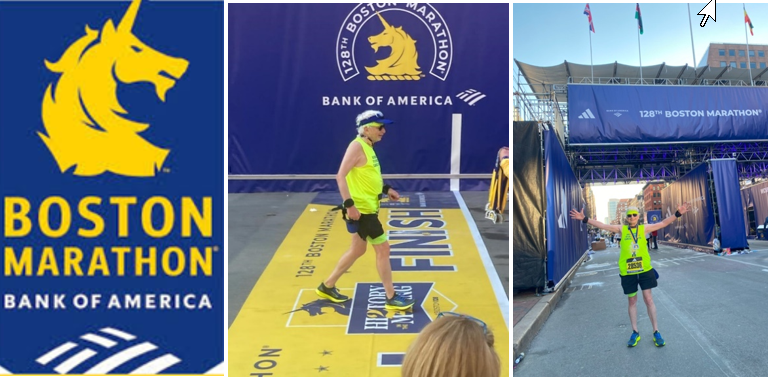
In our “Why I’m Running” series, Boston Marathon athletes share what’s inspiring them to make the 26.2-mile trek from Hopkinton to Boston.
Name: Michael F. Holick
Age: 79
From: Sudbury, Mass.
I am planning to run the Boston Marathon this year. I had the opportunity last year to run and complete the Boston Marathon to serve as an inspiration for cancer patients who have been disabled due to their disease. I am fighting my own battle with Stage 3 prostate cancer. The androgen deprivation therapy and radiation therapy caused anemia and left me with no testosterone, resulting in muscle weakness, severe hot flashes, and intense fatigue. Despite these overwhelming impediments — and that I had never run in my life — I initiated a vigorous weight training and running program to demonstrate that no matter the circumstances, the human spirit can conquer all, including the Boston Marathon.
This year, I am running for Mass General Brigham Spaulding Rehabilitation’s Race for Rehab.
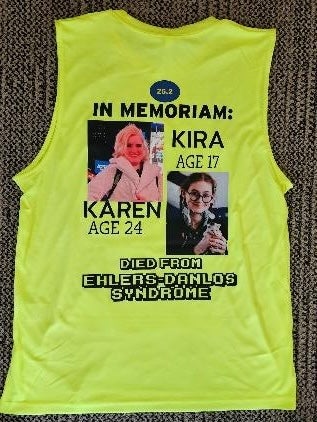
My goal for running the Boston Marathon in 2025 is to honor two beautiful brave young women, Kira and Karen, who succumbed to medical complications associated with the underappreciated debilitating genetic disorder, hypermobile Ehlers-Danlos syndrome (hEDS), at ages 17 and 24, respectively.
I have a very strong personal and emotional connection to Karen. While in hospice, she requested that her life should not go unnoticed. She made the brave decision to have her body donated to science to help unravel the mysteries and causes of the myriad of horrific medical conditions that she experienced in her young life, which was featured in the recently released documentary movie “Complicated.”
I was given the awesome and daunting responsibility of accomplishing her wish. I made all the arrangements, participated in her autopsy and recently published in her honor a case report of all our findings in Biomedicines. We reported for the first time new genetic insights into hEDS that were likely responsible for her early demise.
Editor’s note: This entry may have been lightly edited for clarity or grammar.





To comment, please create a screen name in your profile
To comment, please verify your email address
Conversation
This discussion has ended. Please join elsewhere on Boston.com