
Sign up for the Today newsletter
Get everything you need to know to start your day, delivered right to your inbox every morning.

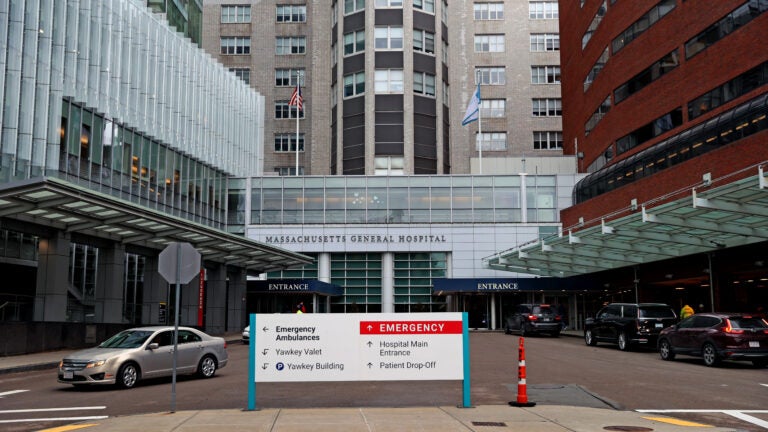
This story was told by Claire Bloom, a primary care doctor at Massachusetts General Hospital (MGH). MGH and Brigham and Women’s Hospital (BWH) are the two flagship hospitals of Mass General Brigham (MGB), a nonprofit health system that was formed when the two hospitals merged in 1994.
In February, MGB announced its largest layoffs in the health system’s history, totaling an estimated 1,500 of about 82,00 employees, according to the Boston Globe. The first wave of layoffs occurred in February, with the second following in March.
Claire’s story has been edited from a conversation with Annie Jonas.
I’m in a very large primary care practice, and they laid off our practice manager. We have approximately 50 physicians, that many or more residents, and a couple dozen nurses and medical assistants. We have a lot of desk staff and various operations people, and eight or 10 nurse practitioners – it’s a very large practice, and so you really need somebody on top of things to keep the trains running. That was the practice manager.

I think what happened with anybody who was laid off is they were blindsided. They didn’t find out personally about their layoff until the email to the entire MGB community went out. Now, that person’s work still needs to be done, right? It’s not like you can eliminate the tasks that the practice manager does – they just have to be transferred to other people. Those other people already have full time jobs. Those people are going to be overworked and burnt out, and it’s just not possible.
I tell my patients when they want me to squeeze them in for an appointment that I can squeeze more socks in my dresser drawer, but I cannot squeeze a human being into a time slot. And I think that also goes for workers. There’s only so much you can squeeze people. And either those people are going to have to work unpaid overtime…or those people are going to try to do the work and get burnt out.
As a result of the layoffs, some of the things that need to get done will not get done, or they won’t get done in a timely fashion. I’m not seeing that things are completely falling apart now, but they will – and morale is already there. There’s nobody that I know of who has boots on the ground, who’s doing the basic work – the doctors, the nurses, nurse practitioners – who feel like this is a good thing. These people [who were laid off] perform really important roles.
The organization is making changes that seem to be, in my opinion, kind of driven by an ethos as if this is private equity, where you take over something and squeeze the dollars out of it…and then sell it, and have a profit. But we’re supposed to be a nonprofit. We don’t know who makes the decisions. And so that’s part of what has really led to an incredible drop in morale.
It’s intensely frustrating for us who have so many barriers to doing our job and taking care of people. The system, it’s not just neutral. The system is sort of pushing against us.
When you can read in the [papers] that the MGB CEO [Anne Klibanski] received a 40% raise and makes $6 million a year, it’s very frustrating. I remember during the recession, people at Beth Israel were being laid off, and the then-CEO [Paul Levy] and the C-suite took voluntary pay cuts and did not take any bonuses in solidarity with employees who were facing layoffs. I haven’t heard anything like that from MGB. Cutting the salary or bonus of the CEO is not going to make that much of a difference, but it is a gesture.

Get everything you need to know to start your day, delivered right to your inbox every morning.





To comment, please create a screen name in your profile
To comment, please verify your email address
Conversation
This discussion has ended. Please join elsewhere on Boston.com