
Sign up for the Today newsletter
Get everything you need to know to start your day, delivered right to your inbox every morning.
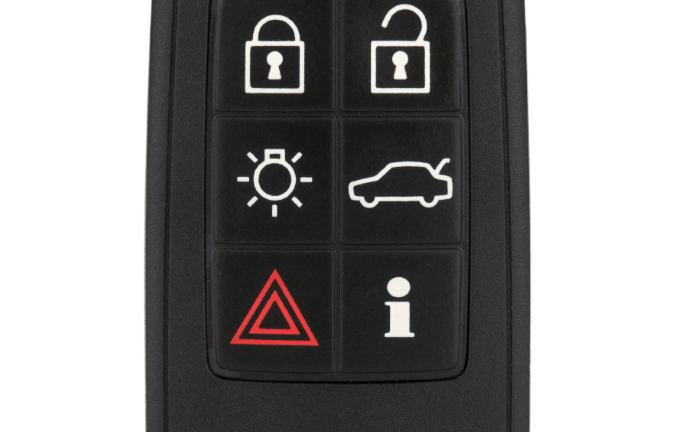
Q. I am purchasing a 2014 BMW GT xDrive that comes with just one key fob. I have read that Home Depot sells a DIY kit for matching a key fob to my vehicle. The Home Depot key machine can physically cut the key, but I need it linked to my car electronically as well. Any suggestions on the best and most economical method of accomplishing this?
A. I have seen the Home Depot self‑serve key machines but have never personally used one. I also see online that they sell key fobs for some domestic and popular import vehicles. It has been my experience that BMW and Mercedes key fobs require specific programming tools and security access. These tools and the required codes typically come from the dealer. However, an automotive locksmith or independent repair shop that belongs to the NASTF Vehicle Security Professional Registry may also be capable of performing this work. Access to the registry is what allows qualified professionals to obtain the security codes needed for programming, along with the appropriate scan tool. My suggestion would be to start with a locksmith: purchase the fob, have the hidden mechanical key cut, and then have it programmed. Readers have told me independent locksmiths have saved them several hundred dollars compared to dealer pricing. Readers, before purchasing any used car, be sure to check that it comes with more than one key.
Q. I have a 2017 Toyota Highlander with 60,000 miles. The check engine light is on and the display says “check all‑wheel‑drive system.” I checked the gas cap, and after removing it and reinstalling it, it clicks once to complete tightening. Then a few minutes later it still has one more click in it to tighten, as if it is walking back. Could this be the issue causing both warnings?
A. On this model Toyota, and many vehicles like it, virtually any problem that turns on the check engine light will also disable the all‑wheel‑drive system as a safety precaution and trigger a warning message. At this point the best options are to either replace the gas cap with an OEM cap or, better yet, scan the car for diagnostic trouble codes to see if there is a leak in the evaporative emissions system. The stored codes will help guide you in the right direction. They could certainly point to a gas cap issue, or to something else entirely.
Q. I own a 2013 Volvo S60 with 101,000 miles. I recently took the car to my mechanic for routine service. Everything is fine, but he mentioned that at 120,000 miles Volvo recommends changing the timing belt, belt tensioner, and related parts. He stated that the engine is a direct‑interference engine and would be ruined if the timing belt failed. He said that time is as much a concern as mileage because of belt age. I was planning to wait until 120,000 miles, which could be another three or four years. I have owned the car for 10 years and plan to keep it. Would it be prudent to do this service sooner?
A. The short answer is yes, you should change the timing belt. Your shop is correct that this engine is an interference engine. If the timing belt were to fail, the pistons and valves would collide and could cause major engine damage. Volvo’s service information specifies timing belt replacement at 120,000 miles or 10 years, whichever comes first. If this were my car and I planned to keep it, I would replace the timing belt and associated components now rather than risk failure based on age alone.
Q. What are your thoughts on Harbor Freight hand tools? My nephew, who works on my car, has started working at a local repair shop and I want to help him build his tool collection.
A. Harbor Freight sells a wide range of hand tools with varying levels of quality. When I started in the trade, Snap‑On and MAC tool trucks came to the shop weekly, and it was very easy to overspend. I also worked near a Sears store, and in many cases the Craftsman line of hand tools met my needs, and I still have many of them today. More recently, I needed triple‑square drivers for Volkswagen repairs and purchased a set at Harbor Freight, which worked just fine. I am somewhat particular about torque accuracy and purchased their digital torque adapter, which effectively turns any ratchet or breaker bar into a torque wrench. I found it to be quite accurate and very compact. Bottom line, in my opinion, the Pittsburgh line is better suited for DIY use, while Doyle and Icon tools can, in some cases, approach tool‑truck quality at a much more affordable price.
Q. I have a 2022 Chevy Camaro, which I find both fun and stylish. During its last service visit for a check engine light, the technician found a misfire. He said there was coolant in the spark plug tube, not inside the cylinder itself, causing the misfire. He cleaned it up and the car is running fine. He pressure‑tested the cooling system and did not find any leaks. What is going on?
A. On some GM engines, the cylinder heads can be porous due to manufacturing defects. These porous areas can allow coolant to seep into the spark plug tubes. Unfortunately, the spark plug tubes are cast and permanently sealed into the cylinder head and are not serviceable. In these cases, the only proper repair is replacement of the affected cylinder head.
John Paul is AAA Northeast’s Car Doctor. He has over 40 years of experience in the automotive business and is an ASE-certified master technician. E-mail your Car Doctor question to [email protected]. Listen to the Car Doctor Podcast on Apple Podcasts or other popular podcast sites.
Get everything you need to know to start your day, delivered right to your inbox every morning.





Be civil. Be kind.
Read our full community guidelines.To comment, please create a screen name in your profile
To comment, please verify your email address