
Does the lack of rainfall this spring mean it’s going to be a hot summer?
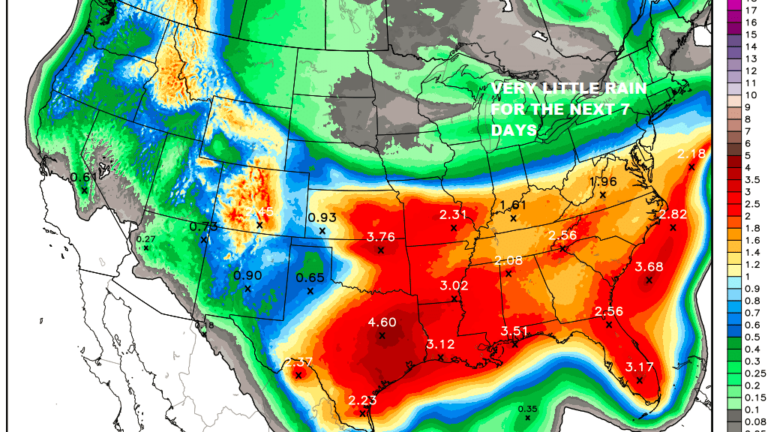
The weather continues to look quite nice, with abundant sunshine and pleasant temperatures as we enter the second half of May. This means no rain and a continuation of the developing dry pattern.
If you are someone who doesn’t enjoy summer heat waves and several days in a row of 90-plus temperatures, you should be wishing for rain. You might not think a dry pattern in April and May has anything to do with a summer heat wave, but it does.
In order to get the air to heat up, the ground adjacent to it must be warmed by the sun. The hotter the ground, the hotter the air will become. Deserts heat up really fast each day and cool off quickly at night. One of the reasons for this is the dry ground. If the ground is moist, then some of the sun’s energy must be used up to evaporate moisture. After a very wet period, which we haven’t seen in a while, the ground is saturated and it’s more difficult for it to be heated.
The dry weather this spring can build on itself. As the ground becomes drier there’s less moisture for evaporation and fewer showers. As the saying goes, drought begets drought.
Weather is of course exponentially more complicated than saying a dry April and May will mean a hot summer, but there are other factors at play which may lean us in that direction. The El Nino of last fall and this winter continues to weaken and is likely going to become a La Nina this fall. Summers following a strong El Nino year average hot.
This idea of forecasting seasonally is still far from perfect. The government forecasts are based on odds, rather than a specific number. Much of southern New England will typically see anywhere from just a few 90-degree days over Cape Cod, to 13-17 days as you go from Boston and then move inland. The last really hot summer we had was 2010 when Boston reached 90 degrees a whopping 24 times. For those of us who don’t like heat, that was a miserable summer. It was also a summer following an El Nino, although a different type of El Nino than the one currently waning.

Meteorological Summer Averages (June-August)
Already, several summer forecasts have been issued and it’s looking warmer and warmer. The official forecast from NOAA below shows the northeast with the greatest odds of a warmer than average summer.

June, July, August Temperature Forecast
The Weather Network, in Canada, is also forecasting a hot and dry summer for our region.

Summer 2016 Forecast
We managed to get through much of last summer with 14 90-degree days in Boston, which is about average. You might remember four of those days came in September. This year, signs are pointing to the fact we will not only reach, but likely exceed that number. Get out the air conditioners.
You can follow Dave Epstein on Twitter @growingwisdom.



To comment, please create a screen name in your profile
To comment, please verify your email address
Conversation
This discussion has ended. Please join elsewhere on Boston.com