
Photos: Volunteers Care for Endangered Turtles in Need
With predators hunting them and the elements making them sick, the sea turtles found along the New England coast are in desperate need of our help. Thankfully, the New England Aquarium’s Animal Care Center is full of volunteers to nurse these creatures back to health. Find out the impact one volunteer can have on the life of a turtle and see what it takes to get these turtles fit for the ocean.
-

Starting each November, volunteers comb the beaches of Cape Cod Bay in search of young, stranded sea turtles. They rescue an average of 90 turtles each year and bring them to the aquarium’s Animal Care Center. Turtles arrive with a number of maladies, like hypothermia, dehydration, pneumonia, and shell or bone fractures.
-

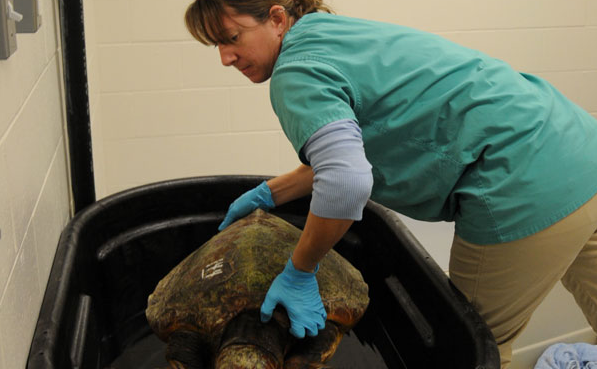
From December to February of 2013, Kat DeStefano of the New England Aquarium Rescue and Rehabilitation team did her work early in the morning and late into the evening to keep her days open for the turtles who entered the care center and needed her help.
-

Every day during the rescue period, dozens of banana boxes came to the care center full of rescued turtles. Kat and the many other volunteers found more room and new facilities on a daily basis to accommodate the growing number of patients.
-

Many of the patients that arrived were large loggerhead turtles, a species that can grow to be 34 to 49 inches and live to be fifty years old. As the season went on, the turtles that entered the care center got bigger and bigger.
-

As more loggerheads arrived at the care center, volunteers created “Loggerland,’’ a 24-foot pool where dozens of turtles could swim together. Most days, Kat wore a dry suit and mingled with the turtles, encouraging them to eat.
-

Of all the turtles from the 2013 season, one in particular had a big impact on Kat: #206. She arrived at the care center late in the season, abnormally cold and lethargic. Her vitals were taken—heart rate, respiration rate, blood samples—and she was moved to the “swim room,’’ where turtles can move freely.
-

#206 was a Kemp’s ridley sea turtle, one of the most critically endangered species of turtle on the planet. Kemp’s ridley sea turtles can grow to be 24 to 36 inches long and live to be fifty years old. Foxes, raccoons, and crabs prey on the eggs and hatchlings on land, while sharks, large fish, and humans threaten the juveniles and adults in the ocean.
-

Upon closer inspection, Kat noticed that #206 was having trouble breathing. Her body was limp and unresponsive, with her fins dangling at her sides. Over the next few days, Kat spent many hours with #206, feeding her through a tube, helping her take breaths, and keeping her body moving in the water.
-

After a few weeks, thanks to Kat’s persistence and the dedication of all the volunteers at the care center, #206 started returning to health. She became one of the healthiest turtles in the facilities, with a love for squid heads and new friends in Kat DeStefano and the entire rescue team.
-

But #206 is not alone in her recovery. Over 90% of the sea turtles that arrive at the aquarium’s Animal Care Center alive survive their treatment and are released back into the ocean happy and healthy. The aquarium’s reputation for helping turtles is so good that it’s often referred to as the “Sea Turtle Hospital.’’




To comment, please create a screen name in your profile
To comment, please verify your email address
Conversation
This discussion has ended. Please join elsewhere on Boston.com