
Are you breaking the law when you play an NCAA bracket?
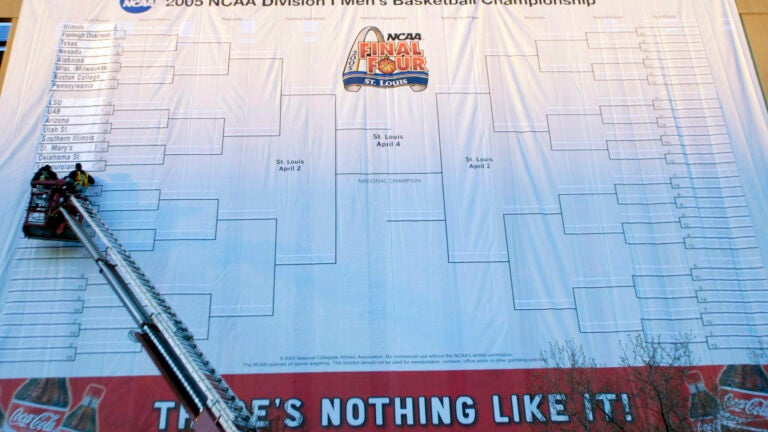
Here’s a March Madness question to ponder: Is entering an NCAA bracket pool a violation of federal or state laws? Some experts say it could be.
But tens of millions of college basketball fans who are about to spend hours making their picks probably don’t need to worry about getting busted.
Marc Edelman wrote in Forbes that pay-to-enter NCAA pools seem to violate three federal laws: the Interstate Wire Act of 1961, the Professional and Amateur Sports Protection Act, and the Uniform Internet Gambling Enforcement Act.
But the typical pool participant really has nothing to worry about, attorney Anthony N. Cabot told NPR:
[fragment number=0]
But Forbes’ Edelman advises that those running the game would have a somewhat increased chance of facing legal trouble:
[fragment number=1]
It’s also possible the bracket could violate state law, Edelman writes, especially “where these pools involve more than a certain amount of money changing hands, and the pools are found to be based on ‘chance.’’’:
Another thing to consider is your company’s policies. The NPR report suggests that if you’re joining an office pool, it’s a good idea to find out whether the company specifically bans gambling.
And another warning from the NPR report is not to forget the IRS:
[fragment number=2]
Got all that? Great, now go dominate your brackets.




To comment, please create a screen name in your profile
To comment, please verify your email address
Conversation
This discussion has ended. Please join elsewhere on Boston.com