
Dzhokhar Tsarnaev’s lawyers won’t get additional time to argue against death penalty, judge rules
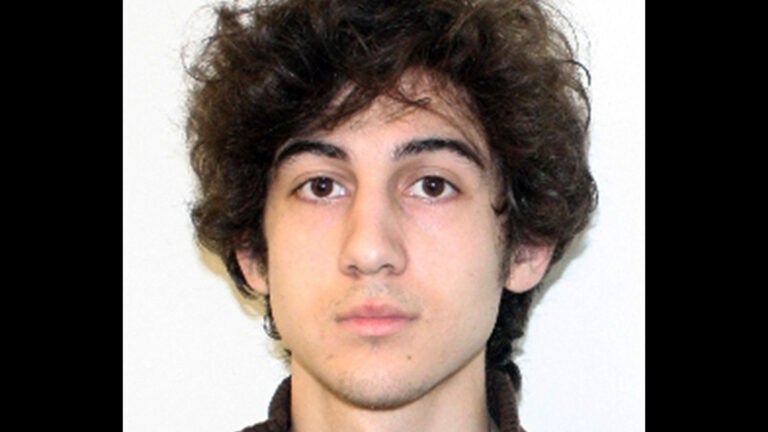
A federal judge has declined to grant more time to defense attorneys to prepare arguments against the death penalty for Dzhokhar Tsarnaev, the alleged Boston Marathon bomber.
US District Court Judge George A. O’Toole Jr. said he wouldn’t intervene in an internal process that the US Department of Justice has set up to determine whether prosecutors should pursue the death penalty against a defendant.
Under the process, which takes place before a trial, defense attorneys can submit input to the US attorney’s office, which then sends its recommendation, along with the defense attorneys’ input, to the Justice Department in Washington, where the attorney general makes the ultimate decision on whether to seek the death penalty.
Tsarnaev, 20, faces numerous federal charges, including some that could bring him the death penalty, in the twin bombings near the Boston Marathon finish line on April 15 that killed three people and wounded more than 260 others.
In a four-page ruling this afternoon, Judge O’Toole said that the Justice Department had the sole authority to determine whether to seek the death penalty, and he had no legal say in the matter.
“The decision whether to seek the imposition of the death penalty on the defendant’s conviction of any of these offenses rests with the prosecution,’’ the judge said. He declined a request by the defense that he postpone an Oct. 24 deadline that prosecutors had set for the defense to submit their arguments against the death penalty.
“What the defendant asks is that the Court set dates for events occurring not in the course of the judicial proceeding but rather in the course of the [Justice Department’s] internal deliberations. That would be well beyond the scope of any inherent authority to manage judicial business,’’ O’Toole wrote.
Prosecutors from US Attorney Carmen Ortiz’s office indicated in court filings earlier this week that they plan to move forward with an Oct. 31 self-imposed deadline to decide whether to recommend the death penalty.
Tsarnaev and his brother, Tamerlan, also allegedly fatally shot an MIT police officer in Cambridge before engaging in a gunfight with police in Watertown several days after the bombing. Tamerlan, 26, was killed in that episode when he was shot by police and run over by his own brother.
In another development in the Marathon bombing story today, the Boston FBI, the State Police, and Boston police issued a statement denying that law enforcement had identified the Tsarnaevs before Tamerlan was killed in the Watertown shootout early on the morning of April 19.
The agencies acknowledged that the Joint Terrorism Task Force had been at MIT in Cambridge on April 18. MIT Police Officer Sean Collier was killed that night before the brothers fled toward Watertown. But the statement said that the task force had been at the university “on a matter unrelated to the Tsarnaev brothers.’’
“To be absolutely clear: No one was surveilling the Tsarnaevs and they were not identified until after the shootout. Any claims to the contrary are false,’’ the statement said.
US Senator Chuck Grassley, an Iowa Republican, this week wrote the FBI director in Washington, asking whether the FBI was conducting surveillance in Central Square on the night of April 18 and whether the agency was surveilling the brothers, their associates, or acquaintances.



To comment, please create a screen name in your profile
To comment, please verify your email address
Conversation
This discussion has ended. Please join elsewhere on Boston.com