
President Obama’s first 4 years
-

On Feb. 12, President Obama will deliver the first State of the Union address of his second term in office. As the president outlines his agenda for his next four years in office, we thought it would be a good time to look back at Obama’s first four years in office.
Pictured: President and Mrs. Obama walked the inaugural parade route down Pennsylvania Avenue during the 57th Presidential Inauguration parade on Jan. 21, 2013.
-
Auto bailout

In January 2009, President Obama approved a bailout worth $24.9 billion to rescue two of the Big Three US automakers, General Motors and Chrysler, from bankruptcy. Only Ford did not take bailout funds. Although unpopular, the auto bailout is credited with helping the US auto industry get back on its feet.
Pictured: Chevrolet Sonics moved down the line at the General Motors Orion Assembly plant in Orion Township, Mich., on April 25, 2012. Nearly four years after GM filed for bankruptcy protection, the automaker is building the Sonic, the best-selling subcompact car in the nation.
-
Meet Bo

The president and his family adopted a Portuguese water dog named Bo a few months after he took office. Questions over which breed the Obama family was interested in began to “dog’’ president-elect Obama at his first press conference. On April 12, 2009, it was announced that the Obama family had accepted Bo as a gift from Senator Edward M. Kennedy.
The decision to adopt a Portuguese water dog was driven largely by Malia Obama, who is allergic to other breeds.
-
Supreme Court picks

On May 9, 2009, President Obama nominated Sonia Sotomayor to replace retiring Supreme Court Justice David Souter. She was confirmed by the US Senate by a vote of 68-31 becoming the Supreme Court’s first Latina justice.
On May 10, 2010, President Obama nominated US Solicitor General Elena Kagan to the US Supreme Court to replace retiring Justice John Paul Stevens. Kagan was sworn in on Aug. 7, 2010, becoming the first justice appointed without any prior experience as a judge since William Rehnquist.
Pictured: Associate Justices Elena Kagan, left, and Sonia Sotomayor arrived at the ceremonial swearing-in for President Obama on Jan. 21, 2013.
-
Beer summit

In July 2009, Harvard professor Henry Louis Gates was arrested by Cambridge police office James Crowley when police responded to reports of a possible burglary. The incident drew widespread attention and stirred a debate over racial profiling by police.
A few days after the arrest, President Obama stepped into the controversy when he remarked that Cambridge police had “acted stupidly.’’ The remarks drew criticism from the law enforcement community and Obama later said he regretted his choice of words.
The Gates-Crowley encounter culminated in a “beer summit’’ when President Obama invited both men to the White House to discuss the issue over beers. Both men accepted the invitation and said they walked away from the gathering expressing with a favorable view of the other.
-
Stimulus package

On Feb. 17, 2009, early in his presidency, President Obama approved the $787 billion American Recovery and Reinvestment Act, sometimes referred to as the ‘stimulus.’
The intention of the multi-billion dollar stimulus package was to prevent the US recession from getting worse by creating and saving jobs.
The measure included federal spending on infrastructure, education, health care, a series of federal tax incentives, and unemployment benefits. It remains one of the most controversial pieces of legislation passed by the president.
Pictured: The New York Stock Exchange
-
Death of Sen. Edward Kennedy

Senator Edward M. Kennedy of Massachusetts died of a brain tumor on Aug. 25, 2009. Kennedy became a valuable ally for Obama when he ran for president in 2008, endorsing then-Senator Obama over the more experienced Hillary Clinton. After the election, Kennedy helped Obama’s push to pass health care reform.
Pictured: A video at the Democratic National Convention from Sept. 4, 2012, showed a photo of Senator Kennedy with the president.
-
Unemployment and the economy

When President Obama took office in January 2009, the national unemployment rate was at 7.8 percent, and over the next few months US unemployment continued to worsen. After reaching a peak of 10.1 percent in October 2009, the rate began to decline at a gradual pace. By Jan. 21, 2013, the day of Obama’s second inauguration, the unemployment rate was once again at 7.8 percent. That rate rose again to 7.9 percent, despite the US economy adding 157,000 new jobs.
-
‘You lie!’

On Sept. 9, 2009, President Obama discussed his plan for health care reform in a speech before Congress. The president’s speech was interrupted by Republican Representative Joe Wilson of South Carolina who shouted, “You lie,’’ as Obama explained that his health care plan would insure illegal immigrants. Wilson was formally rebuked by the House of Representatives for the outburst.
Pictured: Representative Joe Wilson (pointing) on Sept. 9, 2009.
-
White House party crashers

On Nov. 24, 2009, Tareq and Michaele Salahi arrived at a White House state dinner honoring India’s Prime Minister Manmohan Singh without an inviation. While the couple was not on the guest list, they still managed to pass through two security checkpoints and even met President Obama. While they were not invited guests to the White House, their unexpected presence at the event did earn them an invitation to appear before Congress for a security investigation, which the couple declined.
-
Underwear bomber

On Dec. 25, 2009, Umar Farouk Abdulmutallab, a 23-year-old Nigerian, attempted to detonate plastic explosives that he stashed in his underwear aboard a Northwest Airlines flight. The attempted terror bombing prompted President Obama to implement new security measures at US airports, including full body scanners.
Abdulmutallab was sentenced to life in prison on Feb. 12, 2012.
-
Scott Brown elected

Republican Scott Brown shocked the political world in 2010 when he won the Massachusetts special election to replace the late Senator Kennedy in 2009. Brown’s surprise victory over Democrat Martha Coakley was seen by political observers as a referendum on President Obama’s health care bill.
Pictured: Joined by his family, Senator-elect Scott Brown took the stage at his victory rally on Jan. 19, 2010.
-
Citizens United ruling

On Jan. 21, 2010, the Supreme Court of the United States ruled on the case of Citizens United v. Federal Election Commission. In its decision, the court said that the government could not limit the amount of political money that corporations or unions could spend. President Obama criticized the court’s decision saying the ruling, “gives the special interests and their lobbyists even more power in Washington.’’
-
Gulf oil spill

On April 20, 2010, an explosion on the BP-operated Deepwater Horizon oil rig killed 11 workers and caused gallons of oil to start pumping into the Gulf of Mexico. In response, President Obama issued a hold on new offshore drilling leases pending a safety review. US Secretary of the Interior Ken Salazar issued a six-month moratorium on offshore drilling later. On June 15, Obama described the gulf oil spill as “the worst environmental disaster America has ever faced’’ and vowed to hold BP accountable for the damages.
Earlier this year, a federal judge allowed BP to plead guilty to manslaughter charges for the deaths of the workers and pay $4 billion in penalties.
REUTERS/Sean Gardner/Files (UNITED STATES – Tags: ANIMALS DISASTER ENERGY ENVIRONMENT)
-
Arizona immigration law

On April 23, 2010, Arizona Governor Jan Brewer signed a controversial anti-illgal immigration measure into law. The measure required police to determine an individual’s immigration status during a stop, detention, or an arrest and imposed penalties for those harboring, employing, or transporting illegal alliens.
President Obama criticized Arizon’s illegal immigration law as “misguided,’’ which led to a testy exchange between the president and Brewer on Jan. 12, 2012.
-
Health care reform

On March 23, 2010, President Obama signed the controversial Affordable Care Act into law. The bill aims to provide greater access to health insurance for millions of Americans and became one of the most hot-button political issues of Obama’s tenure. Opponents, who dubbed the law “Obamacare,’’ argue the measure amounts to government overreach and will result long-ranging economic consequences.
-
General McChrystal fired

On June 23, 2010, President Obama accepted the resignation of General Stanley McChrystal, the top military commander in Afghanistan, after he was quoted in Rolling Stone magazine mocking civilian government officials, including Vice President Joe Biden. The article also referred to McChrystal’s criticism of the president.
President Obama tapped General David Petraeus to replace McChrystal as the top commander in Afghanistan.
-
Republicans win the House

With voters frustrated by unemployment, government bailouts, and President Obma’s unpopular health care overhaul, Democrats suffered significant losses in the 2010 midterm elections, which saw Republicans regain control of the US House of Representatives.
Pictured: House Republican leader John Boehner of Ohio gave a thumbs-up after Republicans won enough seats to take control of the House of Representatives on Nov. 2, 2010.
-
‘Don’t ask, don’t tell’ repealed

On Dec. 22, 2010, President Obama repealed the “Don’t ask, don’t tell’’ policy on gay and lesbians serving in the US military.
Pictured: Ricky Watson of Littleton, Colo., hugged President Obama after thanking him for repealing Don’t ask, don’t tell at a campaign rally in Golden, Colo., on Sept. 13, 2012. Watson was kicked out of the Air Force for being gay.
-
Arab spring

In late December 2010, a wave of demonstrations began sweeping across several Arab countries and resulted in the downfall of several long-standing authoritarian governments. On May 19, 2011, President Obama offered financial assistance to Tunisia and Egypt, where the civil uprisings began, to help stabilize the emerging governments.
Pictured: Fireworks lit Tahrir Square in Cairo as Egyptian antigovernment protesters reacted to the announcement President Hosni Mubarak’s resignation on Feb. 11, 2011.
-
Debt ceiling talks

By mid-2011, negotiations between the White House and Congress over how to resolve the US debt ceiling threatened to break down when both sides failed to reach a compromise. The political impasse ended on July 31, 2011, when President Obama announced a deal had been reached to reduce the deficit and and lift the debt ceiling.
-
Birth certificate released

On April 27, 2011, in an effort to put to rest rumors that he was born in Kenya, not Hawaii, President Obama released his official, long-form birth certificate. The release did little to convince the fringe group of “birthers’’ who continue to deny the president’s place of birth was within US borders.
-
Osama bin Laden killed

On May 2, 2011, US Navy special forces killed terrorist mastermind Osama bin Laden in a private residential compound in Abbottabad, Pakistan, in a covert operation ordered by President Obama.
Pictured: President Obama and Vice President Joe Biden received updates on the mission against bin Laden on May 1, 2011.
-
Hurricane Irene

Hurricane Irene struck the East Coast of the United States on Aug. 28, 2011, causing widespread damage and causing at least 56 deaths. Ahead of the storm, President Obama declared states of emergency in North Carolina, New York, Virginia, Massachusetts, Connecticut, New Jersey, New Hampshire, Rhode Island, Maryland, Delaware, the District of Columbia, and Puerto Rico.
Pictured: Waves from Irene crashed against Stacy Boulevard in Gloucester on Aug. 28, 2011.
-
End of Iraq war

After more than seven years of military engagement in Iraq, President Obama announced on Feb. 27, 2009, that all but a “transitional force’’ of 35,000 to 50,000 US troops would be withdrawn from Iraq by Aug. 31, 2010. A full withdrawal of US troops from Iraq was completed on Dec. 18, 2011.
Pictured: President Obama greeted troops at Fort Bragg, N.C., on Dec. 14, 2011.
-
Occupy Wall Street

The Occupy Wall Street protest movement began in New York City’s Zuccotti Park on Sept. 17, 2011, with similar protest camps popping up across the country. Participants in the Occupy movement were protesting economic inequality, corruption, and the perceived influence of corporations and big money on Washington. The protesters were critical of President Obama for failing to hold banks and other financial instituions accountable for the 2008 economic collapse.
-
‘After my election I have more flexibility’

On March 26, 2012, President Obama was caught on camera during a meeting in Seoul, South Korea, telling Russian President Dmitry Medvedev that he would have “more flexibility’’ after the 2012 election. The two were discussing plans by the United States and NATO for an antiballistic shield which includes particpation from Poland, Romania, and Turkey. Russia opposes the shield.
-
Gay marriage support

In an interview with ABC on May 9, 2012, President Obama revealed his support for same-sex marriage, becoming the first US president to do so.
-
‘You didn’t build that’

At a campaign stop in Roanoke, Va., in July 2012, President Obama gave his political opponents fodder for attacks when he said, “If you’ve got a business — you didn’t build that. Somebody else made that happen.’’
Republican presidential candidate Mitt Romney pounced on the statement, arguing that the comments revealed a belief “that people who build enterprises like this really aren’t responsible for it.’’ The Obama campaign said the statement was taken out of context.
-
US ambassador killed

On Sept. 11, 2012, US Ambassador Chris Stevens was killed when the US consulate in Benghazi, Libya, was attacked. Stevens became the first US ambassador to die in office since 1988. President Obama condemed the attack and ordered increased security at US diplomatic stations around the world.
-
Superstorm Sandy

In late October 2012, Hurricane Sandy battered parts of the Caribbean and the Mid-Atlantic and Northeastern United States, killing 253 people in seven countries. More than 100 deaths were in the United States. President Obama signed emergency declarations for several states expected to be impacted by Sandy on Oct. 28.
New Jersey Governor Chris Christie, an outspoken Republican critic of the president, praised Obama’s response to the hurricane and toured the storm-ravaged areas of his state with the president.
On Jan. 29, 2013, Preident Obama signed a $50 billion Sandy relief bill to assist those affected by the massive storm.
Pictured: President Obama hugged North Point Marina owner Donna Vanzant as he toured damage caused by Hurricane Sandy in Brigantine, N.J., on Oct.31, 2012. At left is New Jersey Governor Chris Christie.
-
Keystone pipeline

President Obama delayed making a decision on the fate of the $7 billion Keystone XL Pipeline project. The proposed Keystone XL Pipeline would transport Canadian oil through the United States to Gulf Coast refineries. The project represents conflicting priorities for Obama. On one hand, it has the potential to create thousands of jobs and help the economic recovery. On the other, approving the project could seriously undermine the president’s environmental agenda.
Pictured: President Obama arrived at the TransCanada Stillwater Pipe Yard in Cushing, Okla.
-
Gun control

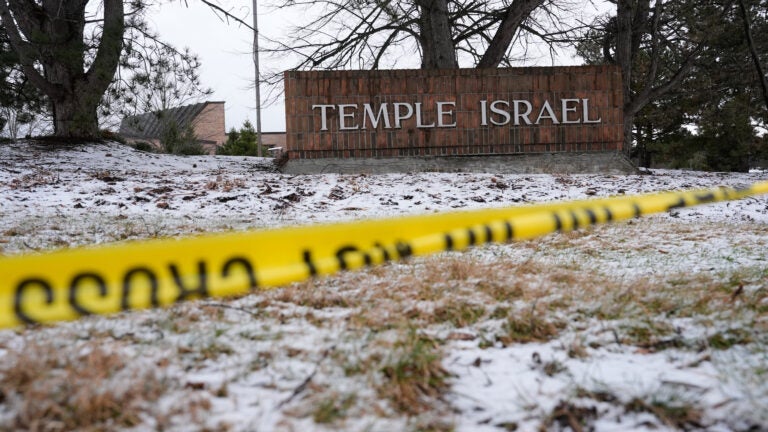
A series of mass shootings occurred during President Obama’s first term in office, including incidents at a supermarket in Tucson, Ariz., a movie theater in Aurora, Colo., a Sikh temple in Oak Creek, Wis., and an elementary school in Newtown, Conn. Following the Newtown tragedy and a renewed debate over gun control, President Obama urged Congress to require background checks for all gun sales and a ban on military-style assault weapons and high-capacity ammunition magazines.


To comment, please create a screen name in your profile
To comment, please verify your email address
Conversation
This discussion has ended. Please join elsewhere on Boston.com