
Rob Gronkowski’s ankle sprain: how to follow his lead to get faster healing
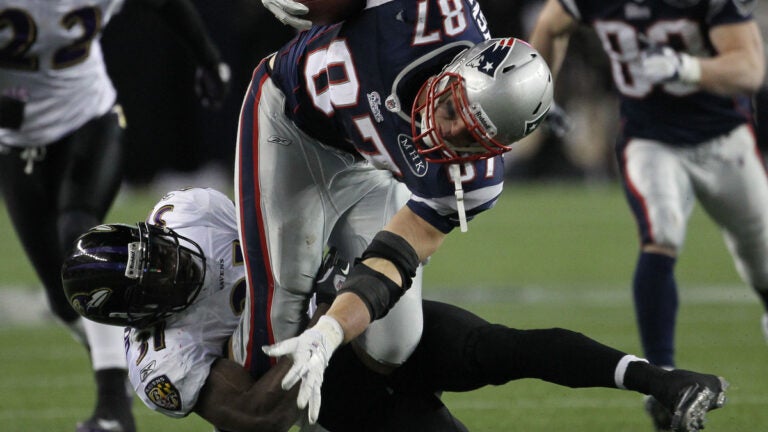
Patriots star tight end Rob Gronkowski sprained his ankle during Sunday’s AFC championship game late, but then came back in the fourth quarter to finish off the game and has plans to play in the Superbowl on February 5th.
My daughter sprained her ankle a few years ago in sleepaway camp and was limping around for several weeks, so I was a little surprised that a player could play through a sprain and recover that quickly.
But Brigham and Women’s Hospital physical therapist Reg Wilcox told me that professional ball players muddle through games with ankle sprains all the time — if they’re not severe enough to involve a ligament tear. “Trainers who get control of the swelling quickly by putting on ice, applying compression, and taping it up, can maintain an injured athlete’s performance over the short-term,’’ said Wilcox.
And minor sprains can heal within a week if appropriate care is given — ice, elevation of the foot above the heart, and exercise to keep muscles strong, such as ankle circles. “Whether Gronkowski will be at 100 percent for the game is hard to predict,’’ Wilcox said, “but I think it’s reasonable to expect that he’ll be in shape for the game.’’
What about those of us who aren’t professional athletes and don’t have trainers to treat our injuries?
“If you have a minor sprain with limited pain and full range of motion, you can probably self-treat,’’ said Wilcox. Wrap the ankle in an ace bandage and apply ice for 15 minutes at a time for the first three days; try to keep your foot elevated above your heart to further reduce swelling and take over-the-counter anti-inflammatory painkillers — ibuprofen, aspirin, naproxen.
Wearing an ankle boot, like Gronkowski has, isn’t a bad idea to keep the ankle stable, Wilcox said, but the longer you wear one, the more exercises you’ll have to do to rebuild ankle strength.
After the first three days, apply a warm compress to help bring blood to the injured area, which will help flush out old blood that has pooled around the injury and aid in healing, said Wilcox.
Injuries that involve a lot of swelling, pain, or instability in the ankle (to the point where you can’t bear any weight on it) should be checked out by a medical professional, Wilcox recommended, to rule out ligament tears and fractures.




To comment, please create a screen name in your profile
To comment, please verify your email address
Conversation
This discussion has ended. Please join elsewhere on Boston.com