
Sign up for the Today newsletter
Get everything you need to know to start your day, delivered right to your inbox every morning.
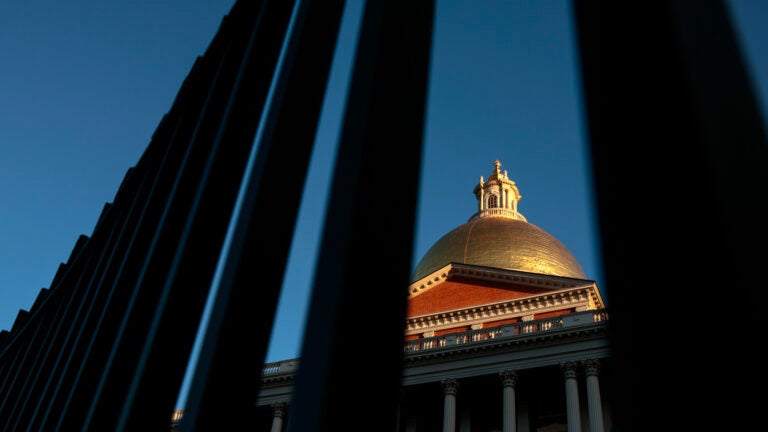
One Massachusetts advocacy group claims that even as it struggles to maintain funding for essential services, the state is leaving hundreds of millions of dollars in taxable income on the table due to offshore corporate tax dodging.
Raise Up Massachusetts, a grassroots coalition of community organizations, is working with the state Legislature to pass a Corporate Fair Share bill requiring global mega-corporations, like Apple, Amazon, and McDonald’s, to pay the state’s existing corporate tax rate on a higher share of the excess profits they conceal offshore.
The state legislation would increase the Global Intangible Low-Taxed Income (GILTI) tax from 5% to 50%, aligning it with the federal government and other states.
Legislators introduced the bill in the state Senate in January, and it is now in the Joint Revenue Committee.
“As Massachusetts faces the potential for billions of dollars in federal budget cuts that threaten our healthcare and education systems, we must raise new revenue to prevent devastating cuts to the public services that our children, families, and seniors depend on,” said state Sen. Jason Lewis, a sponsor of the bill, in a statement.
“By asking the world’s largest corporations to pay their fair share in taxes on the profits they earn in Massachusetts, we can raise significant new revenue and protect our state’s economy from the impact of federal budget cuts,” he continued.
Harris Gruman, co-founder of Raise Up Massachusetts, says the tax revenue could help address staffing shortages in Massachusetts’ direct care system, particularly in mental health, substance use, and home care services.
The tax could help fund higher wages for care workers, who Gruman says only earn $18-$21 an hour. It will also address the state’s $1 billion revenue shortfall, which the Healey administration says would lead to cuts to MassHealth, the state’s Medicaid program.
Gruman said a billion-dollar shortfall is more than the GILTI tax can generate, but says the crisis is more acute than ever, as the federal government plans to cut Medicaid.
“We feel this is a very urgent thing,” said Gruman.
Raise Up Massachusetts, formed in 2013, was behind getting a ballot initiative to pass the millionaire’s tax in 2022, eventually raising more money than expected. Many of the same organizations that later help form Raise Up Massachusetts were also behind the passage of the state’s capital gain tax in 2002, which now helps fund the state’s rainy day fund, which has close to $9 billion.
Gruman said that as the state expects a shortfall from federal funding, it’s time to tap into these reserves, and the Corporate Fair Share tax will give “a lot of gas in the tank” to combat the budget deficit.
“We flipped the script on Washington,” said Gruman. “They’re trying to cut essential care for people to pay for tax cuts to billionaires, and we’re saying we’re going to tax billionaire corporations that are avoiding taxes here to protect care for people.”
Kurt Wise, senior policy analyst at the Massachusetts Budget and Policy Center and author of a recent report on the proposal, explains that large multinational corporations use complicated accounting and legal mechanisms to shift profits generated in the US to offshore tax havens, essentially removing the profits from the taxable income that US federal and state authorities consider for tax purposes.
“It’s an aggressive and abusive form of tax avoidance used by many large multinational corporations, costing the Commonwealth several hundred million dollars a year in revenue,” said Wise.
The federal government established the GILTI tax provision in 2017 to identify shifted profits and return a portion of them to the US tax base. Many states with corporate income tax have also piggybacked on the GILTI provision.
The commonwealth determines what portion of a corporation’s total US profit comes from economic activity in the state and taxes only a small portion of the corporation’s overall profits.
In other words, the state determines “what slice of the total US profit pie Massachusetts will tax,” said Wise.
Only a select few corporations are affected by this tax. The Mass. Budget and Policy Center report said less than half of one percent of C Corporations in the US declared GILTI profits in their tax filings in 2021.
The GILTI profits declared to the IRS by those several thousand C corporations totaled $608 billion.
It’s also “fundamentally not fair” to other Massachusetts-based businesses that don’t set up subsidiaries and tax havens overseas, Wise said. Regular small businesses in the state pay 8% tax on the entirety of their taxable income, not only a sub-portion of the income they’ve decided to pay taxes on.
Wise said that through tax avoidance schemes, large corporations avoid paying their fair share of taxes needed to fund essential services like roads, education, healthcare, and housing — services that these corporations depend on to do business in Massachusetts.
Gruman said, “It’s a fairness issue at a very basic level.”
Sorry. This form is no longer available.

Get everything you need to know to start your day, delivered right to your inbox every morning.





To comment, please create a screen name in your profile
To comment, please verify your email address
Conversation
This discussion has ended. Please join elsewhere on Boston.com