
Plimoth Plantation’s Bread is 400 Years Old, But Hardly Stale
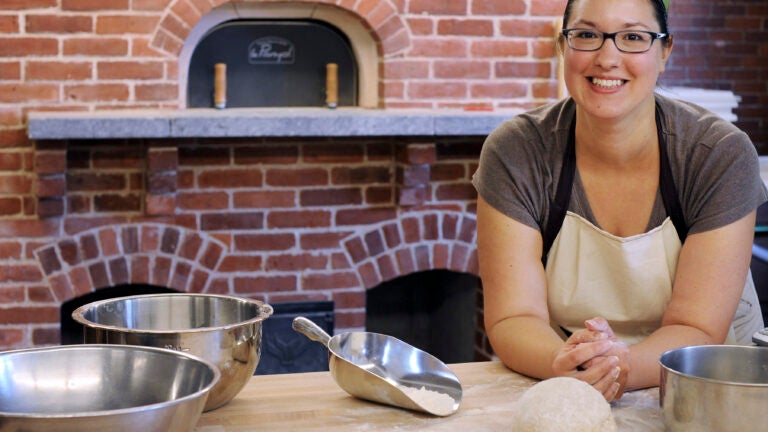
For nearly seven decades, thousands of tourists have taken in the sights of 17th century America at the historic Plimoth Plantation. Now, with a new on-site bakery, visitors will be able to sink their teeth into some history as well.
“There are certain concepts you may understand in your head,’’ said Tani Mauriello, the Plantation’s new baker. “But it’s not until you actively try to do them with your body – or taste them with your mouth – that you gain a better understanding of the past.’’
Dubbed Plimoth Bread Company, the facility opened September 26 as the culmination of a months-long renovation of the Plantation’s Craft Center. The result: visitors can get a taste of colonial-era baking techniques through daily demonstrations, special events, classes, workshops, and opportunities for participation year-round.
“You can smell it and you can see, and it looks and smells delicious,’’ said Sarah Macdonald, a Plantation spokesperson. “Now we have an area where people can try these things.’’
Just don’t expect the same bread you buy at the local Market Basket.
“Almost everything about the bread that we eat now is different from the way it was in 1627,’’ she said. “The type of wheat that we eat is different. The way it is ground is different. Back in 1627, everybody was eating bread made out of corn.’’
The museum doesn’t have to go far to get that corn.
“We have a grist mill that actually grinds corn in downtown Plymouth,’’ said Macdonald. “It became an exhibit of ours about a year and a half ago.’’
Why no bread before? Although there were cooking demonstrations before the renovation, museum-goers could not taste the food due to local health restrictions. Because the re-enactors did not wear gloves (pilgrims pre-date rubber gloves by a few centuries), food could not be served.
In the new bakery, where Mauriello cooks traditional recipes from a modern perspective, she does wear gloves while handling the bread. She uses a wood-fired oven to reproduce delicacies inspired by pilgrim and Wampanoag recipes. And she is surrounded by an ever-changing array of crafters, such as potters and weavers, that hark back to colonial days.

Here are some goodies stacked in front of the Plantation’s brand new wood-fired oven.
The process of making the bread is different, too. Pilgrims would take a piece of old dough, preserve it by salting it, and then soak it in water and let it sit over night, Mauriello said. This developed enough activity to “leaven’’ the bread, making it ferment and rise.
“I really think it’s empowering to be able to make your own food,’’ said Mauriello. “Some people are intimidated by baking, but they don’t have to be. It’s something you can do for yourself and it will work for you, just as it did back then.’’
And Mauriello, who was not always a baker, spices up her demonstrations with fun tidbits from her life.
“I was probably 12 or 13 before I realized you can make a cake without a box,’’ she said. “It was a revelation to me that you didn’t need Betty Crocker in order to make your own cake.’’
Indeed, letting people taste the flavors of the past seems like a natural progression for the Plymouth, Mass., living history museum where sensory experiences are curated and brought to life. Floors are made of dirt, people are dressed in costume, and the year is perennially 1627. And now, so is the bread.
Said Mauriello: “I think it’s important to not take what we have for granted and to value historic work.’’




To comment, please create a screen name in your profile
To comment, please verify your email address
Conversation
This discussion has ended. Please join elsewhere on Boston.com