These hotels are more like museums where you can sleep
When the Super 8 motel chain underwent a major face lift a couple of years ago, its corporate leaders had some fun with the brand’s old, fusty image. For one night, they occupied a Manhattan gallery space and mounted an exhibition grandly billed as “Works from the Super 8 Collection.’’ Knowing full well the mundane still lifes and nature scenes on display were not exactly worthy of such a lofty description, they offered the first 100 visitors their choice of framed motel kitsch to take home.
Even in a cut-rate motor inn, generic art just won’t do anymore. Hoteliers know their customers want an experience, and they’re increasingly inclined to give it to them in the form of provocative art.
Upscale hotels such as the Chambers in New York City and the Henry in Dearborn, Mich., are packing their walls with original works of contemporary art. In Boston, developers are turning the down-at-the-heels old Days Inn on Soldiers Field Road into a brightly decorated hipster boutique called Studio Allston.
But one company in particular has seized the lead on the avant-garde of hotel art. The 21c Museum Hotel chain, based in Louisville, Ky., has quietly built a network of boutique hotels featuring world-class contemporary art exhibits in historic, middle-America downtown buildings from Cincinnati and Oklahoma City to Bentonville, Ark..
At 21c locations, guests are encouraged to browse on multiple floors of wide-open gallery space, and the doors are open free of charge to visitors who aren’t staying in the hotel. It’s a model, conceived by a pair of serious collectors in Louisville, designed to bring a new layer of culture to traditional cities while providing a unique alternative for seasoned travelers.
Hotels compete by offering their guests greater levels of comfort, and the elegant 21c locations are no exception. In terms of the artwork on display, however, the management doesn’t mind if visitors aren’t sure what to make of it.
“The SuperNatural,’’ the current exhibition at the museum hotel in Durham, N.C., features paintings, photographs, and sculptures depicting disturbing hybrids: creatures and places that are “the offspring of scientific research and imagination,’’ as the catalog copy explains, “reflections of our anxiety and aspirations for the future.’’
“Contemporary art is often confounding to people who aren’t immersed in the language of art today,’’ says Alice Gray Stites, 21c’s chief curator. “If people are getting comfortable with being more uncomfortable, I think that’s an exciting thing.’’
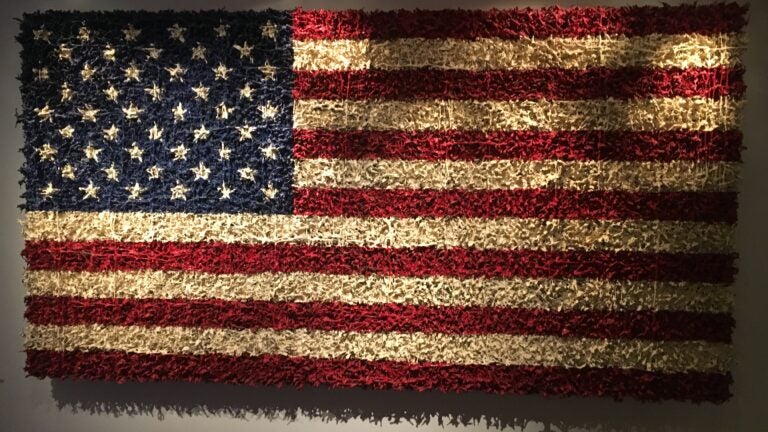
The renowned New York-based conceptual artist Hank Willis Thomas has multiple works in “Seeing Now,’’ another exhibition that has traveled to several 21c locations, including its current installation in Nashville. Viewers are instructed to take a mobile phone snapshot of his enlarged reflective screen print based on Stanley Forman’s “The Soiling of Old Glory,’’ the photographer’s Pulitzer Prize-winning shot of a white teenager assaulting Boston lawyer Ted Landsmark with a flagpole in 1976. To the naked eye, the altered print appears washed out, unfinished. Only when the viewer takes a second photo with flash does the full extent of the photo reveal itself.
The point of contemporary art, Thomas says, is “you’re not supposed to ‘get it.’ You’re supposed to wrestle with it. If it’s too easy, it might as well be an ad or a sign. As the viewer, you complete the work.’’
This is the “fifth or sixth’’ 21c show to feature his art, Thomas says. He first met Laura Lee Brown and Steve Wilson, the Louisville-based preservationists and collectors who conceived the 21c model, about a decade ago, and he was quickly sold on their commitment to the art world by fellow artists such as Kehinde Wiley and Sanford Biggers.
“Their shows travel and take different forms,’’ he says. “It’s really a live space.’’
The 21c concept is turning the familiar hotel model “on its head,’’ says Michael Oshins, a professor at Boston University and the editor of the trade journal Boston Hospitality Review. Rather than building a hotel with an art component, he says, “why can’t it be an art museum where people can sleep?’’
In the “experience economy,’’ Oshins says, customers “want more than the standard vanilla experience.’’ He points out that museums such as the Institute of Contemporary Art in Boston and New York’s Metropolitan Museum of Art do brisk business hosting functions and meetings: “People want to be around art.’’
At the 21c in Bentonville — the home of Walmart national headquarters — one hotel guest recently told Stites that she has become a regular visitor so she can bring business clients to the galleries. Another guest told the curator that he believes his exposure to art “is making me a better person.’’
That’s one amenity you can’t put a price on.