Here are some of the ideas being considered to fix the suffocating traffic to Cape Cod
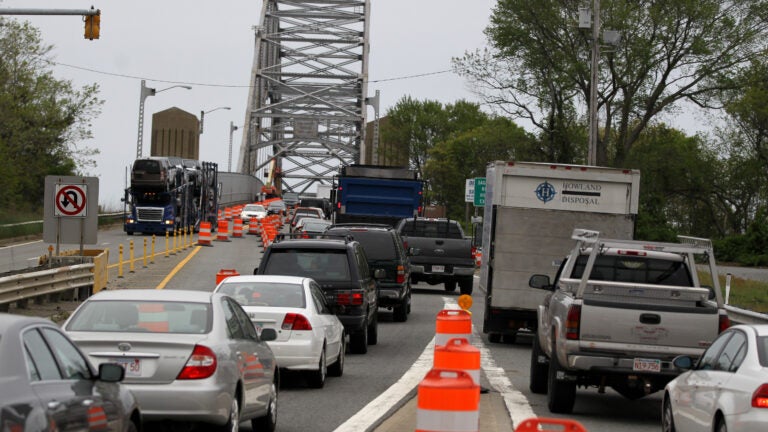
It’s no secret Cape Cod has a traffic problem.
The sprawling lines of vacationers inching toward their beach houses are well documented. The seasonal plague is so longstanding that most shrewd New England residents avoid leaving for their summer getaways on a Friday afternoon like it’s the actual plague.
The two main traffic pressure points are the Sagamore and Bourne bridges, the only two options for traversing the Cape Cod Canal by car. In the peak summer months, daily traffic volume on the Sagamore and Bourne bridges increases 38 percent and 33 percent, respectively, according to a 2015 Massachusetts Department of Transportation study. Local roads — such as Route 28, Route 6, and the Scenic Highway — saw traffic increases of up to 63 percent during that time.
The U.S. Army Corps of Engineers, which controls and maintains the canal and bridges, is in the midst of a three-year study on whether to replace the two narrow spans with wider structures that could better handle the summer traffic. According to MassDOT, the two 80-year-old, functionally obsolete bridges also increasingly require maintenance, often entailing lane closures and exacerbating local traffic — even during the offseason months.
Officials also stress how travel patterns between the two, sole canal crossings — the Route 3/Sagamore Bridge/Route 6 corridor to the east and the Route 25/Bourne Bridge/Route 25 corridor to the west — are also a major contributing factor to the gridlock around the bridges.
“This cross-corridor movement puts pressure on the on the ‘gateway’ highway interchanges adjacent to the canal and Sagamore/Bourne bridges and can result in congestion during peak travel periods,” MassDOT spokesman Patrick Marvin said.

A state presentation slide highlighting the two connecting roadways between the canal bridges.
For now, MassDOT officials have dismissed ambitious proposals such as a canal tunnel or a third, mid-canal bridge due to environmental and cost concerns. Some local residents have argued that a third bridge, as well as the so-called “Southside Connector,” are essential to addressing the gridlock.
As The Boston Globe reported last summer, the state has also shelved a separate proposal for a third, one-way toll bridge adjacent to the Sagamore Bridge. But that doesn’t mean officials aren’t looking at other stop-gap alternatives to ease the traffic.
According to a MassDOT-led study group, a number of one- to three-year projects to improve local infrastructure, such as rotaries and intersections, could lessen year-round traffic caused by the bridges. Simple additions like optimized traffic lights and turning lanes around Bourne could shave seconds to minutes off the delay felt by individual drivers. They also recommended enhancing bicycle and pedestrian accommodation.
Three- to eight-year proposals include moving an exit near the Sagamore Bridge to allow quicker merging, adding a travel lane on Route 6 in Bourne, and reconstructing Belmont Circle or Bourne Rotary. The mid-term resolutions also potentially involve new bike paths, sidewalks, and park-and-rides.
Aside from replacing the bridges (which the MassDOT proposal assumes will eventually occur) and the aforementioned dismissed proposals, the group has proposed three longterm projects to completely restructure what is now the Bourne Rotary, located just south of the Bourne Bridge. The first involves a fly-over bridge for through-traffic, which the state says could remove more than 2,000 daily vehicles off the rotary. Two other proposals would replace the rotary with differing versions of highway-style interchanges.
Another longterm proposal would create a new road between Route 25 and Route 6, giving Cape-bound drivers a shortcut to the Scenic Highway roughly two miles before the Bourne Bridge.
The state study group is scheduled to reconvene again Thursday, June 29. Ironically, that date is the day before what will likely be one of the Cape’s worst traffic weekends of the year.