How do you choose which travel reward credit card is for you?
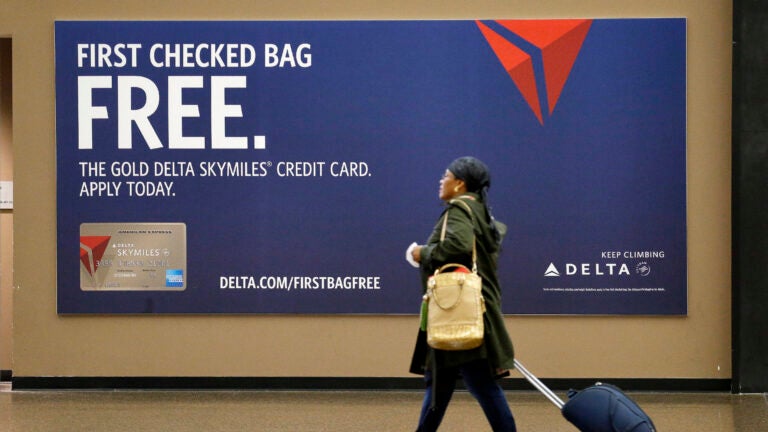
For those who enjoy travel — and who doesn’t? — using travel rewards credit cards is a great way to make that long-awaited dream vacation a reality.
But with so many from which to choose, how can you determine which is best for you?
According to Julie Myhre-Nunes, content director at NextAdvisor.com, knowing the types of rewards (miles, points, etc.) offered and redemption options is key.
“Just because a card offers 70,000 bonus points, it doesn’t mean that those bonus points hold value in the real world,’’ Myhre-Nunes said. “Points are confusing, so make sure you do your research on the card you’re considering to find out what you can actually redeem them for.’’
“Don’t assume that high point value translates into high cash value,’’ she added.
Each year, NextAdvisor.com conducts an in-depth analysis of travel rewards credit cards by redeeming rewards for flights or hotel stays for each card reviewed, then determining the value of the redeemed points.
Once numbers are established for the cards, they are compared against one another and assigned a ranking, Myhre-Nunes, one of the report’s authors, explained.
For this year’s study, 19 cards were analyzed, with the top three spots going to Barclaycard Arrival Elite MasterCard for “best average hotel/flight value and best hotel value’’; JetBlue Plus Card for “best flight value’’; and Hyatt Credit Card from Chase for “best intro bonus value.’’
The study awarded the top spot to the Barclaycard since it “proves to hold the most value overall and the most value for hotel redemptions, as its miles are worth $2.10 per $100 spent in both categories.’’
“This card earns you [two times] miles on all purchases’’ and “rewards can be redeemed for travel statement credit, gift cards and merchandise,’’ the report said.
In addition, every time a cardholder redeems miles, he or she gets 5 percent bonus miles to use toward his or her next redemption. “On top of that, you’ll get 50,000 bonus miles after you spend $3,000 on purchases in the first 90 days, which is equal to $525 when you factor in the 5 percent bonus,’’ according to the report.
The JetBlue Plus Card has a flight redemption value of $2.18 for every $100 spent, and cardholders earn six points for each dollar spent on JetBlue purchases, two points for every dollar spent at restaurants and grocery stores, and one point for each dollar spent on all other purchases.
When JetBlue Plus cardholders spend $1,000 on purchases within the first 90 days, they receive 30,000 points, which, according the report, translates into $441. Rewards may be redeemed for JetBlue or Hawaiian Airline flights, but not for hotels (which is why it received top ranking for “best flight value’’ and not overall, which would include hotels).
The Hyatt Credit Card from Chase received the distinction of having the best introductory bonus value since, the report says, it is worth $1,038.
“Cardholders can earn this bonus, which translates to two free nights at Hyatt properties worldwide, after spending $2,000 in the first three months from account opening,’’ the report stated. “The Hyatt Credit Card from Chase earns three points for every $1 spent at Hyatt locations, two points for every $1 spent at restaurants, on airline tickets, and at car rental agencies, and one point per $1 spent on all other purchases.’’
Points may be used for Hyatt hotel stays and room upgrades, Hyatt dining and spa treatments, or car rentals with participating companies, according to the report. While cardholders can’t redeem points for flights, they may exchange their points for miles with a partner airline, then wait up to 30 days to use the miles, it stated.
Myhre-Nunes said the recently released study should be a tool for those seeking to find a travel rewards credit card.
“Most have annual fees – which isn’t necessarily a bad thing – but if you’re not a frequent traveler, you probably should not go with a card with a fee since you won’t be earning enough to cover the cost,’’ she said. “Don’t discount cards that have annual fees, just figure out if it works for you.’’
Those traveling abroad should find out if their card charges foreign transaction fees, Myhre-Nunes advised. “The majority of hotel- and airline-branded cards we reviewed don’t have foreign transaction fees, but there are some out there that do – often charging 2 to 5 percent of the transactions made overseas,’’ she said. “That can really add up.’’
Finally, Myhre-Nunes cautioned against carrying a balance on travel rewards credit cards – or any others for that matter.
“To make the most of your travel rewards credit cards, try to pay them off every month,’’ she said. “At the end of the day, responsible credit card use is something I would definitely recommend.’’
For more information on the top vote-getters, and to see how other travel rewards credit cards fared, visit www.nextadvisor.com/credit_cards/best-travel-reward-credit-cards-analysis.