
Sign up for the Today newsletter
Get everything you need to know to start your day, delivered right to your inbox every morning.
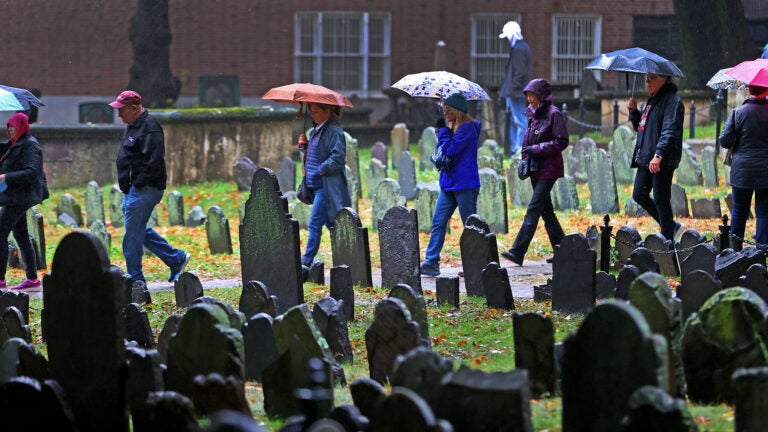
Boston is home to some of America’s oldest graveyards, where famous historical figures were laid to rest after shaping the nation’s history. Today, these burial grounds—some dating back to the 1600s—are visited by millions each year.
“There’s a lot of history that’s in these graveyards that you get to see, it gives you a window into the neighborhoods, the makeup of the people that were there,” said Freedom Trail projects director Catherine Benjamin.
Visiting a cemetery offers a quiet moment to reflect on the changing seasons while connecting with the stories that shaped Massachusetts.
95 Tremont St., Boston
Thousands have been buried in the Downtown Boston cemetery since its opening in 1660. Notable figures include Robert Treat Paine, Paul Revere, and Benjamin Franklin’s parents, who have a a 25-foot-tall obelisk — the largest marker in the graveyard. Many of its headstones feature Puritan style skulls and bones, due to a less romantic thinking around death at the time, said Benjamin.
Buried 1803
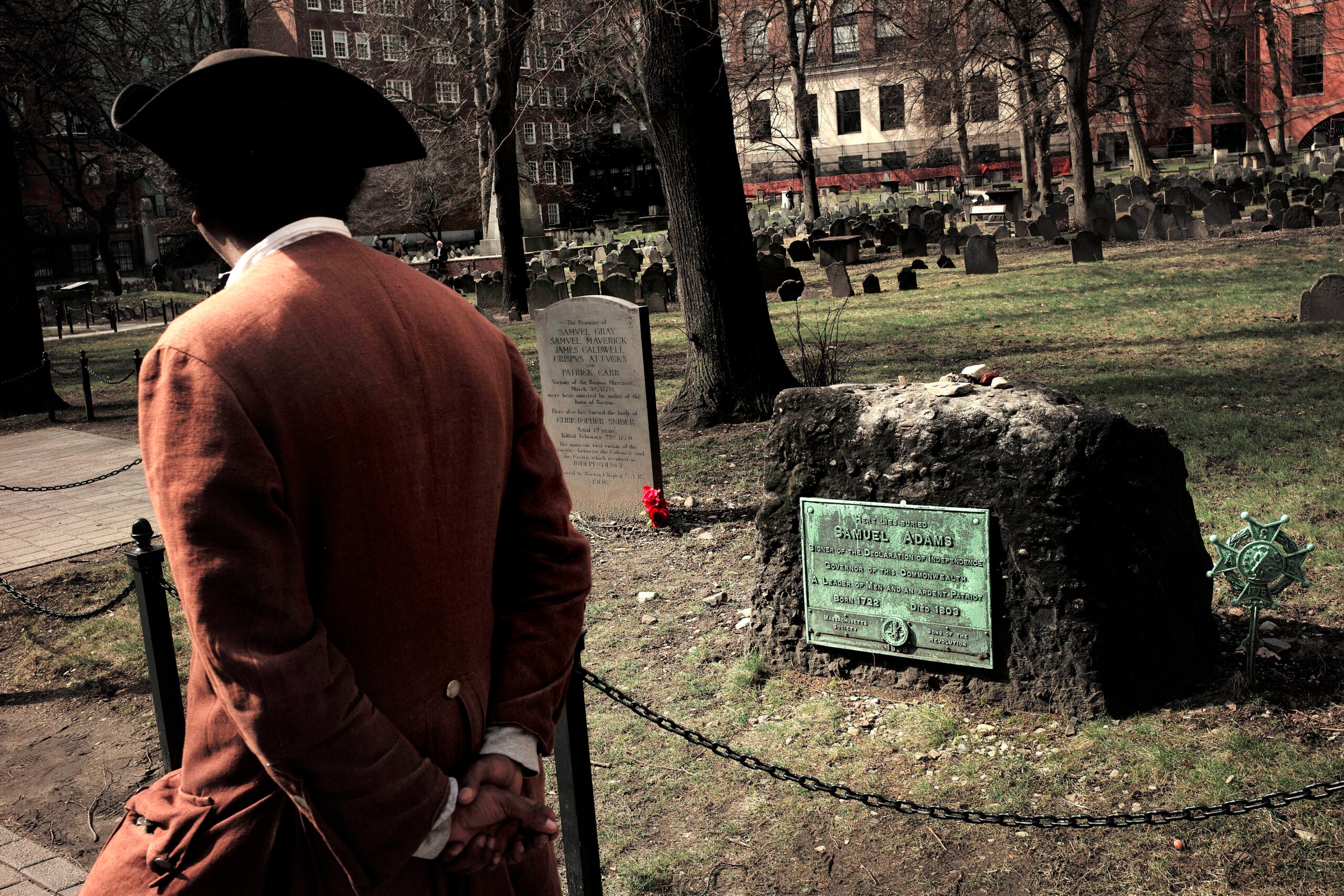
Adams was a key leader in the American revolution and co-founder of the Sons of Liberty. “[He] was this symbol of radicalism, of getting the people riled up and inspired for this political movement of independence,” said Benjamin. But, Adams’ headstone is “not even close” to the original stones, Benjamin said. The new markers make it easier for visitors to find the new ones and it is likely their remains are still close to the new headstone. Adams is buried in his wife, Elizabeth Checkley’s, family burial plot.
Buried 1770
Although it was likely unintentional, next to Samuel Adams’ gravestone are the five victims of the 1770 Boston massacre — Crispus Attucks, Samuel Gray, James Caldwell, Samuel Maverick, and Patrick Carr — whose deaths by British Redcoats helped spark the revolutionary movement Adams would go on to lead.
Buried 1793
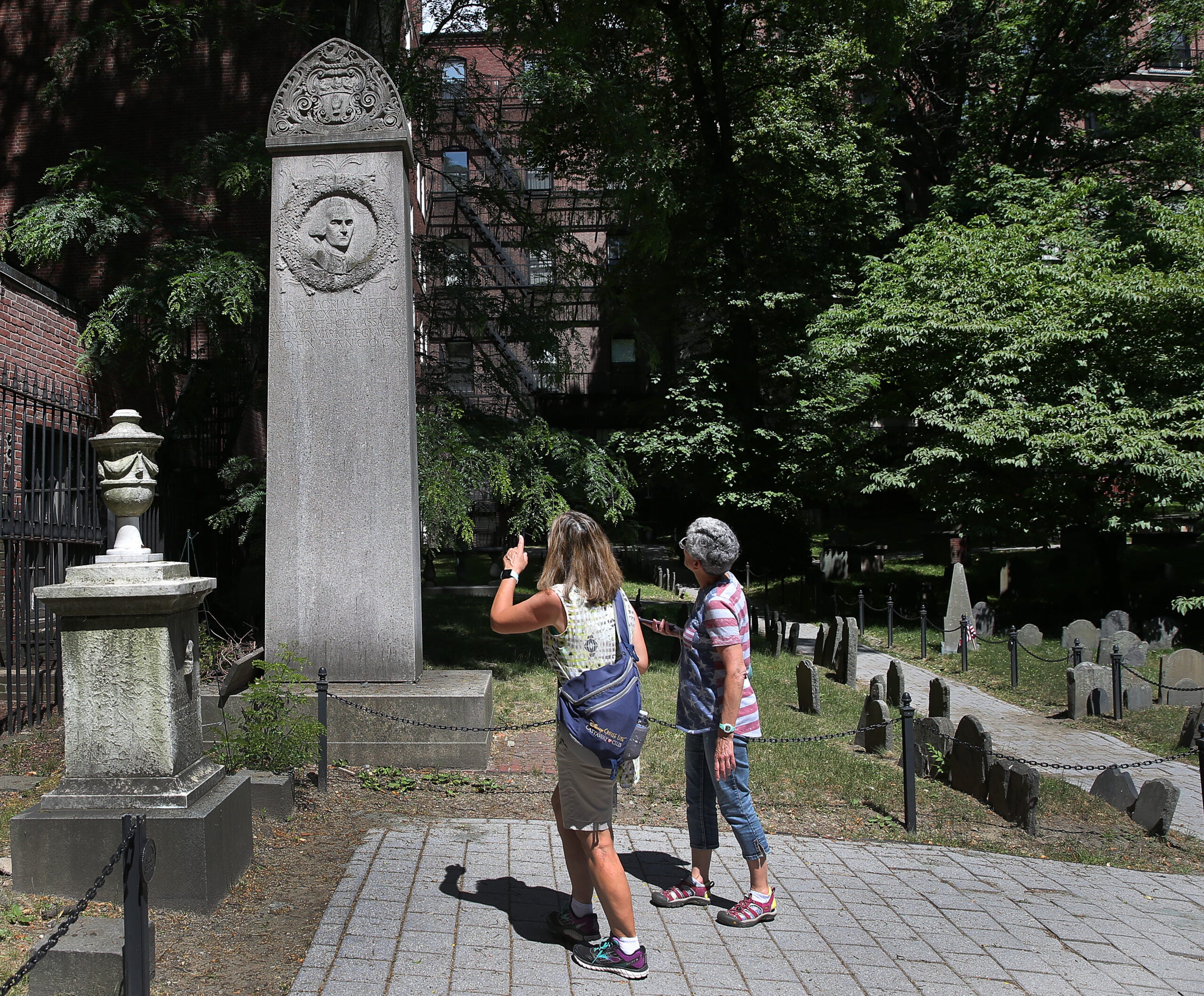
John Hancock, the first to sign the Declaration of Independence and one of America’s Founding Fathers, served as the Governor of Massachusetts until his death. His grave marks the second-largest memorial in the graveyard.
45 Hull St., Boston
Copp’s Hill in the North End was the resting place for many of Boston’s working class and artisans, including numerous Black Bostonians. Although Boston’s cemeteries were not officially segregated, racial divisions still shaped where people were buried — and Black sections of historic graveyards received less care at the time.
Buried 1807
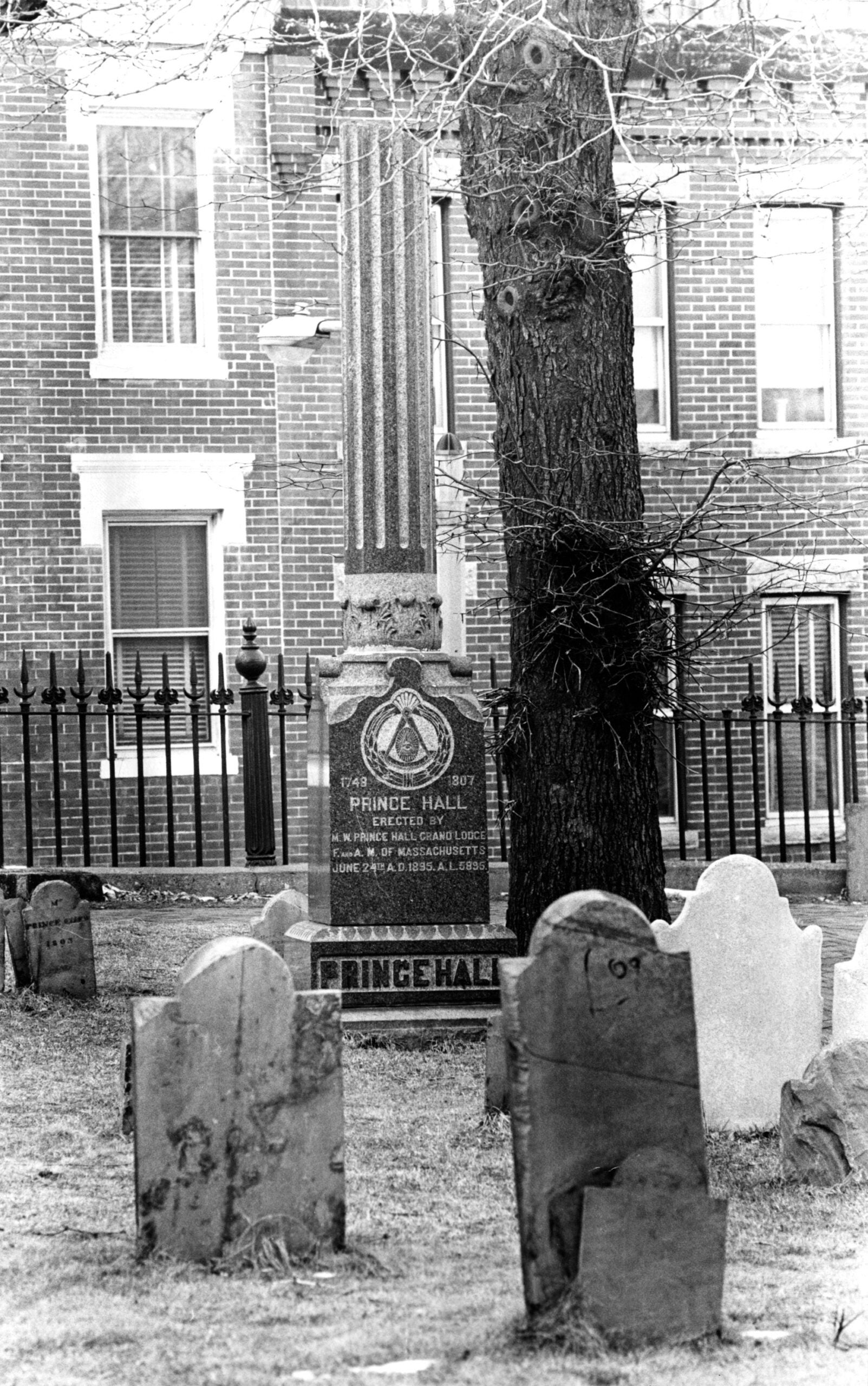
Prince Hall was a leading abolitionist and founder of the first recognized African-American Masonic fraternity in the U.S. Hall petitioned for emancipation, and championed public education for Black children. Today, there are more than 4,500 Prince Hall lodges located across the world. Although a cemetery in Arlington bears his name, it is not his burial site.
Buried 1784
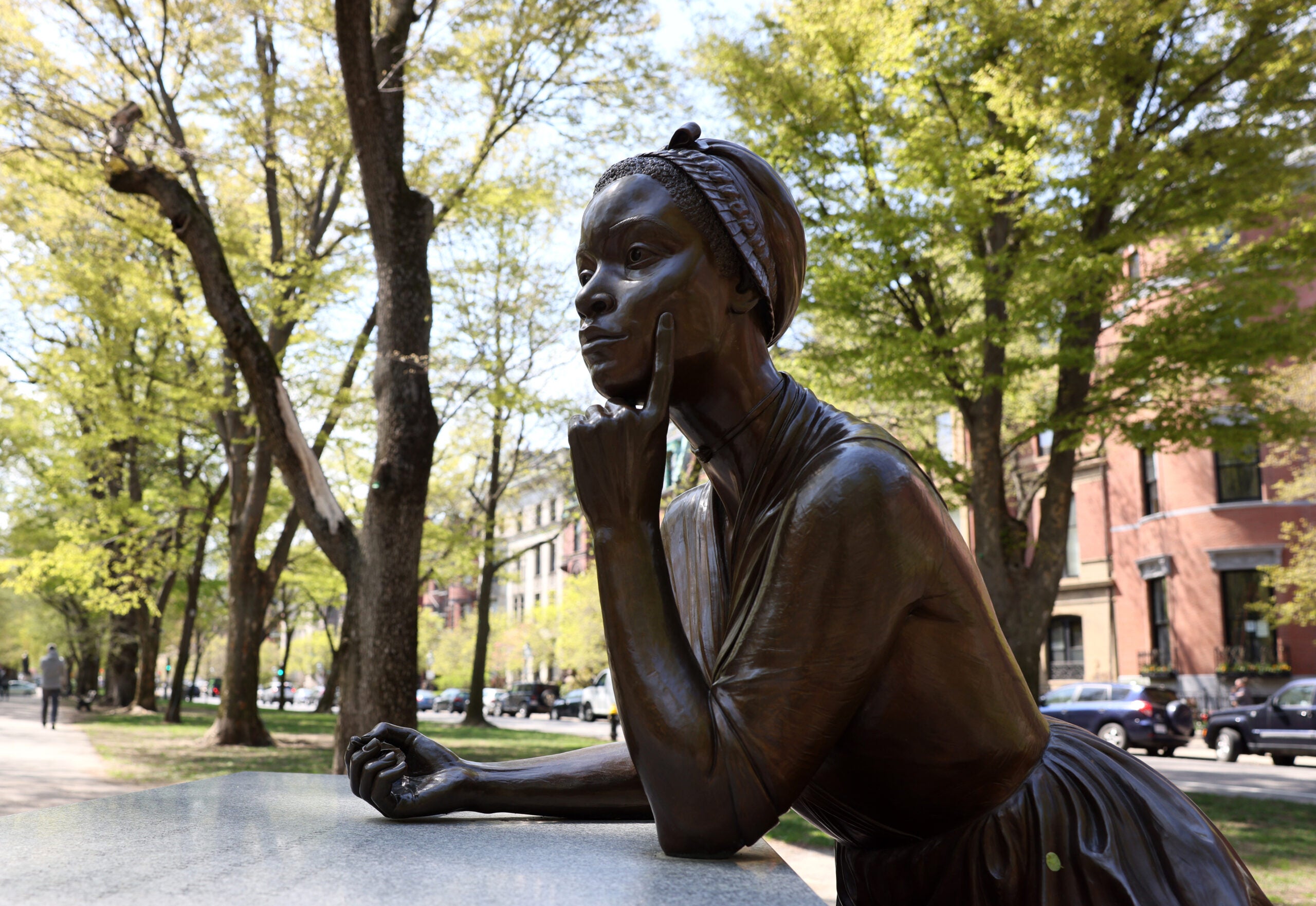
Phillis Wheatley was the first person of African descent and only the third colonial American woman to publish a book of poetry, and was also likely buried at Copp’s Hill, but like many other Black Bostonians from the time, she does not have a headstone. Although she would later become one of the most celebrated American poets, she likely could not afford a stone at the time of her death. In 2003, a bronze statue was unveiled in her honor as part of the Boston Women’s Memorial on Commonwealth Avenue.
129 Bedford St., Concord
Sleepy Hollow Cemetery in Concord was home to some of America’s most influential writers in the 19th century — and while these writers lived as neighbors in town, they are now laid to rest side by side in the section known as “Author’s Ridge.” Unlike the earlier Puritan-style graveyards, the cemetery was “supposed to be a place where you could reflect and see the beauty of nature,” said Concord-based historic interpreter Concord Joe Palumbo.
Recently, town historians found an old ledger book with names of Black Concord residents buried in the “Town Lot” area of the cemetery. Identifying more of the town’s former Black residents whose graves remain unmarked graves, Palumbo said, is Concord’s newest effort to document the town’s overlooked burial history.
Buried 1862
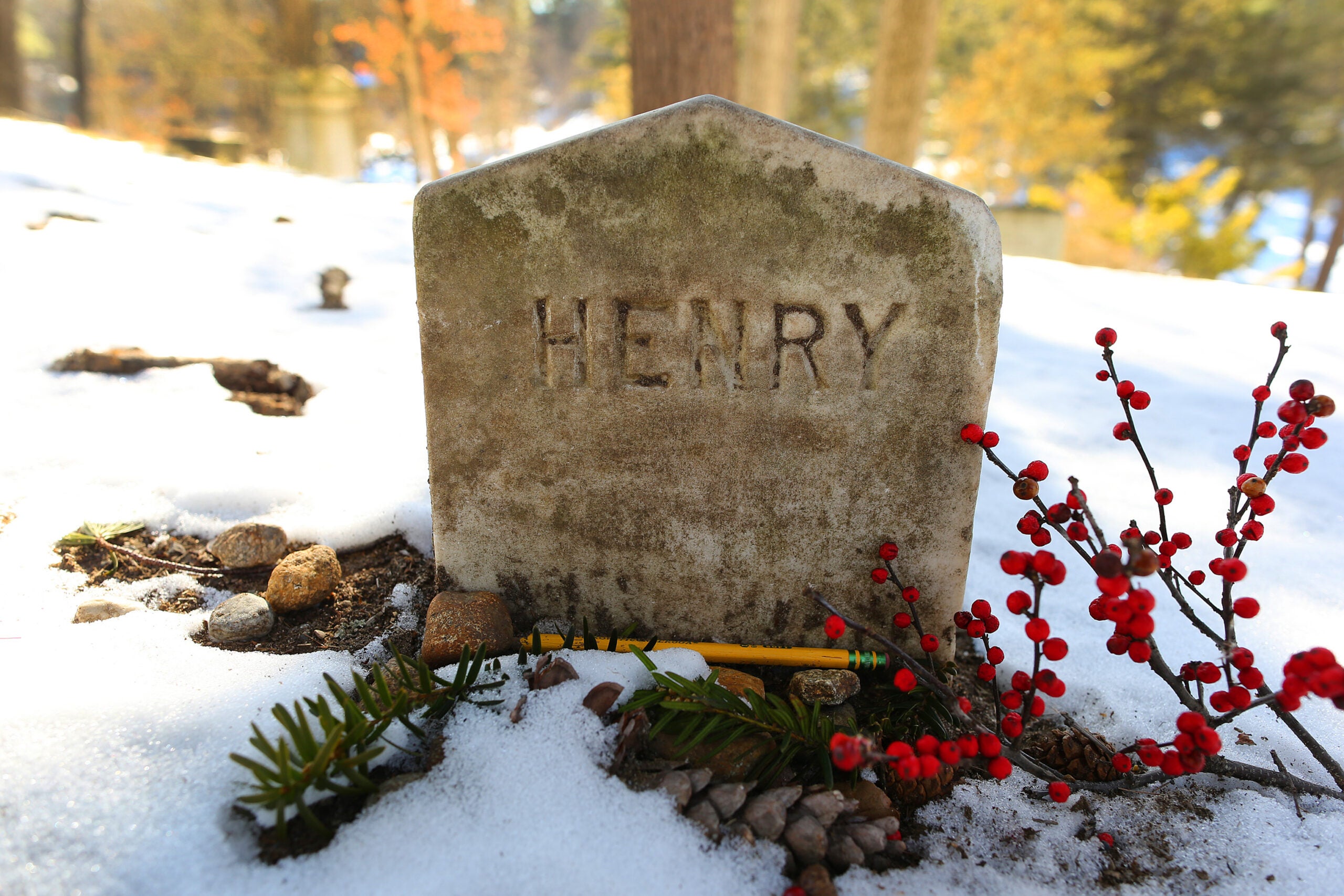
Henry David Thoreau was a celebrated environmentalist, author of “Walden,” a classic American book, and was a beloved teacher. He was also an abolitionist who assisted in the Underground Railroad. Many visitors leave pencils both because of his writing and the fact that his father was a pencil manufacturer. He died young of tuberculosis, and his funeral was a public event in Concord.
Buried 1864
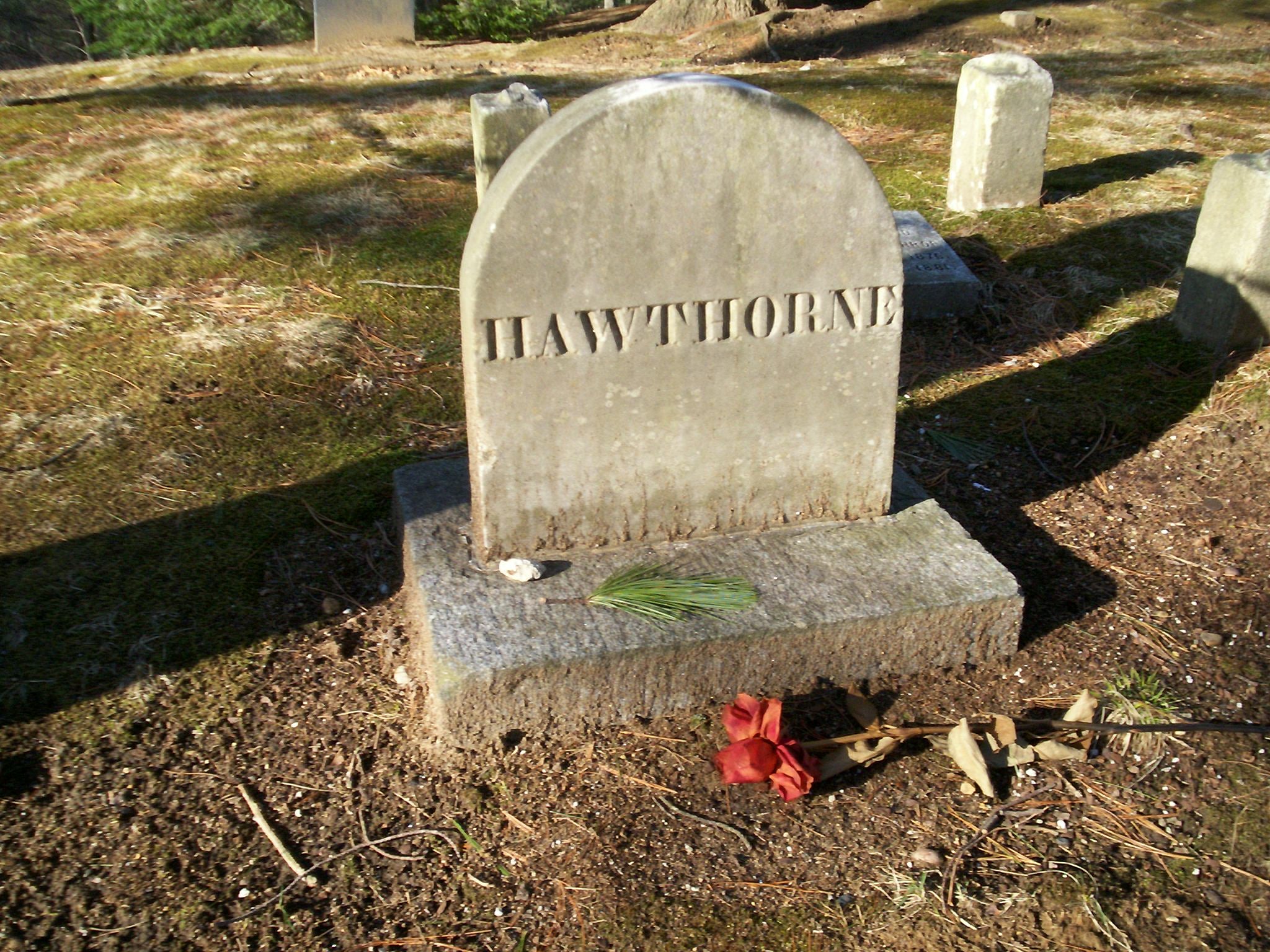
Nathanial Hawthorne, author of classics like “The Scarlet Letter” and “The House of Seven Gables,” stood apart from the transcendentalist writers of his time in Concord. More conservative than his contemporaries, he once wrote of the town: “Never was a poor little country village infested with such a variety of queer, strangely dressed, oddly behaved mortals most of whom took themselves to be important agents of the world’s destiny, yet were simply bores of a very intense character.”
Buried 1888
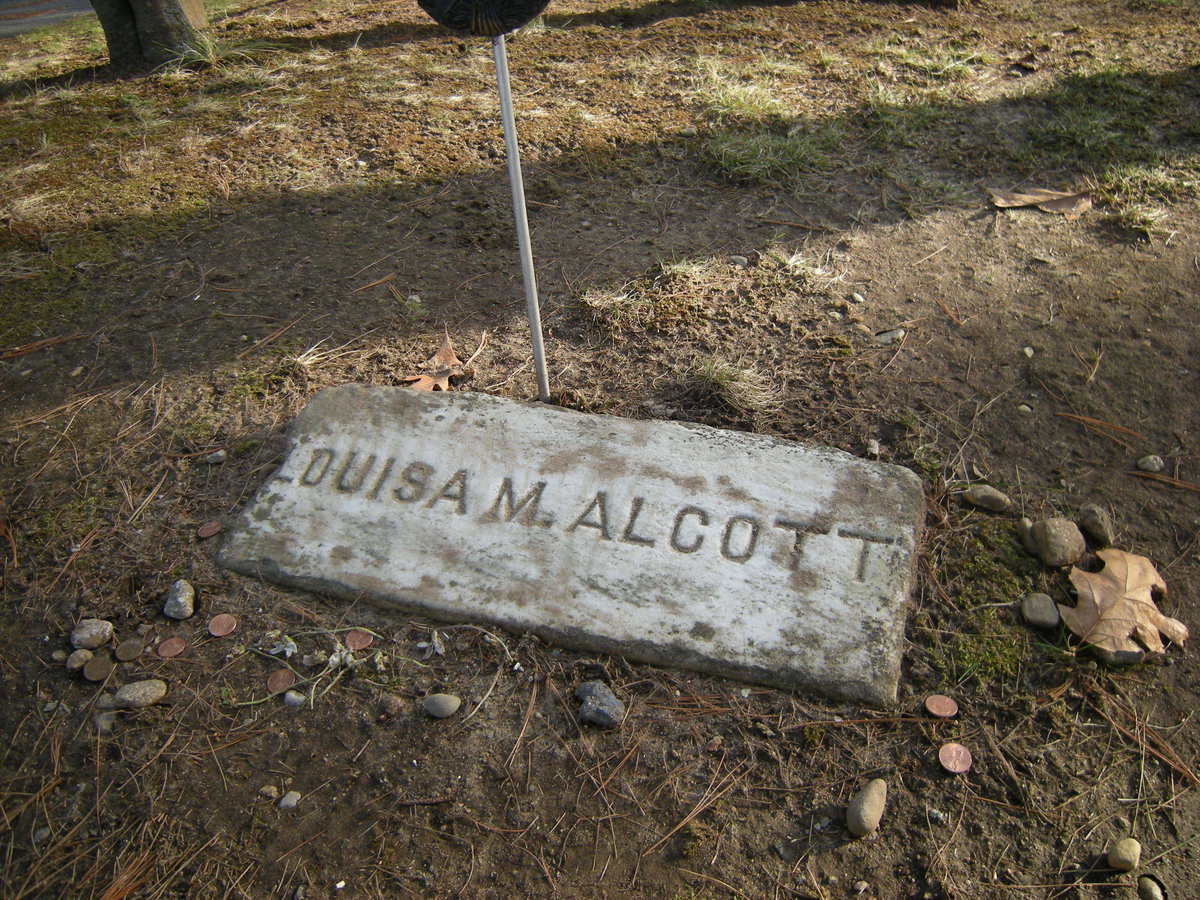
Visitors often leave apples at the gravestone of Louisa May Alcott to honor her esteemed novel, “Little Women,” which she wrote at Orchard House in Concord. A pioneering figure in both literary and civic life, she was one of the first women in Concord to vote. In her final days, while taking care of her elderly father, he reportedly asked to accompany him in death. While she declined, Alcott passed away a few days later at age 55.
Triangle Street, Amherst
Buried 1886
Emily Dickinson wrote nearly 1,800 poems and was a prolific gardener during her lifetime. Her final request, ahead of her death at just 55, was that she not have a funeral procession, but that her “coffin [was] not driven but carried through fields of buttercups.” Only after passing, did her family find and publish much of her poems. Her family home is now the Emily Dickson Museum.
Get everything you need to know to start your day, delivered right to your inbox every morning.




To comment, please create a screen name in your profile
To comment, please verify your email address
Conversation
This discussion has ended. Please join elsewhere on Boston.com